What Is Ukrainian Culture? Traditions, Music, Food, Art and National Identity

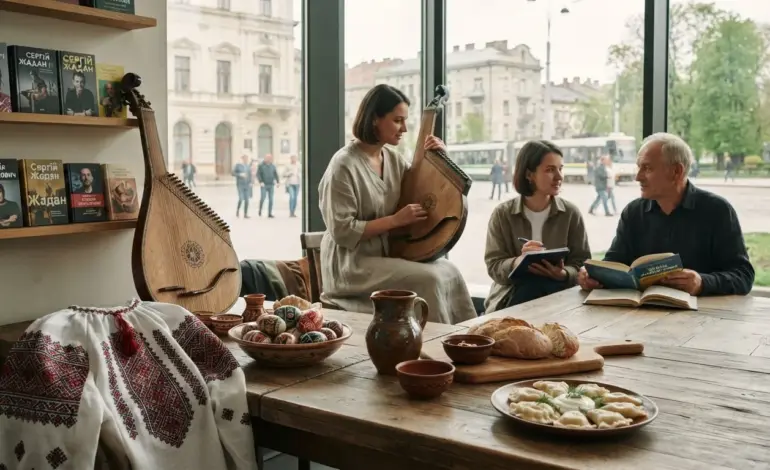

Ukrainian culture is much more than a collection of traditional costumes, folk songs, embroidered shirts, and national dishes. It is a diverse cultural tradition shaped by centuries of history, regional differences, religious influences, artistic movements, and interaction with neighboring societies.
For someone discovering Ukraine for the first time, Ukrainian culture can sometimes appear strongly connected to its folk heritage. Yet contemporary Ukrainian culture is much broader. It includes classical and modern music, literature, cinema, visual art, architecture, cuisine, popular culture, digital creativity, and constantly evolving ideas about national identity.
Understanding Ukrainian culture therefore means looking at both tradition and change.
A Culture Shaped by History
Ukraine lies at a historical crossroads between Central, Eastern, and Southeastern Europe. Different political states and cultural traditions influenced various parts of the territory over the centuries.
The medieval heritage of Kyivan Rus, the Cossack era, the Polish-Lithuanian period, the influence of the Habsburg world in western Ukraine, the Russian Empire, the Soviet period, and the experience of an independent Ukraine have all left their mark.
This history helps explain why Ukrainian culture contains many regional variations while still sharing a recognizable national identity.
Ukrainian culture was not created at one particular moment. It developed over centuries and continues to change.
Ukrainian Language and Cultural Identity
The Ukrainian language is one of the central elements of modern Ukrainian identity.
It belongs to the East Slavic language group and has its own distinctive vocabulary, grammar, literature, and literary tradition.
Ukrainian became particularly important as a symbol of cultural identity during periods when the use of the language was restricted or marginalized by imperial and Soviet authorities.
Today, Ukrainian is the country’s official state language and is increasingly visible in public life, education, media, business, and popular culture.
At the same time, Ukraine has historically been multilingual. Many Ukrainians have used more than one language in their everyday lives, and language patterns have varied considerably by family, region, generation, and historical experience.
This is one reason why Ukrainian identity should not be reduced to a simple language divide.
Ukrainian Traditions and Holidays
Traditional Ukrainian customs are particularly visible during major holidays and family celebrations.
Christmas and Easter have traditionally been among the most important religious and cultural occasions. Christmas customs can include kolyada, or Christmas caroling, while Easter is associated with decorated eggs known as pysanky and specially prepared foods.
Other traditions are connected with weddings, harvest celebrations, seasonal festivals, and family gatherings.
Some customs have religious origins, while others preserve much older folk traditions that existed alongside Christianity.
Modern Ukrainians do not necessarily follow every traditional custom, but many continue to preserve particular practices within their families or communities.
The Embroidered Shirt: Vyshyvanka
One of the most recognizable symbols of Ukrainian culture is the vyshyvanka, an embroidered traditional shirt.
Different regions developed their own embroidery patterns, colors, techniques, and decorative traditions.
Historically, embroidery could carry meanings associated with family, locality, symbolism, or craftsmanship.
Today the vyshyvanka has also become a modern cultural symbol. Ukrainians may wear embroidered clothing during national celebrations, cultural events, weddings, public occasions, or simply as a way of expressing connection with Ukrainian heritage.
Its modern popularity demonstrates how traditional culture can acquire new meanings rather than simply remaining a historical artifact.
Ukrainian Music: From Folk Traditions to Modern Artists
Music occupies an important place in Ukrainian cultural life.
Traditional Ukrainian music includes lyrical folk songs, seasonal songs, wedding songs, historical ballads, and instrumental traditions.
The bandura, a Ukrainian plucked string instrument, has become particularly associated with Ukrainian musical heritage.
Ukraine also developed an important classical musical tradition, with composers and performers contributing to European musical culture.
Modern Ukrainian music is even more diverse.
Contemporary artists work in pop, rock, electronic music, hip-hop, indie, jazz, and experimental genres. Many combine Ukrainian-language lyrics and traditional musical elements with international styles.
This combination of heritage and modernity is one of the defining characteristics of contemporary Ukrainian culture.
Ukrainian Literature
Literature has played an unusually important role in the development of Ukrainian national consciousness.
Taras Shevchenko is perhaps the best-known figure in Ukrainian literary history. His poetry became deeply connected with ideas of Ukrainian language, culture, freedom, and national identity.
But Ukrainian literature is much broader than Shevchenko.
Writers such as Ivan Franko, Lesya Ukrainka, Mykhailo Kotsiubynsky, Valerian Pidmohylny, and many others contributed to a rich literary tradition spanning different periods and artistic movements.
Modern Ukrainian writers continue to explore subjects ranging from everyday life and relationships to history, war, migration, identity, and Ukraine’s place in Europe.
Ukrainian Art
Ukrainian visual art has developed through numerous traditions and influences.
Folk decorative arts include embroidery, pottery, wood carving, weaving, traditional painting, and decorative Easter eggs.
The country has also produced important modernist artists. One of the most internationally recognized is Kazimir Malevich, whose family background was connected to Ukraine and whose early artistic development was partly associated with Kyiv.
Another important figure is Maria Prymachenko, whose imaginative paintings of fantastic animals and plants became one of the most recognizable expressions of Ukrainian folk-inspired art.
Contemporary Ukrainian artists continue to reinterpret historical symbols and respond to modern social and political realities.
Ukrainian Cuisine
Food is another important part of Ukrainian cultural identity.
Some of the dishes most strongly associated with Ukraine include:
- borscht — a beet-based soup with numerous regional and family variations;
- varenyky — dumplings filled with ingredients such as potato, cheese, cabbage, mushrooms, meat, or fruit;
- holubtsi — cabbage leaves stuffed with a savory filling;
- deruny — potato pancakes;
- salo — cured pork fat traditionally served in various ways;
- pampushky — small bread rolls, often served with garlic and traditionally associated with borscht.
However, Ukrainian cuisine is not a fixed list of dishes.
Recipes differ from region to region and from family to family. Modern Ukrainian chefs are also reinterpreting traditional ingredients and techniques in contemporary restaurants.
Food therefore provides another example of how Ukrainian culture preserves its heritage while continuing to evolve.
Regional Diversity Within Ukraine
There is no single Ukrainian cultural experience.
The country is geographically large and historically diverse, and different regions have developed their own traditions.
Western Ukraine has distinctive cultural influences connected with Central Europe, the Carpathians, and the history of Galicia and Transcarpathia.
Central Ukraine contains many traditions associated with the historical heartlands of Ukrainian culture and the Dnipro region.
Southern Ukraine has a particularly diverse historical heritage shaped by the Black Sea, steppe communities, Crimean Tatar culture, Greek colonies, and numerous migrations.
Eastern Ukraine developed its own industrial, urban, and cultural traditions.
These differences do not make one region more or less Ukrainian than another. They demonstrate the variety contained within Ukrainian culture itself.
The Crimean Tatar Contribution
Ukrainian culture also includes the heritage of the Crimean Tatars, the indigenous people of Crimea.
Crimean Tatar culture has its own language, cuisine, music, architecture, traditions, and history.
The relationship between Ukrainian identity and Crimean Tatar heritage has become increasingly visible in contemporary Ukraine, particularly as Ukrainians discuss Crimea, its history, and the rights of its indigenous population.
Recognizing this diversity is important for understanding Ukraine as a multicultural European country rather than as a culturally uniform society.
Ukrainian Culture Today
Contemporary Ukrainian culture cannot be separated from the country’s recent history.
The Revolution of Dignity, Russia’s aggression, the full-scale invasion, displacement, and Ukraine’s closer integration with Europe have influenced literature, music, cinema, journalism, fashion, and visual art.
At the same time, Ukrainian creators increasingly reach international audiences.
Ukrainian musicians perform abroad, filmmakers participate in international festivals, designers work with global brands, and artists present Ukrainian stories in museums and galleries around the world.
Digital platforms have also made it easier for Ukrainian creators to communicate directly with international audiences.
Ukrainian Identity Is Still Evolving
Perhaps the most important thing to understand about Ukrainian culture is that it is not frozen in the past.
Traditions survive because people adapt them.
A traditional embroidered pattern can appear on modern clothing. Folk melodies can become electronic music. Ancient recipes can inspire contemporary restaurants. Historical subjects can become themes for modern cinema and literature.
National identity works in much the same way.
For some Ukrainians, it is strongly connected with language and family traditions. For others, it may be expressed through history, music, food, civic values, or attachment to a particular region.
There is no single way to be Ukrainian.
Looking Beyond the Stereotypes
For international visitors, Ukrainian culture is sometimes presented through a small collection of familiar images: embroidered shirts, folk dancing, borscht, sunflower fields, and traditional songs.
These images are not wrong, but they represent only part of the picture.
Ukraine also has contemporary cities, modern designers, technology companies, independent filmmakers, experimental musicians, internationally recognized artists, ambitious young writers, and a rapidly evolving cultural scene.
The most interesting way to understand Ukrainian culture is therefore to see tradition and modernity together.
Ukrainian culture is a living culture. It carries the memory of centuries while constantly adapting to a changing country and a changing world.