Russia Dramatically Increases Use of Jet-Powered Shahed Drones Against Ukraine


Russia has sharply increased its use of jet-powered Shahed-type drones against Ukraine, with more than 2,500 reportedly launched in August compared with about 1,500 in July. Ukrainian adviser Serhii “Flash” Beskrestnov says Russia is now using some drones almost immediately after production, highlighting the rapid expansion of this new component of Moscow’s aerial campaign.
Russia Is Using More Jet-Powered Shahed Drones
Russia has significantly increased the number of jet-powered Shahed-type drones it uses to attack Ukraine.
According to Ukrainian defense technology adviser Serhii Beskrestnov Russia used approximately 1,500 such drones against Ukraine last month.
This month, the figure has already exceeded 2,500.
A 67% Increase in One Month
The figures indicate a substantial increase in the use of this type of drone.
The number rose from approximately 1,500 in July to more than 2,500 in August.
That represents an increase of at least 67% in a single month.
Russia Is Apparently Using Newly Produced Drones Quickly
Beskrestnov says the drones are being sent against Ukraine almost directly from the factory.
In other words, Russia may be using newly manufactured systems in combat without maintaining large stocks of them for long periods.
A Drone Fragment Carried a Recent Production Date
Beskrestnov illustrated his statement with a fragment of one of the Russian drones.
According to the report, the fragment showed a production date of August 15, 2026.
The example suggests that at least some Russian drones can move from production to operational use within a very short period.
Why Jet-Powered Drones Matter
Jet-powered drones are different from the slower propeller-driven Shahed variants that Ukraine has been fighting for years.
Their higher speed can reduce the time available for detection and interception.
That creates an additional challenge for Ukraine’s air-defense network.
Russia Is Expanding Its Drone Arsenal
The increase is not simply about producing more of the same type of drone.
Russia has been introducing and expanding several types of unmanned systems, including faster attack drones and decoys.
This allows it to use different combinations during large-scale attacks.
The Geran-4 Is One Example
Ukraine’s military intelligence previously reported Russia’s use of the Geran-4, a jet-powered strike drone.
According to information cited by NV, the system can maneuver at speeds of around 300–400 km/h and reach approximately 500 km/h under certain conditions. It has also been reported to operate at altitudes of up to 5 kilometers and cover distances of up to 450 kilometers.
Speed Changes the Air-Defense Challenge
A conventional Shahed can spend a considerable amount of time in the air.
A faster jet-powered UAV can cover the same distance more quickly.
This can shorten the warning period available to air-defense crews and make interception more demanding.
Russia Is Combining Different UAV Types
The Russian attacks are increasingly based on mixed waves.
These can include conventional Shahed-type drones, jet-powered variants, reconnaissance or decoy drones and other unmanned systems.
The goal is to complicate the task of Ukrainian defenders.
Decoys Can Make Identification Harder
Some Russian drones are designed primarily to complicate air-defense operations.
Decoys can force Ukrainian systems to track and assess targets that may not be intended to strike infrastructure directly.
This can consume time and defensive resources.
The Scale of Russian Drone Attacks Is Also Growing
The increase in jet-powered drones is occurring alongside a broader increase in Russian drone attacks.
President Volodymyr Zelenskyy recently said that Russian forces had launched nearly 2,000 attack drones against Ukraine in a single week, along with more than 1,600 guided aerial bombs and 31 missiles.
Another Large Attack Took Place Overnight
The night of August 30 provided another example of the scale of the campaign.
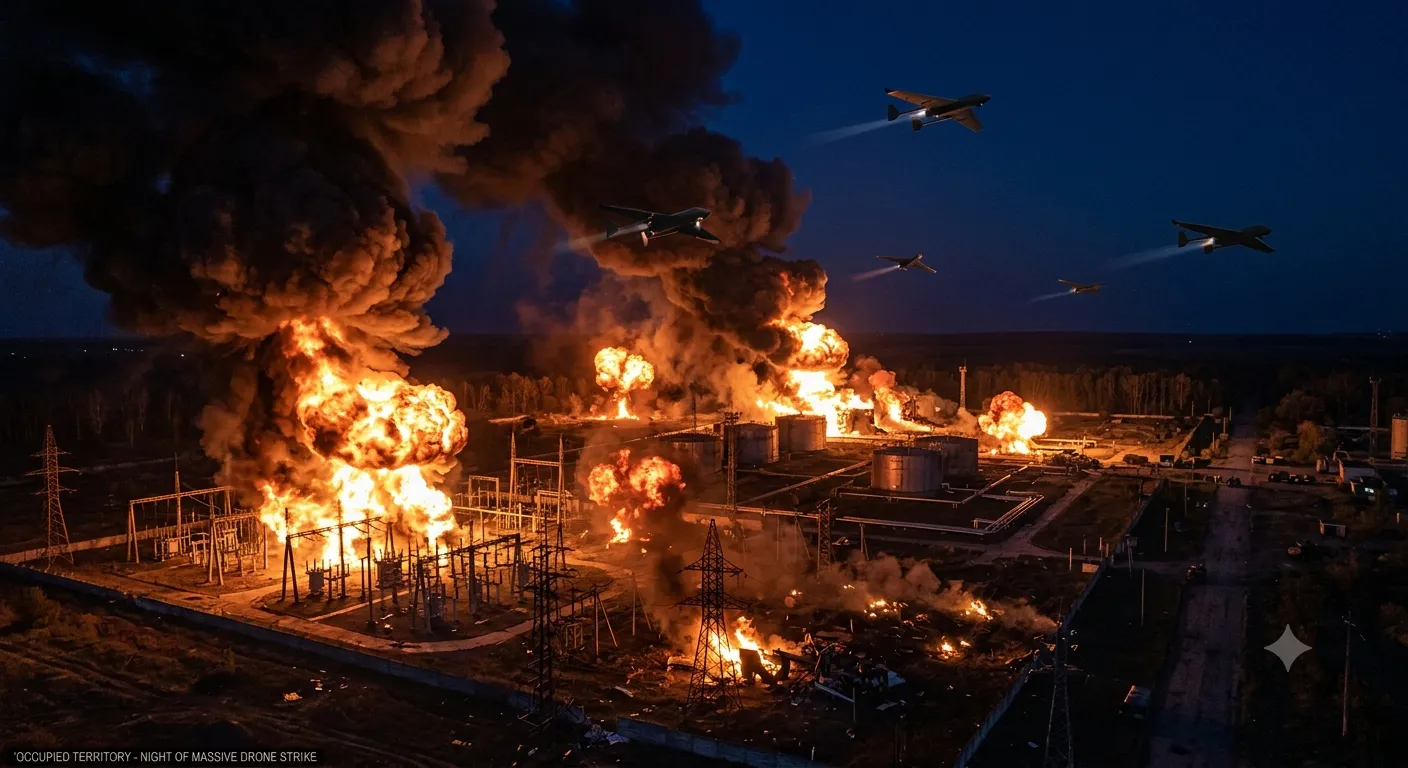
According to Ukraine’s Air Force, Russia launched 130 attack UAVs together with two Iskander-M ballistic missiles. Most of the drones were jet-powered.
Ukraine Intercepted Most of the Drones
By 08:30 on August 30, Ukrainian air defenses had reported shooting down or suppressing 125 of the 130 drones involved in that particular attack.
The intercepted drones included Shaheds, Gerbera systems and other types of UAVs.
But Some Weapons Still Reached Their Targets
Despite the high interception rate, Ukraine recorded hits at 13 locations during that overnight attack.
Falling debris was reported at another four locations.
Kyiv Has Been Under Repeated Pressure
The increase in jet-powered drones comes during a period of repeated Russian attacks on Kyiv.
Ukraine’s capital has experienced several consecutive days of drone attacks.
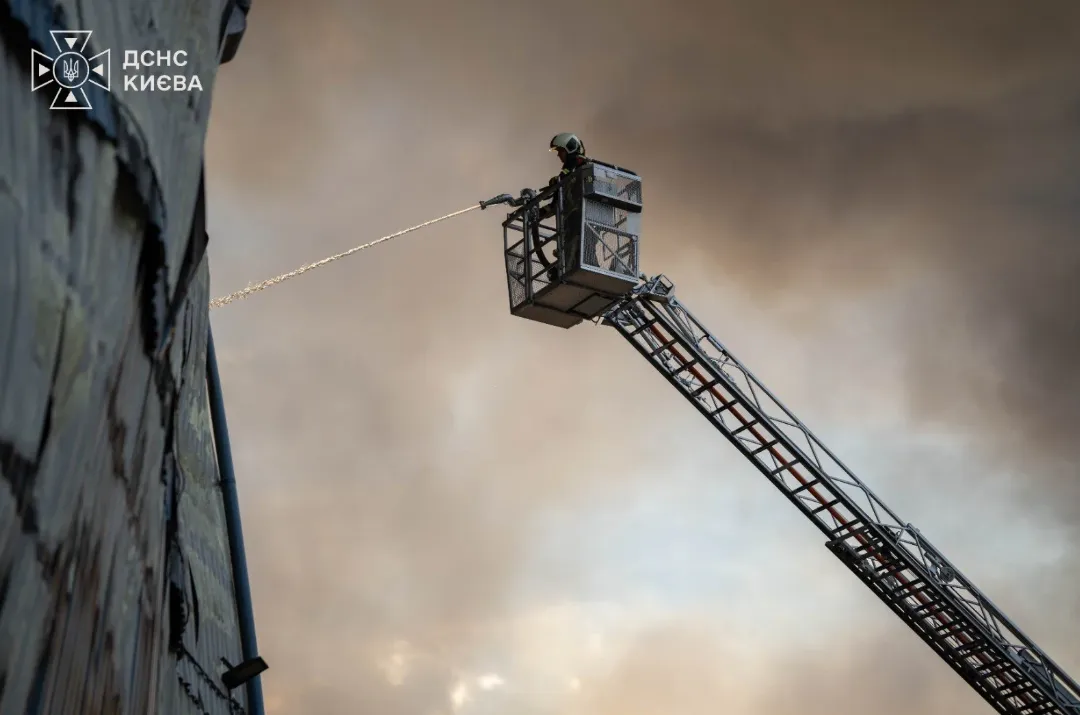
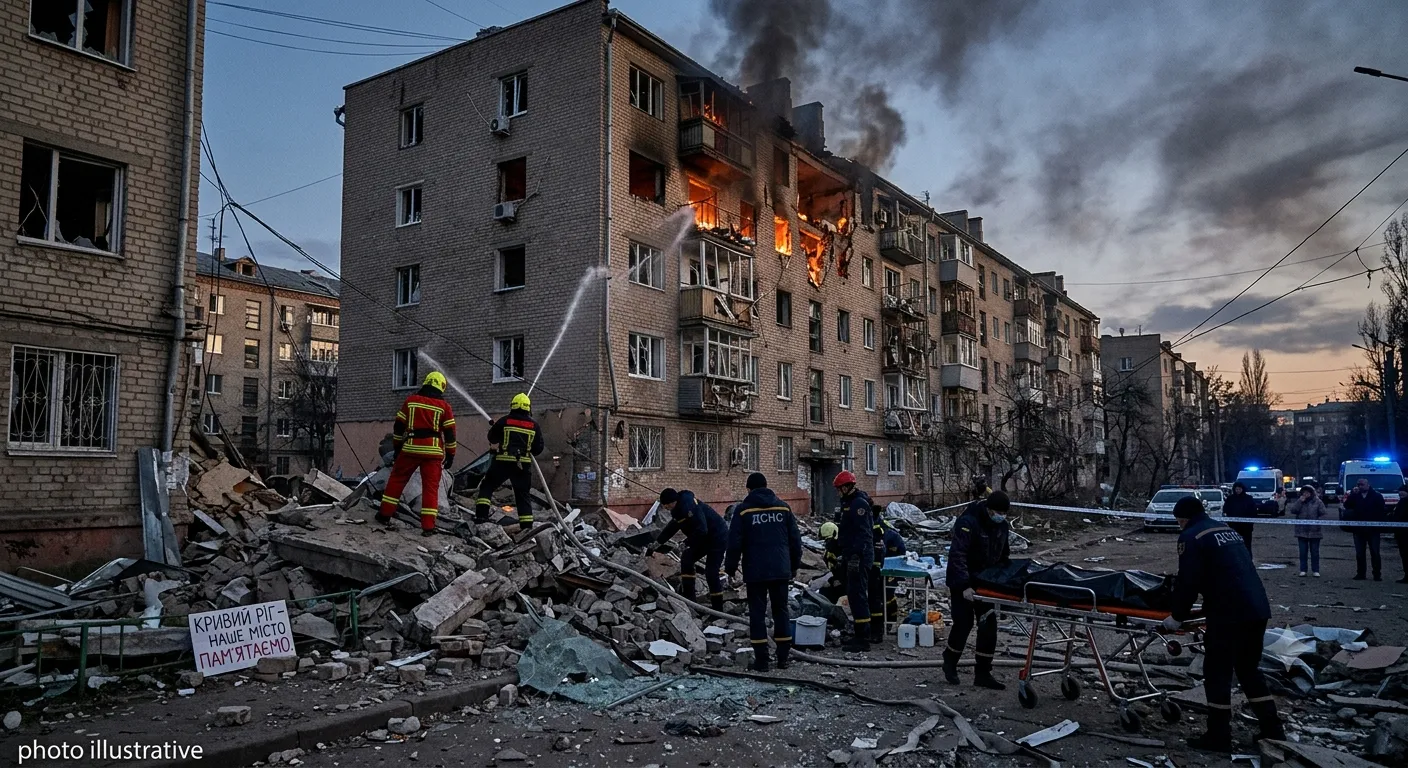
On August 30, emergency services reported a large fire in a non-residential building in the city’s Holosiivskyi district.
The New Drones Can Be Used Against Distant Targets
The reported capabilities of jet-powered systems make them potentially useful against targets far from the immediate front line.
Their speed and range allow Russia to threaten infrastructure deep inside Ukraine.
The Threat Is Not Limited to Military Targets
Russian drones have repeatedly struck or damaged civilian infrastructure, businesses, residential areas and transport facilities.
The broader drone campaign therefore affects ordinary civilian life across Ukraine.
Production Speed Is Becoming Important
Beskrestnov’s comments point to another aspect of the drone war: production tempo.
If Russia can manufacture drones and use them almost immediately, it may be able to sustain large attack waves without building enormous stockpiles.
This Could Support Continuous Attacks
A rapid production-to-launch cycle could help Russia maintain a steady tempo of attacks.
Instead of relying primarily on accumulated reserves, new production could continually feed operational units.
Ukraine Is Facing a Moving Target
The development of faster drones means Ukrainian defenses must continue adapting.
Systems designed to counter slower UAVs may face different requirements when confronted with faster, more maneuverable targets.
Electronic Warfare Remains Important
Ukraine’s response to Russian drones includes electronic warfare as well as conventional air-defense systems.
During large attacks, UAVs can be destroyed physically or neutralized through electronic means.
Ukraine Uses Multiple Layers of Defense
The country’s air-defense network includes aircraft, surface-to-air missile units, electronic warfare teams, mobile fire groups and unmanned systems.
These layers work together to detect and neutralize incoming threats.
The Numbers Tell a Larger Story
The reported figures provide a clear indication of the trend:
July: approximately 1,500 jet-powered Shaheds.
August: more than 2,500.
That is more than 1,000 additional jet-powered drones used in one month.
Russia Is Scaling the New Drone Type Quickly
The increase suggests that Russia is no longer treating jet-powered drones as a limited experimental capability.
Their growing numbers indicate that they are becoming a regular component of the Russian strike arsenal.
The Production Date Is Significant
A drone manufactured on August 15 and subsequently used against Ukraine would illustrate a remarkably short production-to-combat cycle.
However, the available information concerns an individual fragment and should not be taken as proof that every Russian drone follows the same schedule.
Ukraine Has Been Studying the New Threat
Ukrainian military and technology specialists have increasingly focused on identifying and understanding Russia’s new drone variants.
The objective is to develop ways to detect and intercept them more effectively.
Intelligence Has Identified New Russian Systems
Ukraine’s Main Directorate of Intelligence previously reported the emergence of the Geran-4 jet-powered drone.
The system is part of Russia’s broader effort to develop faster unmanned strike capabilities.
The Drone War Is Becoming More Technological
The evolution from relatively slow Shahed drones toward faster systems is one part of a broader transformation of the air war.
Both sides are continuously developing new drones, electronic warfare systems and counter-drone technologies.
Russia Is Also Using Decoys
The Russian attack package can include drones intended to distract Ukrainian defenses.
This makes it more difficult to determine which targets pose the greatest immediate danger.
A Large Attack Can Exhaust Defenses
Even when the majority of drones are intercepted, a large number of simultaneous targets can put pressure on air-defense crews and ammunition stocks.
This is one reason Russia has increasingly relied on mass drone attacks.
Ukraine’s High Interception Rate Does Not Remove the Threat
The August 30 attack illustrates the point.
Ukraine reported neutralizing 125 of 130 drones, yet strikes were still recorded at multiple locations.
Falling Debris Creates Additional Risks
A drone destroyed or suppressed in the air can still produce dangerous debris.
Fragments can damage buildings and vehicles or injure people on the ground.
Civilian Areas Remain Vulnerable
The continuing attacks demonstrate that air-defense battles do not occur only over military facilities.
Debris and individual drones can reach populated areas.
Kyiv Has Experienced This Repeatedly
The capital has seen repeated drone attacks, including incidents that caused fires and damage to non-residential buildings.
Emergency services continue responding to these incidents.
The Scale of the Campaign Is Increasing
The jump from 1,500 to more than 2,500 jet-powered drones in one month is significant because it reflects both a change in the type of weapons Russia is using and an increase in their frequency.
What This Means for Ukraine
Ukraine now faces an aerial threat that is simultaneously larger, faster and more diverse.
Defending against it requires continued development of multiple types of air-defense and counter-drone technologies.
The Threat Could Continue Growing
Beskrestnov’s figures suggest that the use of jet-powered drones is still expanding.
If production continues to increase, Ukraine could face even larger numbers of these systems in future attack waves.
The War Is Driving Rapid Drone Innovation
The conflict has become a major testing ground for unmanned technology.
Both Russia and Ukraine are adapting drones to overcome the other side’s defenses.
Jet Propulsion Is One of Those Adaptations
For Russia, adding jet propulsion offers a way to increase speed and potentially make interception more difficult.
For Ukraine, that creates an incentive to develop faster detection and interception technologies.
The Race Is Also About Cost
Large-scale drone warfare is partly a contest over economics.
Russia can launch hundreds of relatively inexpensive UAVs in a single attack, forcing Ukraine to use potentially more expensive defensive systems.
Air Defense Must Become More Efficient
The long-term challenge for Ukraine is therefore not simply to intercept every drone.
It also needs cost-effective ways of dealing with large numbers of increasingly sophisticated UAVs.
The August Figures Are an Important Warning
The increase from roughly 1,500 to more than 2,500 jet-powered drones in one month shows that this is no longer a marginal part of Russia’s air campaign.
The numbers are growing rapidly.
The Situation Is Still Developing
The figures for August were reported on August 30, meaning the month was not necessarily fully over when the statement was made.
The exact final monthly total could therefore change.
The Numbers Come From a Ukrainian Adviser
The figures were provided by Serhii Beskrestnov, a Ukrainian presidential adviser on technological defense issues.
They should therefore be understood as a Ukrainian assessment rather than an independently audited Russian production or launch count.
Why the Figure Is Still Significant
Even if the exact count is later revised, the reported increase indicates a substantial expansion in Russia’s use of jet-powered attack drones.
The trend is consistent across multiple reports.
Russia Is Moving Toward Faster Mass Attacks
The combination of increasing numbers and greater speed could become an important feature of Russia’s future aerial campaign.
Ukraine will have to adapt its defenses accordingly.
The New Threat Is Already Operational
This is not simply a prototype being tested.
Ukraine is already facing jet-powered Russian drones in regular attacks.
The reported August figures suggest their operational use has expanded rapidly.
The Air War Is Entering Another Phase
The growing presence of jet-powered drones represents another stage in the evolution of the Russia-Ukraine air war.
What began with relatively simple mass UAV attacks is becoming increasingly complex.
Ukraine’s Defense Will Continue to Adapt
Ukrainian forces have repeatedly modified their approach to Russian drones.
The emergence of faster UAVs is likely to accelerate the development of new interception and detection systems.
The Human Impact Remains the Same
Regardless of the technology involved, the purpose of the attacks remains to strike targets inside Ukraine.
For civilians, the result is continued air-raid alerts, disrupted sleep, damaged buildings and the persistent risk of injury.
Russia Is Turning Jet-Powered Drones Into a Mass Weapon
The reported increase from around 1,500 jet-powered Shahed attacks in July to more than 2,500 in August points to a rapid expansion of Russia’s use of faster attack drones.
According to Serhii “Flash” Beskrestnov, Russia is increasingly launching these systems almost immediately after they leave production, while Ukraine is simultaneously facing large mixed waves of conventional Shaheds, jet-powered drones and decoys.
The development matters because speed changes the air-defense equation. Ukraine’s defenders must detect and respond to targets that can reach their destination faster, while also dealing with attacks involving hundreds of drones at once. The August figures suggest that jet-powered UAVs are becoming a significant and growing element of Russia’s aerial campaign against Ukraine.