How Does the Ukrainian Economy Work? Key Industries, Jobs, Trade and Business

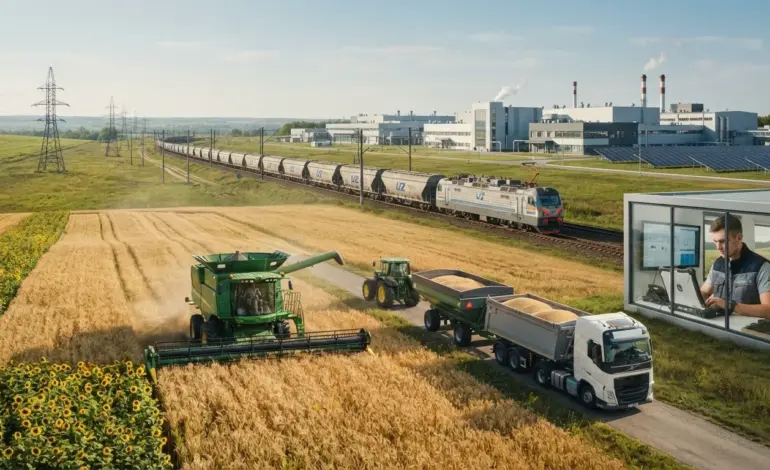
 Ukraine has one of the largest economies in Eastern Europe, with a diverse mix of agriculture, manufacturing, energy, technology, construction, trade, and services.
For many people outside the country, the Ukrainian economy is best known for two things: its enormous agricultural potential and its growing technology sector. Both are important, but they represent only part of a much broader economic system.
Ukraine is also a major producer of industrial goods, an important European supplier of agricultural commodities, a country with substantial energy infrastructure, and home to millions of small businesses and entrepreneurs.
Understanding how these sectors fit together provides a much clearer picture of how the Ukrainian economy works—and how it is changing as Ukraine integrates more closely with the European Union.
A Diverse Economy at the Crossroads of Europe
Ukraine’s geographical position has always influenced its economy.
The country sits between the European Union, the Black Sea region, and the wider markets of Eastern Europe and Asia. It has extensive agricultural land, significant mineral resources, large industrial centers, major transport corridors, ports, and a highly educated workforce.
Before Russia’s full-scale invasion in 2022, Ukraine’s economy combined a large industrial base with agriculture, services, retail, construction, and a rapidly developing technology sector.
The war has dramatically changed how these parts of the economy operate.
Businesses have had to adapt to damaged infrastructure, energy shortages, disrupted supply chains, labor shortages, and changing export routes. At the same time, new industries have emerged or expanded, particularly defense technology, cybersecurity, engineering, and reconstruction-related businesses.
Agriculture: One of Ukraine’s Most Important Economic Sectors
Agriculture is one of the sectors most strongly associated with Ukraine—and for good reason.
The country has exceptionally large areas of fertile agricultural land, including extensive chernozem, or black-earth soils.
Ukraine produces and exports major quantities of:
- wheat;
- corn;
- barley;
- sunflower seeds;
- sunflower oil;
- rapeseed;
- soybeans;
- poultry and other agricultural products.
Agriculture is important not only because of farming itself, but because it supports a much wider chain of economic activity.
Farmers require machinery, fertilizers, fuel, logistics, storage, insurance, financing, processing facilities, and transport services.
This means agriculture creates economic activity far beyond the farm.
Ukraine’s agricultural exports are also important to international food markets. The European Union is now Ukraine’s largest trading partner, and agricultural products such as cereals, vegetable oils, and oilseeds are among Ukraine’s major exports to the EU.
Manufacturing: More Than Heavy Industry
Ukraine inherited a substantial industrial base from the Soviet period, but today’s manufacturing sector is more diverse than the stereotype of Soviet-era heavy industry suggests.
Important areas include:
- metallurgy;
- machinery;
- food processing;
- chemicals;
- pharmaceuticals;
- automotive components;
- electrical equipment;
- engineering;
- building materials;
- defense production.
Steel and iron products have historically been major Ukrainian exports.
At the same time, Ukrainian manufacturers have increasingly moved toward more specialized production, including components, machinery, electronics, engineering products, and defense technologies.
The war has accelerated this transformation.
Companies have relocated production away from threatened areas, rebuilt damaged facilities, diversified suppliers, and developed products specifically adapted to wartime conditions.
Ukraine’s Energy Sector
Energy is one of the foundations of any modern economy, and Ukraine has a particularly complex energy system.
The country has historically relied on:
- nuclear power;
- thermal power;
- hydroelectricity;
- natural gas;
- coal;
- renewable energy.
Nuclear power has traditionally played an especially important role in Ukraine’s electricity generation.
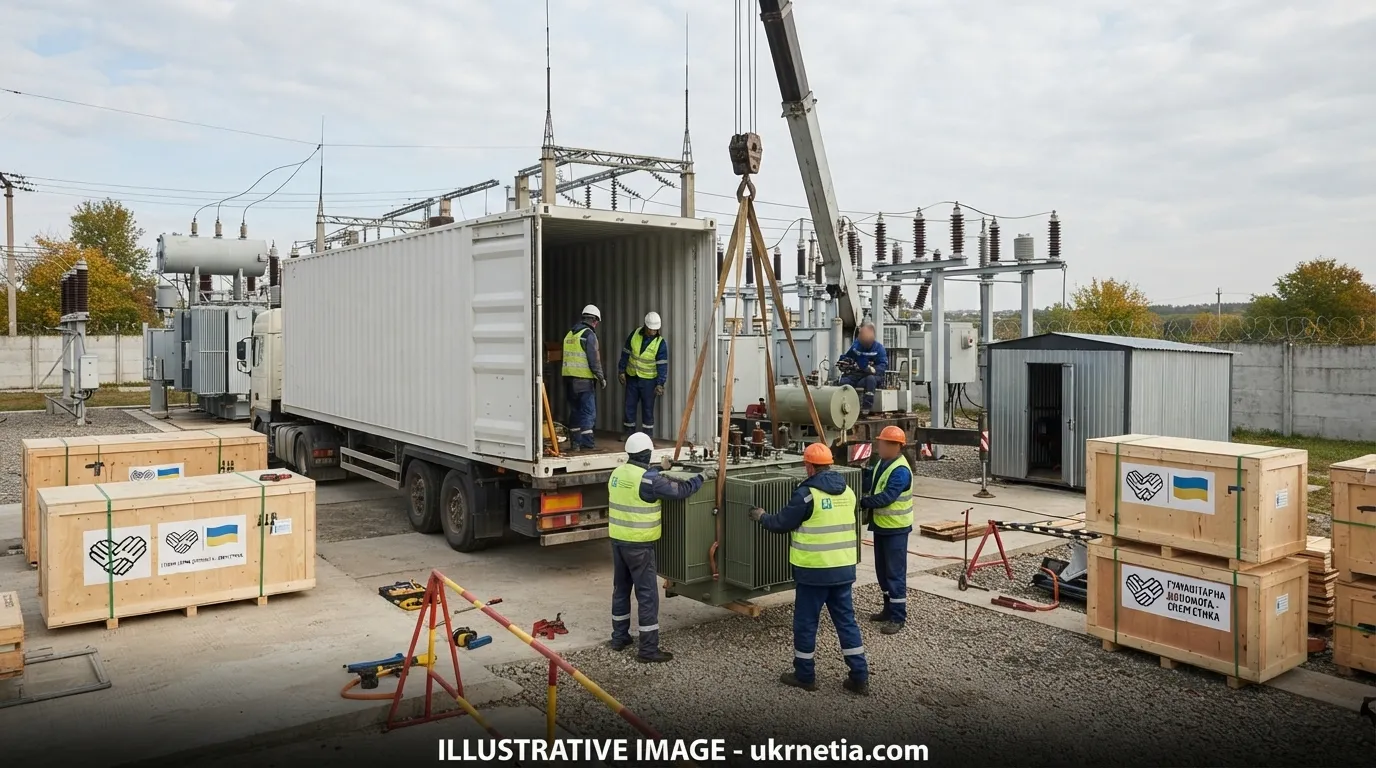
At the same time, the energy sector has been one of the major targets of Russia’s attacks. Power generation, transmission networks, substations, and district heating systems have suffered extensive damage.
The World Bank’s latest assessment identifies the energy sector as one of the areas with the largest reconstruction needs, estimated at nearly $91 billion over the coming decade.
This creates an enormous challenge, but also an opportunity to modernize the energy system.
Future investment is likely to involve greater decentralization, renewable generation, energy storage, grid modernization, and improved integration with the European electricity market.
IT and the Digital Economy
Ukraine has developed a strong technology sector over the past two decades.
Ukrainian companies and specialists work in areas including:
- software development;
- artificial intelligence;
- cybersecurity;
- fintech;
- cloud computing;
- gaming;
- robotics;
- engineering;
- digital services.
A significant part of Ukraine’s technology industry is internationally oriented.
Ukrainian IT professionals frequently work with clients and companies in North America and Europe, meaning that the sector is closely connected to global markets.
The technology industry has also demonstrated considerable resilience during the war. Many companies relocated employees, established distributed teams, and continued serving international customers despite the disruption.
Ukraine’s growing defense-tech ecosystem has added another dimension to the sector, combining software development, engineering, artificial intelligence, robotics, drones, communications, and manufacturing.
Small Business and Entrepreneurship
Large corporations often attract the most attention when people discuss an economy, but small and medium-sized businesses are essential to Ukraine.
They operate in almost every part of the economy:
- retail;
- restaurants;
- transport;
- construction;
- agriculture;
- professional services;
- manufacturing;
- technology;
- tourism;
- education.
Small businesses provide employment and help local economies continue functioning, particularly during wartime.
Entrepreneurs have also demonstrated considerable flexibility. Businesses have relocated, changed suppliers, moved online, modified products, and found new export markets.
For many Ukrainians, entrepreneurship is not simply about building a large company. It can mean running a small shop, workshop, farm, agency, restaurant, online business, or professional practice.
This broad entrepreneurial sector gives the economy an important degree of flexibility.
Employment and the Ukrainian Workforce
Ukraine’s labor market has been profoundly affected by the war.
Millions of people have been displaced, some workers have left the country, and many businesses face shortages of qualified employees.
The World Bank identifies labor shortages, displacement, brain drain, and the need to retrain people returning from military service among the major challenges facing the economy.
At the same time, Ukraine has a large pool of highly educated workers.
The country has traditionally produced significant numbers of engineers, programmers, scientists, medical professionals, teachers, and skilled industrial workers.
The future labor market will therefore depend not only on creating jobs but also on matching workers with the rapidly changing needs of the economy.
Exports: What Does Ukraine Sell to the World?
International trade is central to the Ukrainian economy.
Major Ukrainian exports include:
- agricultural products;
- vegetable oils;
- cereals;
- iron and steel;
- ores;
- machinery and equipment;
- electrical products;
- chemicals;
- IT and other professional services.
The composition of exports has changed significantly because of the war.
Before 2022, Ukrainian Black Sea ports were central to international trade. Russia’s invasion disrupted those routes and forced Ukraine to develop alternatives through European roads, railways, inland waterways, and eventually renewed maritime export routes.
The EU-Ukraine Solidarity Lanes became particularly important. By March 2026, they had enabled the movement of approximately 217 million tonnes of Ukrainian goods since their launch in May 2022.
The European Union Has Become Ukraine’s Main Trading Partner
The European Union plays an increasingly important role in Ukraine’s economy.
The EU accounted for approximately 65% of Ukraine’s trade in goods in 2025, making it by far the country’s largest trading partner. Total EU-Ukraine trade in goods reached approximately €68.2 billion that year.
This relationship goes beyond simple imports and exports.
Ukraine is gradually aligning its regulations, technical standards, customs procedures, and economic institutions with European rules as part of its path toward EU membership.
The revised EU-Ukraine Deep and Comprehensive Free Trade Area entered into force in October 2025, creating a longer-term framework for deeper economic integration and gradual alignment with EU production standards.
For Ukrainian businesses, this creates access to a huge nearby market—but it also requires them to meet increasingly demanding European standards.
Ukraine Imports European Goods and Technology
Trade works in both directions.
Ukraine imports large quantities of:
- machinery;
- vehicles;
- electrical equipment;
- pharmaceuticals;
- fuels;
- industrial equipment;
- consumer goods;
- technologies.
European imports are particularly important for reconstruction and industrial modernization.
The EU’s exports to Ukraine reached €46.5 billion in 2025, with machinery, electrical equipment, mineral fuels, and other manufactured products among the major categories.
This creates a relationship in which Ukraine supplies agricultural goods, raw materials, manufactured products, and services while importing machinery, technology, energy products, vehicles, and other goods.
War Has Reshaped the Economy
It is impossible to understand the modern Ukrainian economy without considering the war.
Russia’s full-scale invasion has damaged factories, farms, energy infrastructure, housing, transport networks, ports, and businesses.
The latest joint assessment by the Government of Ukraine, World Bank, European Commission, and United Nations estimates that the total cost of Ukraine’s reconstruction and recovery needs will reach almost $588 billion over the next decade.
The largest long-term needs are currently estimated in transport, energy, housing, commerce and industry, and agriculture.
Yet the economic story is not simply one of destruction.
Ukrainian companies have continued operating, adapting, relocating, rebuilding, and developing new products.
The war has also accelerated investment in defense technology, energy resilience, domestic manufacturing, logistics, cybersecurity, and dual-use technologies.
Reconstruction Could Become a Major Economic Sector
Reconstruction is likely to become one of the largest economic projects in modern Ukrainian history.
It will require investment in:
- housing;
- roads and railways;
- ports;
- electricity generation and distribution;
- water systems;
- industrial facilities;
- schools and hospitals;
- telecommunications;
- agriculture;
- environmental remediation.
The World Bank estimates that transport, energy, and housing alone account for well over $275 billion of long-term reconstruction needs.
This means reconstruction will not simply involve replacing what was destroyed.
It could provide an opportunity to build newer infrastructure, modernize industries, introduce more efficient technologies, and integrate Ukraine more deeply into European supply chains.
How the Main Parts of the Economy Fit Together
The Ukrainian economy works as an interconnected system rather than a collection of isolated industries.
A simplified example illustrates this.
A Ukrainian farmer grows wheat.
The wheat may be harvested using Ukrainian or imported machinery, transported by Ukrainian logistics companies, processed by a food manufacturer, stored in a warehouse, and exported through a Ukrainian port or European transport route.
Banks finance parts of the process.
IT companies provide software.
Energy companies provide electricity.
Small businesses provide local services.
European companies may purchase the final product.
The same interconnected system exists in manufacturing, construction, technology, and almost every other sector.
What Could Ukraine’s Economy Look Like in the Future?
Ukraine’s future economic model is likely to be different from the one that existed before the full-scale invasion.
The country has the potential to combine several advantages:
Agriculture can remain a major export industry while becoming more focused on processing and higher-value products.
Manufacturing can become more integrated into European supply chains.
IT and technology can expand into artificial intelligence, cybersecurity, robotics, defense technology, and advanced engineering.
Energy can become more decentralized and resilient.
Small businesses can benefit from a larger European market.
Reconstruction can create demand for construction, engineering, manufacturing, logistics, energy, and technology.
And deeper integration with the European Union can gradually change the rules under which Ukrainian businesses operate.
Looking Ahead
The Ukrainian economy is neither purely agricultural nor primarily technological.
It is a diverse economy built around agriculture, manufacturing, energy, services, trade, technology, and millions of businesses and workers.
The war has created enormous economic damage and serious challenges, particularly in energy, infrastructure, labor, and investment. But it has also accelerated changes that were already underway: closer integration with Europe, greater emphasis on technology, stronger entrepreneurship, and a search for more resilient production and energy systems.
The European Union is increasingly central to Ukraine’s trade and economic development, while reconstruction could become one of the largest investment projects in Europe.
For international observers, the most important thing to understand is that Ukraine’s economic story is not simply about recovering what was lost.
It is increasingly about what kind of economy Ukraine will build next—and how closely that economy will become connected to the European market.