Ukraine Expands Long-Range Drone Operations Deep Inside Russia


KEY TAKEAWAYS
- Ukraine continues expanding its long-range drone campaign against targets deep inside Russia.
- Recent strikes have focused on oil refineries, logistics hubs, and industrial facilities linked to Russia’s war effort.
- Domestically developed drone technology has become one of Ukraine’s most important military innovations.
- Military analysts say long-range drone operations are reshaping the strategic balance of the conflict.
Ukraine’s long-range drone campaign has become one of the most closely watched developments of the war. Recent strikes targeting oil refineries, logistics facilities, and industrial infrastructure hundreds of kilometers inside Russia demonstrate Kyiv’s growing ability to project force far beyond the front line. Military experts increasingly view these operations as a strategic tool designed to weaken Russia’s military and economic capacity rather than simply deliver symbolic attacks.
A New Dimension of Modern Warfare
When Russia launched its full-scale invasion in 2022, Ukraine had only limited capabilities to strike military-related targets deep inside Russian territory.
Over the past four years, however, Ukraine has invested heavily in domestic drone development, creating a rapidly expanding industry capable of producing increasingly sophisticated long-range unmanned aircraft.
Today’s operations demonstrate how drone warfare has evolved from supporting frontline troops to becoming an important strategic capability in its own right.
Why Energy Infrastructure Matters
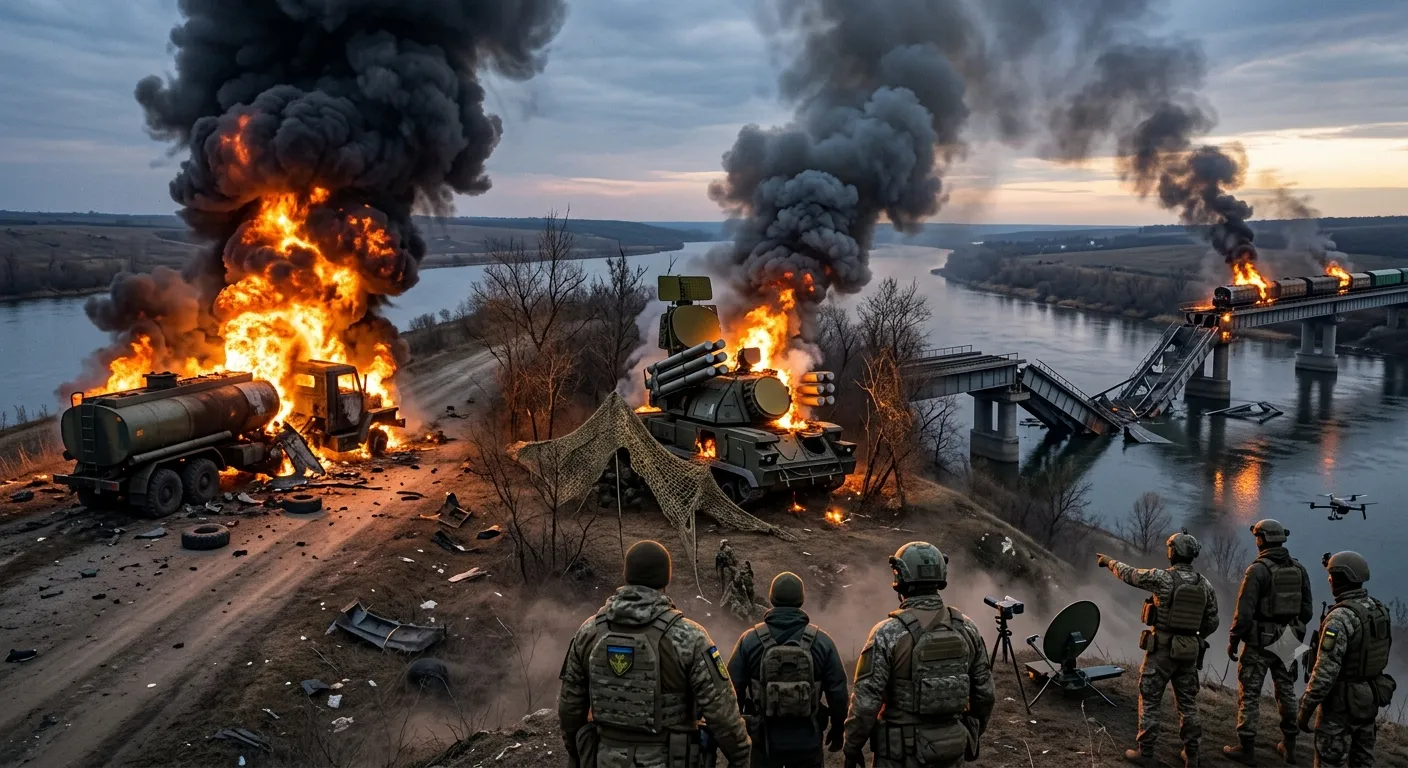
Many recent Ukrainian strikes have targeted oil refineries, fuel depots, pumping stations, and logistics centers.
Military analysts argue that these facilities play a critical role in sustaining Russia’s armed forces by supplying fuel, transportation, and industrial production needed for military operations.
By disrupting this infrastructure, Ukraine aims to increase logistical costs, complicate military planning, and reduce the efficiency of Russia’s war economy rather than focusing solely on battlefield targets. Recent attacks reportedly affected several oil facilities and logistics sites across multiple Russian regions.
Domestic Innovation Drives Rapid Progress
One of the most remarkable aspects of Ukraine’s drone campaign is that much of the technology has been developed domestically.
Ukrainian engineers, technology companies, and defense manufacturers have significantly expanded production while continuously improving drone range, navigation systems, payload capacity, and operational reliability.
The rapid pace of innovation reflects the broader transformation of Ukraine’s defense industry, where civilian technology expertise increasingly contributes to military capabilities.
Defense specialists note that the conflict has accelerated technological development at a pace rarely seen in modern warfare.
Strategic Effects Beyond Physical Damage
Long-range drone operations are designed to achieve more than the destruction of individual facilities.
Repeated attacks can force an opponent to relocate air-defense systems, invest additional resources in protecting infrastructure, interrupt industrial activity, and create uncertainty across large geographic areas.
Protecting hundreds of potential targets simultaneously presents a significant challenge, requiring difficult decisions about where defensive resources should be concentrated.
This strategic pressure has become an increasingly important element of the broader conflict.
The Future of Drone Warfare
Military experts increasingly believe that long-range drones will remain a defining feature of future conflicts.
Compared with traditional missiles, drones can often be produced more quickly, adapted more easily, and deployed in larger numbers.
Ukraine’s experience is already attracting international attention from governments, defense industries, and military planners seeking to understand how unmanned systems are changing modern warfare.
As technology continues advancing, drone operations are expected to play an even greater role alongside conventional military capabilities.
WHY IT MATTERS
Ukraine’s expanding drone program illustrates how technological innovation can reshape the battlefield. Long-range unmanned systems are no longer simply tactical weapons—they are becoming strategic assets capable of influencing logistics, industrial production, and military planning far from the front lines. The lessons emerging from Ukraine are already influencing defense thinking well beyond Eastern Europe.
WHAT’S NEXT?
Military analysts expect both Ukraine and Russia to continue investing heavily in long-range unmanned systems, electronic warfare, and air-defense technologies. As drone capabilities evolve, the competition between increasingly sophisticated offensive systems and defensive countermeasures is likely to become one of the defining characteristics of modern warfare.
RELATED TOPICS
- Drone Warfare
- Defense Technology
- Military Innovation
- Long-Range Strikes
- Defense Industry