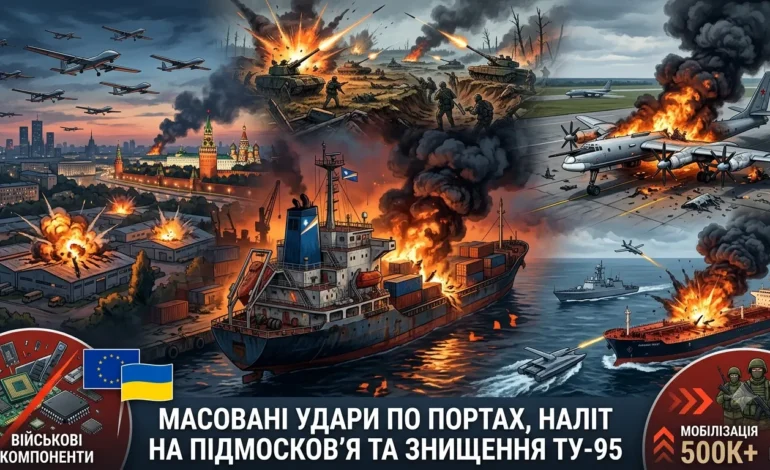
Massive strikes on ports, raid on moscow region, and destruction of tu-95: key war developments as of july 18

KYIV — July 18, 2026. The war in Ukraine has entered a phase of exceptionally high-intensity strikes deep into the rear of both sides. Over the past 24 hours, Russian forces made another attempt to paralyze Ukrainian maritime logistics, while the Armed Forces of Ukraine responded with a series of coordinated and highly effective operations deep inside the Russian Federation—stretching from the Moscow region to strategic airfields and shipping lanes.
Here is an in-depth review of the main events on the frontline, new warfare tactics, and the international response.
The Battle for Exports: Missile Terror in Odesa Region and Strike on Passenger Train
The Russian army continues its attempts to undermine Ukraine’s economic potential by focusing its efforts on destroying Black Sea infrastructure. The Odesa region has once again found itself under a massive combined attack.
According to the Air Force of the Armed Forces of Ukraine, the enemy deployed around 90 attack drones, alongside ballistic missiles and “Oniks” supersonic anti-ship missiles. Despite active resistance from Ukrainian air defense systems, a direct hit was recorded at one of the port terminals.
A defining feature of this attack was the damage inflicted upon a civilian foreign vessel sailing under the flag of the Marshall Islands. The explosion claimed the life of one crew member and left several other sailors with injuries of varying severity. Ukraine’s Ministry of Infrastructure has already declared the incident a direct act of piracy and a blatant attempt to intimidate international shippers operating within the Ukrainian maritime corridor.
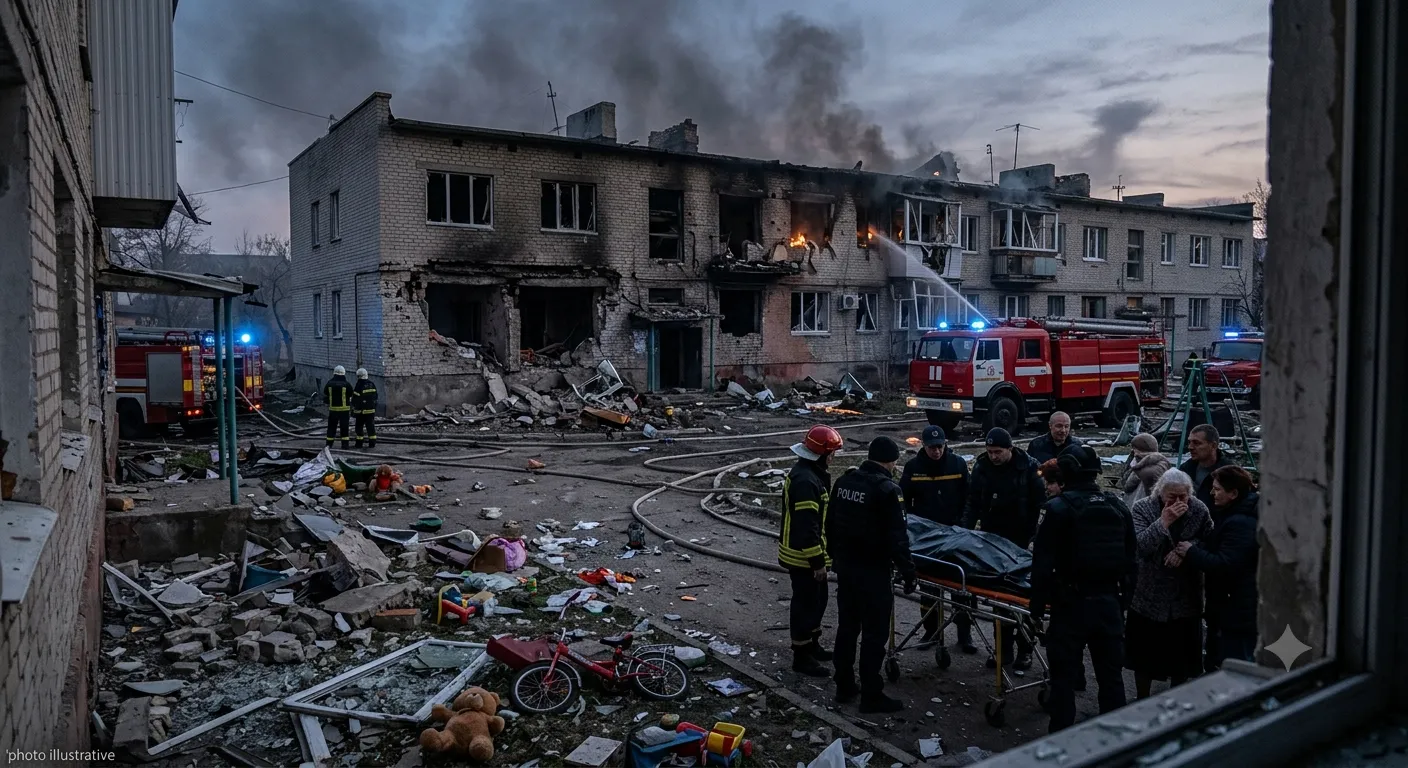
Beyond the south, the enemy also targeted railway infrastructure. In the Zaporizhzhia region, a Russian kamikaze drone struck a passenger train. The blast wave and flying debris damaged several carriages. Passengers were promptly evacuated, and railway traffic in the area has since been restored.
Burning Moscow Suburbs and the Liquidation of a Tu-95: The Ukrainian Drone Response
The Ukrainian defense industry, in tandem with military agencies, has demonstrated a significant increase in the range and precision of its unmanned systems. Several strategic facilities deep within the Russian Federation suffered severe damage simultaneously.
Strike on Russia’s Logistics Heart
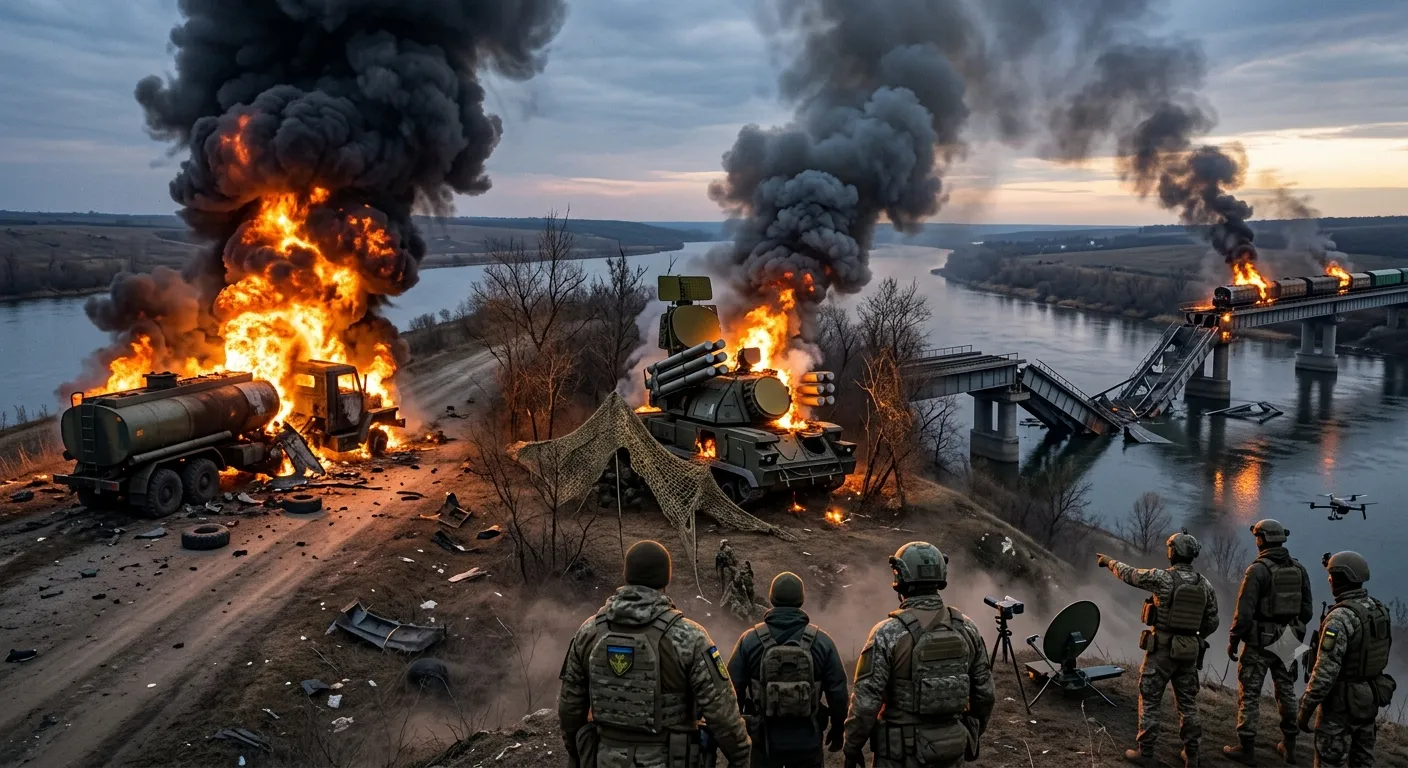
Long-range kamikaze drones attacked a major oil depot and strategic logistics warehouses in the Moscow region, located more than 500–700 km from the Ukrainian border. Local residents reported a series of powerful explosions, after which massive fires broke out at the facilities.
In his evening address, Ukrainian President Volodymyr Zelenskyy confirmed the success of the operation, emphasizing that these bases played a critical role in supplying the Russian military-industrial complex.
“These were not just fuel depots. They stored components that Russia used to assemble the missiles and drones that fly toward our cities every day. Now, they no longer have this resource,” the Head of State emphasized.
One Strategic Bomber Down
Russian aviation suffered an even more painful blow at the Engels military airfield in the Saratov region (roughly 800 km from the frontline). As a result of a special operation organized by the Security Service of Ukraine (SBU), a Tu-95 strategic bomber—a key aircraft of Russia’s “nuclear triad”—was completely destroyed right on the tarmac.
The loss of a Tu-95 is highly damaging for the Kremlin, as the production of new aircraft of this class is currently impossible in Russia, and these very planes are used to launch Kh-101 cruise missiles at Ukraine.
Hunting the “Shadow Fleet” and Explosions in Crimea
The Unmanned Systems Forces (USF) of the AFU, alongside the SBU, conducted an unprecedented large-scale operation in the Black Sea, targeting the economic arteries of the aggressor.
A massive assault involving naval and aerial drones successfully struck the Russian patrol ship Svetlyak. However, the primary targets were vessels financing the Kremlin’s war effort. The strike hit 2 large oil tankers and, according to various estimates, between 11 and 13 vessels of Russia’s so-called “shadow fleet.” Russia relies on these ships to illegally export oil in defiance of international energy sanctions. Experts note that this operation will significantly complicate the logistics of Russian exports in the Black Sea region.
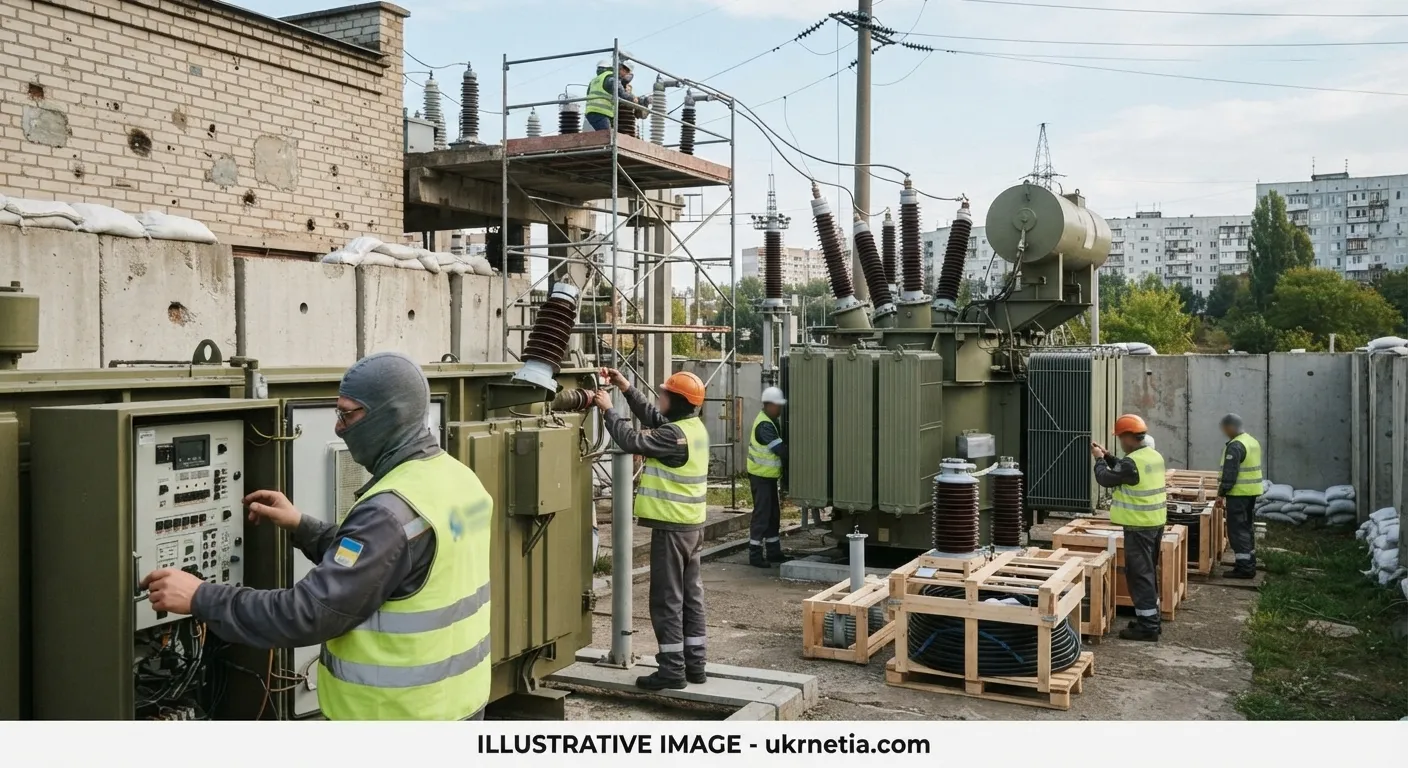
Concurrently, tensions flared up in occupied Crimea. A series of explosions rocked the vicinity of the Gvardeyskoye airbase. Preliminary reports indicate direct hits on aircraft parking areas and ammunition depots. Furthermore, the drone raid knocked out two key electrical substations on the peninsula, causing partial blackouts across several districts.
Frontline Dynamics and the Kremlin’s Mobilization Plans
The situation along the line of combat contact remains consistently difficult. Commander-in-Chief of the AFU Oleksandr Syrskyi reported that the enemy continues to exert pressure across multiple sectors, attempting to execute its plan of establishing a so-called “buffer zone” in the border areas of northern Ukraine. Ukrainian units are holding the line, inflicting heavy personnel and equipment casualties on the enemy, though Russian forces retain an advantage in artillery ammunition.
Amidst staggering losses on the battlefield, the Kremlin appears to be preparing for deeply unpopular domestic decisions. According to analytical data from the Center for Countering Disinformation (CCD), the Russian leadership has drafted a plan for a massive wave of mobilization, set to be announced in the autumn of 2026.
It is anticipated that Russia aims to forcibly conscript over 500,000 citizens to offset battlefield losses and sustain new offensive operations.
The West Closes Loopholes: New EU Sanctions
While artillery duels rage on the battlefield, significant breakthroughs have occurred on the diplomatic front. The European Union has officially approved a new package of sanctions aimed at dismantling Russia’s technological supply chains.
The new restrictions completely shut down avenues for supplying foreign microchips and dual-use components that Russia had been importing through third countries. The sanctions are tailored to severely disrupt the production of:
-
Attack unmanned aerial vehicles (specifically the Shahed/Geran type);
-
“Iskander” operational-tactical ballistic missiles.
The EU hopes that these measures, paired with Ukraine’s military strikes on ammunition depots, will substantially lower the intensity of Russian missile strikes in the medium term.