Ukraine Reports Destruction of Two Russian Fighter Aircraft


KEY TAKEAWAYS
- Ukrainian forces have reported the destruction of two Russian fighter aircraft.
- The reported losses come amid continued Ukrainian strikes against Russian military aviation and infrastructure.
- Ukraine’s General Staff reported that Russia had lost one aircraft during the previous 24-hour period, although the exact aircraft type was not specified in the daily losses report.
- Separate Ukrainian reports have recently confirmed the destruction of a Russian Su-24M at the Saki airfield in occupied Crimea.
- The destruction of Russian aircraft is significant because combat aviation remains an important component of Russia’s ability to conduct strikes and support ground operations.
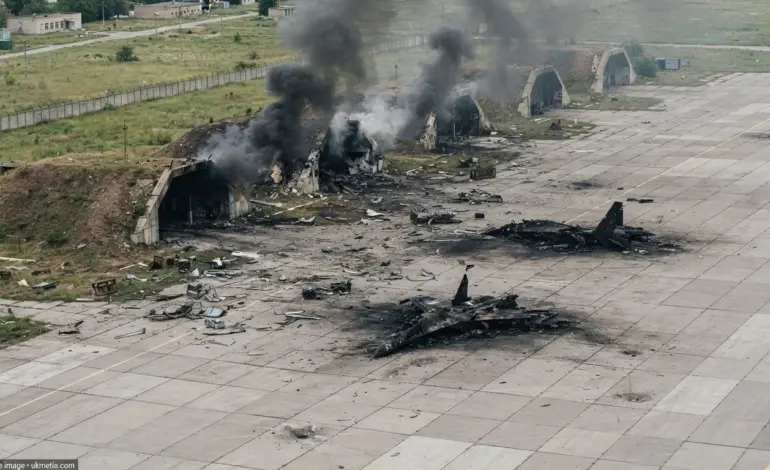
Ukrainian forces have reported another significant blow to Russian military aviation, with two Russian fighter aircraft reportedly destroyed. The reported losses come as Ukraine continues targeting Russian military infrastructure and aviation assets, although available official reports do not establish that both aircraft were lost during a single operation.
Two Russian Aircraft Reportedly Destroyed
Ukrainian forces have reported the destruction of two Russian fighter aircraft.
The claim comes amid an ongoing Ukrainian campaign against Russian military infrastructure, including airfields and aviation-related facilities.
The available information does not establish that both aircraft were destroyed at the same location or during the same strike.
Russian Aviation Has Suffered Continued Losses
Russia’s military aircraft losses have continued throughout the full-scale war.
Ukraine’s General Staff reported that Russian forces had lost another aircraft during the previous reporting period, bringing the total number of Russian aircraft losses recorded by Ukraine to 440 as of August 23.
These figures are Ukrainian estimates and may differ from independently verified losses.
A Recent Su-24M Loss in Crimea
One recently confirmed Ukrainian strike involved a Russian Su-24M bomber at the Saki airfield in occupied Crimea.
According to Ukrainian officials, the aircraft was destroyed during one of the earlier strikes against the airfield. Four pieces of airfield equipment were also reportedly destroyed.
The incident demonstrates Ukraine’s continuing ability to reach Russian aviation infrastructure in occupied territory.
Why Fighter Aircraft Matter
Russian combat aircraft perform several important roles.
They can provide support for ground forces, conduct reconnaissance and launch air-launched weapons.
Losses therefore reduce the number of aircraft available for operations and can force Russia to adjust how it deploys the remaining fleet.
Airfields Are Increasingly Important Targets
Ukrainian attacks on Russian airfields have become an important element of the war.
Aircraft are particularly vulnerable while parked on the ground, where maintenance, fuel and ammunition infrastructure can also become targets.
Damage to supporting infrastructure can sometimes be as significant as the loss of an individual aircraft.
Ukraine Is Targeting Military Aviation Infrastructure
Recent Ukrainian operations have focused not only on aircraft themselves but also on the infrastructure supporting Russian aviation.
This includes airfields, maintenance facilities and other military assets.
The objective is to reduce the effectiveness of Russian aviation over the longer term.
The Exact Aircraft Types Matter
The term “fighter aircraft” can cover several different types of Russian combat aircraft.
Russia operates fighters, fighter-bombers, attack aircraft and other specialized aviation platforms.
Without an official identification of the two aircraft referenced in the report, it would be premature to assign specific models to the losses.
Official Ukrainian Data Provides a Broader Picture
Ukraine’s daily General Staff reports provide estimates of Russian equipment losses.
As of August 23, Ukraine reported 440 Russian aircraft and 354 helicopters lost since the beginning of the full-scale invasion.
The figures are updated as Ukrainian authorities receive and verify information.
Independent Verification Remains Important
Claims about aircraft losses can be difficult to verify immediately.
Satellite imagery, photographs and other visual evidence can later provide additional confirmation.
For this reason, individual reports should be distinguished from losses that have been independently documented.
Russian Aviation Remains Operational
Despite substantial reported losses, Russia still possesses a large military aviation fleet.
The destruction of individual aircraft therefore does not mean that Russian aviation has been eliminated.
Instead, the cumulative effect can gradually reduce available aircraft and increase pressure on maintenance and operational planning.
The Cost of Replacing Aircraft Is High
Modern combat aircraft are expensive and complex systems.
Replacing them requires not only manufacturing new airframes but also engines, avionics, weapons systems and trained personnel.
Losses can therefore create long-term pressure on Russia’s military-industrial system.
Trained Pilots Are Another Constraint
Aircraft losses can also have consequences for trained aircrews.
Replacing an aircraft may be possible over time, but replacing experienced pilots and other specialized personnel is considerably more difficult.
This makes aviation losses potentially more significant than the number of airframes alone suggests.
Ukraine Has Increased Its Long-Range Capabilities
Ukraine has increasingly demonstrated an ability to strike targets far from the immediate front line.
This has expanded the range of military infrastructure that Russian forces must protect.
Airfields and logistics facilities therefore require additional defensive measures.
Russian Airfields Face a Growing Security Challenge
Protecting large airfields against modern Ukrainian weapons is difficult.
Aircraft need open areas for takeoff and landing, while shelters and support facilities require substantial infrastructure.
Dispersing aircraft and strengthening shelters can reduce vulnerability but also complicate operations.
The Impact Goes Beyond Two Aircraft
The destruction of two aircraft has a direct numerical effect on Russia’s fleet.
However, the broader impact may include damage to runways, maintenance facilities, fuel infrastructure and other assets associated with aviation operations.
Such secondary effects can increase the operational cost of an attack.
Ukraine’s Strategy Focuses on High-Value Targets
Russian combat aircraft are among the more valuable assets available to Moscow’s military.
Targeting such systems allows Ukraine to potentially create a disproportionate effect compared with attacks on less valuable equipment.
This is particularly important for a country facing a larger military opponent.
Aviation Losses Can Affect Front-Line Operations
Russian aircraft are used to support operations along the front.
If fewer aircraft are available or if commanders become more cautious about deploying them, this can affect the frequency and effectiveness of Russian air support.
The actual battlefield impact depends on the scale and location of the losses.
Russia Can Adjust Its Tactics
Russia has responded to previous aviation threats by changing aircraft deployment patterns, increasing air defenses and using standoff weapons from greater distances.
Such adaptations can reduce the immediate consequences of individual aircraft losses.
However, they can also make Russian aviation operations more expensive and less flexible.
Ukraine’s Air Campaign Is Continuing
The reported destruction of the aircraft is part of a broader pattern of Ukrainian strikes against Russian military assets.
Recent Ukrainian operations have targeted military facilities in Russia and occupied Ukrainian territories.
The campaign has increasingly included aviation-related infrastructure.
Recent Russian Aircraft Losses
Ukraine recently reported the destruction of a Russian Su-24M at the Saki airfield in occupied Crimea.
The General Staff’s daily figures also recorded another Russian aircraft loss during the latest reporting period.
These events demonstrate that Russian military aviation continues to face losses.
The Information War Also Matters
Reports of aircraft destroyed can have a psychological and political impact.
For Ukraine, demonstrating the ability to strike Russian military assets supports the message that Russian rear areas are not completely safe.
For Russia, aviation losses can create pressure to limit the exposure of valuable aircraft.
What Happens Next
Further information may clarify which two Russian aircraft were reportedly destroyed and when the losses occurred.
Additional satellite imagery or official Ukrainian statements could provide confirmation and details.
Until then, the reported destruction should be distinguished from the broader official aircraft-loss figures published by Ukraine.
The reported destruction of two Russian fighter aircraft adds to Ukraine’s continuing campaign against Russian military aviation. While the exact circumstances and aircraft types require further confirmation, Ukraine’s recent strikes against aviation assets—including the reported destruction of a Russian Su-24M at Saki—show that Russian airfields and combat aircraft remain important targets.