Ukraine Brings 103 More Military Personnel Home From Russian Captivity

KEY TAKEAWAYS
- Ukraine brought 103 military personnel home from Russian captivity on August 19, 2026.
- The released personnel include members of the Armed Forces of Ukraine, State Border Guard Service and National Guard.
- Among those returning are defenders of Mariupol and service members who fought on the Donetsk, Luhansk, Kharkiv, Zaporizhzhia, Kherson, Dnipro and Sumy directions.
- The exchange was the 77th prisoner exchange between Ukraine and Russia.
- Regional authorities have begun identifying some of the returned soldiers, including people from Dnipropetrovsk, Lviv, Poltava and Volyn regions.
- Ukrainian authorities say work on further returns from Russian captivity continues.
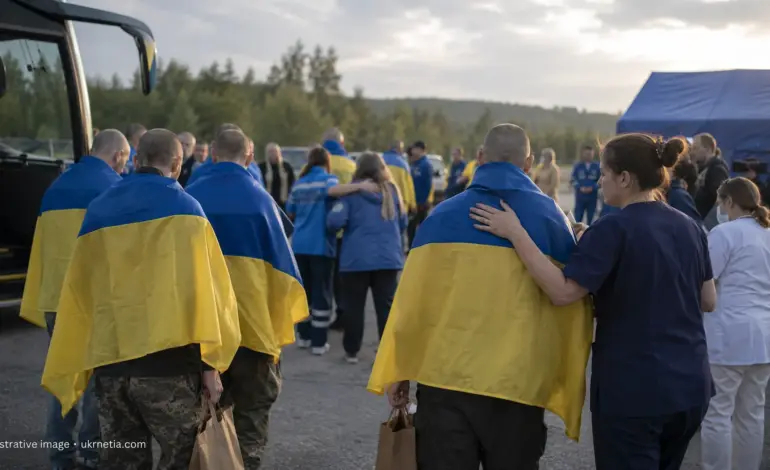
Ukraine brought another 103 military personnel home from Russian captivity on August 19, in the latest prisoner exchange between the two countries. The released Ukrainians include soldiers from the Armed Forces, National Guard and Border Guard Service, as well as defenders of Mariupol and troops who fought across several of the war’s most intense fronts.
103 Ukrainians Return Home
Ukraine and Russia conducted another prisoner exchange on August 19, with 103 Ukrainian military personnel returning from Russian captivity.
The release was announced by President Volodymyr Zelenskyy, who said the returned personnel were members of several components of Ukraine’s Defense Forces.
The exchange adds another group of Ukrainian service members to those who have been brought home through negotiations since the beginning of the full-scale war.
Soldiers From Three Defense Forces
The released personnel include representatives of the Armed Forces of Ukraine, the National Guard and the State Border Guard Service.
Their different service backgrounds reflect the broad range of Ukrainian personnel who have been captured during the war.
Some were involved in frontline combat, while others performed military and border-security missions.
Defenders of Mariupol Among Those Released
Some of the Ukrainians returning home took part in the defense of Mariupol, one of the most significant battles of the full-scale invasion.
Other released service members fought in several regions of Ukraine, including the Donetsk, Luhansk, Kharkiv, Zaporizhzhia, Kherson, Dnipro and Sumy directions.
Their release brings home personnel who had been held in Russian captivity after fighting in different phases and areas of the war.
The 77th Prisoner Exchange
The August 19 exchange was reported as the 77th prisoner exchange between Ukraine and Russia.
The exchanges have become one of the most important channels of direct humanitarian contact between the two sides despite the continuation of hostilities.
Each exchange requires negotiations and coordination involving Ukrainian government institutions and international or intermediary mechanisms.
Families Have Been Waiting for Their Return
For the families of captured Ukrainian service members, an exchange can bring an end to years or months of uncertainty.
Captivity often leaves relatives without reliable information about the condition or location of their loved ones.
The return therefore represents not only a military development but also a major humanitarian event for hundreds of Ukrainian families.
Regional Authorities Identify Returned Soldiers
Following the announcement, Ukrainian regional authorities began publishing information about residents from their areas who were among those released.
For example, officials reported that 13 of the 103 returned personnel are residents of Dnipropetrovsk region.
Four residents of Lviv region were also reported to have returned during the exchange.
Additional names and regional information are expected to emerge as authorities complete verification and contact families.
The Humanitarian Importance of Exchanges
Prisoner exchanges are significant because they address one of the most painful consequences of the war.
Military personnel captured during combat can remain in detention for prolonged periods, while their families wait for information about their fate.
Returning them home allows Ukraine to provide medical evaluation, psychological support and rehabilitation after captivity.
Returning Soldiers Need Medical Care
Former prisoners of war can require extensive medical and psychological assistance after returning to Ukraine.
Some may have suffered injuries before capture, while others may have developed health problems during detention.
The first stage after release therefore involves more than simply bringing people across the border.
Returned personnel must undergo medical examinations and receive appropriate support before they can resume normal life.
Captivity Can Have Long-Term Consequences
The effects of captivity can continue long after a person returns home.
Former prisoners may experience psychological trauma, physical weakness and difficulties adjusting to ordinary life.
For service members, there can also be uncertainty about their future military status and whether they will eventually return to service.
Ukraine has therefore developed rehabilitation and reintegration programs for personnel released from captivity.
Exchanges Continue During the War
The latest release demonstrates that prisoner negotiations can continue even while military operations remain active.
The existence of an exchange channel does not indicate that the broader conflict has ended or that negotiations have produced a political settlement.
Instead, prisoner exchanges represent a separate humanitarian track focused on returning detained personnel.
Ukraine Continues to Seek Further Returns
The Ukrainian government has repeatedly stated that the return of all Ukrainian prisoners remains a priority.
This includes military personnel as well as civilians held by Russia.
The August 19 exchange therefore represents another step in a much larger effort to identify, locate and secure the release of Ukrainians in captivity.
The Number of Captive Ukrainians Remains Larger
The release of 103 people does not mean that the issue of Ukrainian prisoners has been resolved.
Thousands of Ukrainian military personnel and civilians have been captured or detained during the war, with individual cases often requiring prolonged negotiations.
Some families have waited years for information about relatives who remain missing or in captivity.
Every exchange therefore reduces the number of people held but does not eliminate the broader problem.
International Pressure Remains Important
Ukraine has repeatedly called on international organizations and foreign governments to help secure access to prisoners and encourage Russia to comply with international humanitarian law.
International monitoring can be particularly important because families often have limited independent information about relatives held in Russian custody.
The humanitarian treatment of prisoners remains a major international concern alongside the exchanges themselves.
The Return of Mariupol Defenders Carries Special Significance
The presence of Mariupol defenders among the released personnel is particularly significant because the defense of the city became one of the defining episodes of the war.
Thousands of Ukrainian soldiers were involved in the defense of Mariupol and the Azovstal industrial complex.
Many were subsequently taken into Russian captivity.
Their continued return has therefore remained a major priority for Ukraine and their families.
Exchanges Can Reunite Entire Families
For some families, the return of a prisoner means the restoration of contact after years of uncertainty.
Children can see parents again, spouses can reunite and parents can finally confirm that their relatives are alive.
These personal consequences make prisoner exchanges one of the most emotionally significant developments associated with the war.
Verification of Returned Personnel
The process does not end when released personnel cross into Ukrainian-controlled territory.
Authorities must verify identities, establish medical conditions and determine individual needs.
Families are also contacted and informed.
This process is essential because information about returned personnel may initially be incomplete.
More Names Are Expected to Become Known
Regional authorities have already begun publishing information about residents who were included in the exchange.
However, complete details about all 103 returned personnel may take time to emerge.
Authorities must balance public information with the privacy and security of the released service members and their families.
Another Step in the Return Process
The August 19 exchange is another reminder that the return of Ukrainian prisoners is a continuing process rather than a single event.
Each group of released personnel represents months or years of captivity coming to an end for individual Ukrainians.
At the same time, families whose relatives remain in Russian custody continue waiting for the next exchange.
Ukraine’s Efforts Continue
The latest exchange provides another indication that negotiations over prisoners remain active despite the wider war.
Ukraine continues working to identify those held in captivity, negotiate their release and provide assistance once they return.
The goal remains the return of every Ukrainian who can be brought home through exchanges and other humanitarian mechanisms.
The return of 103 Ukrainian military personnel from Russian captivity is another major humanitarian development in the war. The group includes members of Ukraine’s Armed Forces, National Guard and Border Guard Service, including defenders of Mariupol and soldiers who fought on several fronts. While the latest exchange brings relief to more than a hundred families, thousands of Ukrainians are still believed to remain in Russian captivity, making further exchanges and international pressure a continuing priority.