Ukraine Plans to Integrate Its Only Uranium Producer Into Energoatom


KEY TAKEAWAYS
- Ukraine’s Verkhovna Rada has approved legislation intended to preserve and develop the Eastern Mining and Processing Plant, known as SkhidGZK.
- SkhidGZK is Ukraine’s only enterprise extracting uranium ore and producing natural uranium concentrate.
- The next planned step is to integrate the company into Energoatom, creating a vertically integrated nuclear-energy holding.
- The planned chain would cover uranium mining, production of natural uranium concentrate and electricity generation.
- The company has accumulated substantial debt and has experienced prolonged production problems, making restructuring and investment central to the government’s plans.
- Energoatom has agreed to provide UAH 555 million for modernization and increased uranium production, according to earlier government plans.
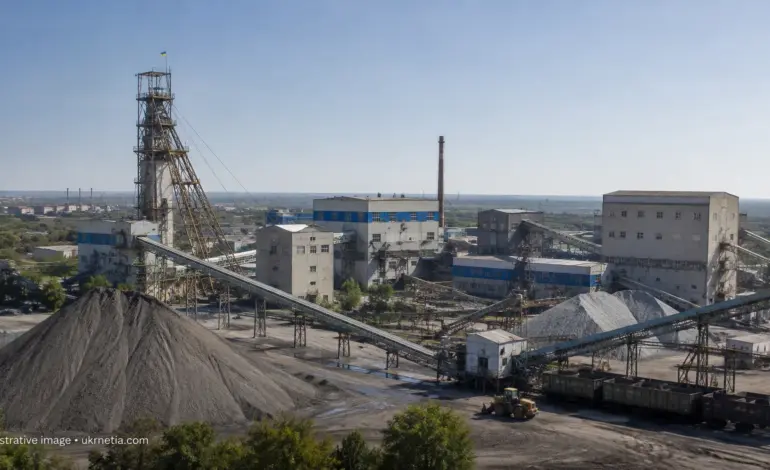
Ukraine is preparing to integrate its only uranium producer, the Eastern Mining and Processing Plant (SkhidGZK), into Energoatom as part of a plan to create a vertically integrated nuclear-energy holding. The government says the restructuring is intended to preserve uranium production, modernize the enterprise and strengthen Ukraine’s domestic nuclear fuel supply chain.
Ukraine’s Only Uranium Producer Faces Restructuring
SkhidGZK is the only Ukrainian enterprise currently responsible for extracting uranium ore and producing natural uranium concentrate.
The company operates mining and processing facilities in central Ukraine and has strategic importance for the country’s nuclear-energy sector.
The government has been seeking a way to preserve the enterprise after years of financial difficulties and interruptions to production.
The latest legislation is intended to provide a new corporate structure for the company and create conditions for its further development.
SkhidGZK Will Become a Joint-Stock Company
Under the approved framework, the state enterprise is to be transformed into a joint-stock company whose 100% of shares will remain state-owned.
This corporate transformation is designed to establish a legal basis for the subsequent integration of SkhidGZK into Energoatom.
The government sees the restructuring as more than a change in ownership structure.
It is intended to become the first stage of a broader transformation of Ukraine’s uranium and nuclear-energy industry.
Planned Integration With Energoatom
The next stage is the planned accession of SkhidGZK to the state nuclear power operator Energoatom.
The objective is to create a vertically integrated structure controlling several stages of the nuclear-energy chain.
That chain would begin with the extraction of uranium ore, continue with the production of natural uranium concentrate and ultimately connect with electricity generation at Ukrainian nuclear power plants.
Such integration could reduce fragmentation between raw-material production and the nuclear-energy sector.
Why Domestic Uranium Matters
Ukraine has significant uranium resources and has historically been capable of producing part of the raw material required by its nuclear industry.
SkhidGZK currently provides up to around 40% of the uranium needs of Ukrainian nuclear power plants, according to information cited by Interfax-Ukraine.
Increasing domestic production could therefore reduce Ukraine’s dependence on imported uranium-related materials.
That is particularly important for a country seeking greater energy independence during a prolonged war.
Production Has Faced Serious Problems
SkhidGZK has experienced prolonged financial and operational difficulties.
The company stopped uranium mining for extended periods, including a production interruption caused by blocked accounts in early 2026. It subsequently planned to resume mining and processing after new legislation restored its ability to continue operations.
The company used part of the production pause to carry out extensive repairs at its mining and processing facilities.
These included work on mining equipment, lifting systems, rail infrastructure, drainage systems and crushing equipment.
Debt Is a Major Challenge
Financial problems remain one of the biggest obstacles facing SkhidGZK.
According to figures cited by Interfax-Ukraine, the company’s creditor debt reached approximately UAH 9.8 billion, nearly three times the balance-sheet value of its main assets.
The debt included approximately UAH 3.3 billion owed to Energoatom and around UAH 400 million owed to the state budget.
The remaining liabilities were owed to other suppliers and creditors.
Government Wants to Increase Production
The restructuring is accompanied by plans to increase uranium production.
Earlier this year, the Energy Ministry said that SkhidGZK’s production needed to rise from approximately 25 tons per month to 40 tons per month.
The ministry identified approximately 50 tons per month as the company’s break-even production level.
This indicates that simply restarting the mines will not be enough.
The government wants the enterprise to reach a production scale that can support its long-term financial sustainability.
Energoatom Has Planned Investment
In July 2026, the government agreed on UAH 555 million in financing from Energoatom for SkhidGZK.
The funds are intended for modernization of production facilities, increasing uranium ore extraction and expanding production of uranium oxide concentrate.
The investment represents an attempt to move the company away from simply maintaining existing facilities and toward increasing production capacity.
A Vertically Integrated Nuclear-Energy Chain
The proposed structure would connect mining with the rest of Ukraine’s nuclear-energy system.
Instead of treating uranium extraction as a separate state enterprise, the government wants it to become part of a larger industrial chain under the umbrella of Energoatom.
In theory, this could make coordination between raw-material production and nuclear power generation easier.
It could also allow investment decisions to be made with the needs of the entire nuclear-energy system in mind.
Ukraine Has a Strategic Uranium Resource
Ukraine is among the countries with significant uranium resources.
According to the source article, the country ranked 11th globally in uranium production in 2024, producing around 288 tons.
Most of Ukraine’s uranium resources are concentrated in deposits associated with the Kirovohrad block of the Ukrainian Shield.
Many of these deposits require underground mining because the uranium-bearing ore is located in basement rock.
Nuclear Energy Is Particularly Important During the War
Ukraine relies heavily on nuclear power for electricity generation.
The country’s nuclear plants have continued operating despite Russia’s attacks on the wider energy system.
Maintaining access to domestic uranium resources is therefore not simply an industrial policy issue.
It is also connected with the long-term resilience and independence of Ukraine’s energy sector.
The War Has Increased the Importance of Energy Independence
Russia’s attacks have repeatedly demonstrated the vulnerability of Ukraine’s energy infrastructure.
Although uranium mines are not a substitute for protecting power plants and electricity networks, domestic nuclear-fuel resources can reduce dependence on foreign supply chains.
A functioning domestic uranium industry also gives Ukraine greater flexibility in developing its nuclear-energy sector.
Western Nuclear Supply Chains Are Also Changing
The restructuring comes against the background of broader changes in the international nuclear-fuel market.
Western countries have been working to reduce dependence on Russian nuclear-fuel supply chains since the beginning of Russia’s full-scale invasion of Ukraine.
The United States banned imports of Russian uranium in 2024, although waivers and transition provisions have complicated the process of completely eliminating Russian supplies.
For Ukraine, strengthening domestic uranium production could therefore have strategic value beyond its own electricity system.
The Goal Is More Than Saving One Enterprise
The government’s approach suggests that SkhidGZK is being treated as a strategic asset rather than simply a financially troubled company.
The planned integration with Energoatom would give the enterprise access to the resources of a much larger state energy company.
At the same time, Energoatom would gain a more direct connection to the raw material required for nuclear-energy production.
Investment Will Determine Whether the Plan Works
The biggest question is whether the restructuring will translate into sustained investment and higher production.
Transforming SkhidGZK into a joint-stock company does not automatically solve its debt, equipment or productivity problems.
The enterprise requires modern mining equipment, reliable financing and a stable market for its uranium products.
The planned Energoatom investment is therefore an important first step, but not necessarily the end of the restructuring process.
What Could Change for Ukrainian Uranium Production
If the plan succeeds, Ukraine could gradually build a more integrated domestic uranium-to-energy system.
Higher production would reduce the gap between domestic uranium output and the needs of Ukrainian nuclear plants.
It could also provide additional industrial activity and employment in the regions where SkhidGZK operates.
For the government, the longer-term objective is to turn the uranium industry from a financially troubled state asset into a productive component of national energy security.
A Strategic Test for Energoatom
The integration will also create new responsibilities for Energoatom.
The company will need to manage not only nuclear power generation but also an upstream mining operation with significant investment and debt requirements.
This will test Energoatom’s ability to manage a vertically integrated industrial chain.
Success would strengthen Ukraine’s nuclear-energy independence, while failure to modernize the uranium producer could simply transfer its financial problems to a larger state company.
Ukraine Is Trying to Preserve Its Uranium Industry
The current restructuring represents a significant change in the way Ukraine approaches its uranium resources.
Rather than allowing its only uranium producer to continue operating under severe financial pressure, the government is attempting to integrate it into the country’s nuclear-energy system.
The strategy combines corporatization, state investment and eventual integration with Energoatom.
The coming years will determine whether these measures can turn SkhidGZK into a sustainable source of domestic uranium.
Ukraine’s plan to integrate SkhidGZK into Energoatom is intended to preserve and modernize the country’s only uranium-producing enterprise while building a vertically integrated nuclear-energy chain. With significant debt and years of production problems behind it, the company requires substantial investment to become financially sustainable. The planned UAH 555 million modernization program and higher production targets could give Ukraine a stronger domestic uranium supply, but the success of the restructuring will depend on whether investment can translate into consistently higher output.