Russian Strikes Destroy All Remaining Equipment at Kherson CHP Plant

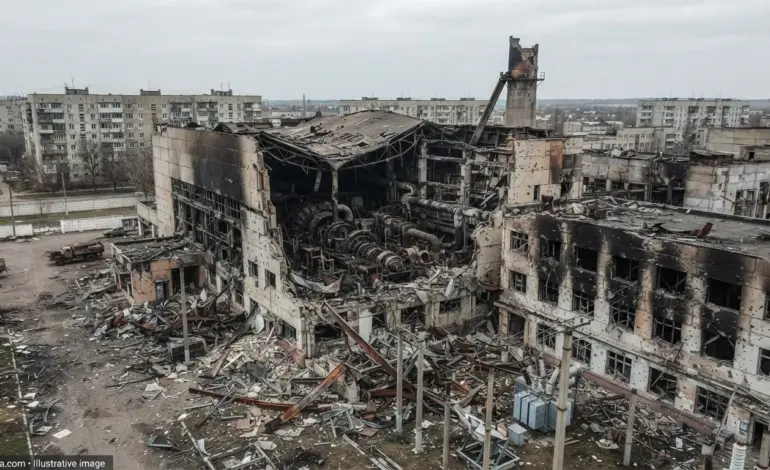

- Russian forces struck Kherson’s combined heat and power plant (CHP) with four guided aerial bombs during the night of August 27.
- The attack caused critical destruction at the facility and destroyed or disabled all remaining heat- and power-generating equipment.
- The plant is a civilian critical-infrastructure facility operated by the Naftogaz Group.
- The CHP plant supplies heat to a significant part of Kherson’s residential buildings, making the destruction particularly serious ahead of the heating season.
- The attack came only one day after another Russian guided-bomb strike had already caused serious damage to the facility.
- The plant has been repeatedly attacked throughout 2026, including an artillery strike in March that killed a 66-year-old female employee.
Russian forces have destroyed all remaining heat- and power-generating equipment at Kherson’s CHP plant after striking the facility with four guided aerial bombs overnight on August 27. The plant is a civilian critical-infrastructure facility that provides heat to a significant part of the city, raising serious concerns about Kherson’s preparations for the coming heating season.
Russian Forces Strike Kherson CHP Plant Again
Russian forces carried out another attack on Kherson’s combined heat and power plant during the night of August 27.
According to Ukraine’s Naftogaz, four guided aerial bombs hit the territory of the facility. The attack caused what the company described as critical destruction.
The latest strike was particularly serious because the plant had already suffered major damage from previous attacks.
All Remaining Generating Equipment Was Destroyed
Naftogaz said the attack completely destroyed or disabled all heat-generating and power-generating equipment that remained at the station.
This means the latest strike did not simply damage part of the facility. It eliminated the remaining equipment needed for its normal generation functions.
The Plant Is a Civilian Facility
Kherson CHP is operated by the Naftogaz Group and is classified as a civilian critical-infrastructure facility.
Its primary function is to provide heat to residential areas of Kherson.
Naftogaz said the facility has no military purpose.
The Attack Comes Before the Heating Season
The timing of the destruction is especially significant.
Ukraine is approaching another heating season, and Kherson already faces extraordinary challenges because of its proximity to Russian forces.
The loss of the plant’s remaining generating equipment makes the task of providing reliable heat to residents substantially more difficult.
The Plant Was Hit One Day Earlier
The August 27 attack followed another Russian strike on the same facility on August 26.
That earlier attack involved a guided aerial bomb and caused serious damage to the plant. At the time, Naftogaz said the full extent of the destruction could not yet be assessed because of the security situation.
The second attack therefore came before the consequences of the first strike had even been fully evaluated.
The Facility Has Been Attacked Repeatedly
Kherson CHP has been subjected to repeated Russian attacks throughout the year.
Naftogaz and local Ukrainian authorities have reported numerous strikes against the facility since the beginning of 2026.
The repeated attacks have progressively reduced the plant’s ability to operate.
The Plant Had Already Stopped Operating Normally
The facility’s problems began well before the latest strikes.
In December 2025, repeated Russian attacks forced the Kherson CHP plant to suspend operations, leaving more than 40,000 residents without heating, according to regional authorities.
The situation demonstrated how vulnerable the city’s heating infrastructure is to continued attacks.
Workers Have Also Been Killed
The attacks have not affected only equipment.
On March 26, Russian forces shelled the CHP facility, killing a 66-year-old female employee, according to Suspilne’s account of the attacks on the plant.
The death illustrates the risks faced by workers maintaining critical infrastructure in frontline Kherson.
Employees Were in a Shelter During the Latest Attack
According to Naftogaz, employees of the station were in a shelter when the latest attack occurred.
This helped prevent casualties among workers despite the scale of the strike.
The company did not report employee deaths or injuries from the August 27 attack.
Four Guided Aerial Bombs Were Used
The latest attack involved four guided aerial bombs, according to Naftogaz.
These weapons can cause extensive structural damage to industrial facilities.
The repeated use of such weapons against the same infrastructure has significantly compounded the damage.
Why CHP Plants Are Important
Combined heat and power plants can perform two critical functions simultaneously.
They generate electricity while also producing heat for district-heating networks.
For cities such as Kherson, this infrastructure can therefore be important for both energy supply and residential heating.
Losing the Equipment Is More Serious Than Losing a Building
Even if parts of the physical structure remain standing, the destruction of generating equipment can make a facility unable to perform its core functions.
Replacing such equipment is a major engineering project.
It requires specialized machinery, financing, logistics and a secure environment in which reconstruction crews can work.
Kherson Faces a Particularly Difficult Winter
Kherson is located close to Russian-controlled territory and remains subject to frequent drone, artillery and aerial attacks.
This makes repairing large energy infrastructure particularly difficult.
Any reconstruction effort must take place while the city remains under military threat.
The City Needs Alternative Heating Solutions
With the CHP plant’s remaining generating equipment destroyed, authorities will need to rely increasingly on alternative heating arrangements.
These could include distributed heating systems, smaller boiler facilities and other emergency solutions.
The exact response will depend on the condition of other infrastructure and the security situation.
The Attack Has a Direct Civilian Impact
The destruction of a heating plant does not necessarily produce immediate casualties.
Its consequences can appear later, when temperatures fall and residents need reliable heating.
For a city already suffering from war damage, maintaining heat during winter can be a major humanitarian challenge.
Rebuilding Will Be Extremely Difficult
The destruction of all remaining generating equipment means that restoring the plant’s full capacity will likely require substantial investment.
Industrial generators, turbines, boilers and associated systems are complex pieces of infrastructure.
Replacing them is not comparable to repairing ordinary residential damage.
The War Has Repeatedly Targeted Energy Infrastructure
Russia has repeatedly attacked Ukraine’s energy infrastructure during the full-scale invasion.
Power plants, substations, gas facilities and heating systems have all been damaged.
The stated impact goes beyond the physical infrastructure itself because energy disruptions affect homes, hospitals, businesses and public services.
Kherson Is Especially Vulnerable
Kherson’s geographical position makes the city unusually exposed.
Russian forces control territory across the Dnipro from the city, allowing them to attack targets at relatively short range.
The city has consequently experienced repeated strikes against civilian infrastructure.
The Heating Network Is a Critical Lifeline
District heating is particularly important in Ukrainian cities because many apartment buildings depend on centralized systems.
If the primary heating source is destroyed, providing heat to thousands of individual apartments becomes much more complicated.
This makes the loss of the CHP plant a citywide infrastructure problem rather than simply a problem for the plant’s operator.
The Government Will Need to Plan for Winter
The latest strike adds another challenge to Ukraine’s preparations for the 2026–27 heating season.
Authorities will have to assess what alternative capacity is available and what can realistically be repaired or installed before winter.
The security environment makes those preparations more difficult.
Previous Attacks Already Limited the Plant’s Capacity
The latest destruction did not happen to an otherwise fully operational facility.
The plant had already suffered repeated attacks and significant damage.
Earlier in the year, Naftogaz reported that attacks had repeatedly disrupted the station’s operations.
The August strikes therefore represent the culmination of months of damage.
The Latest Attack Was More Severe
The August 26 strike had already caused serious destruction.
The four-bomb attack the following night then destroyed the remaining generating equipment.
Naftogaz described the facility as having suffered critical destruction.
A Major Challenge for Naftogaz
For Naftogaz, the destruction represents a major loss of critical infrastructure.
The company must now work with local authorities to determine what heating and energy solutions remain possible.
Any future reconstruction will also require significant resources.
Workers Remain Essential
Even when infrastructure is heavily damaged, engineers and energy workers remain essential.
They assess equipment, isolate damaged systems, maintain whatever infrastructure remains functional and prepare emergency alternatives.
Their work is particularly difficult when facilities remain within range of repeated attacks.
The Attack Raises Humanitarian Concerns
The immediate concern is not simply the value of the destroyed equipment.
It is whether residents of Kherson will have adequate heating when temperatures fall.
A reliable heating supply is essential for elderly people, children, hospitals and other vulnerable residents.
Kherson Has Experienced This Before
The city has already faced heating disruptions caused by Russian attacks.
The December 2025 shutdown of the CHP plant left more than 40,000 residents without heating, demonstrating the scale of the potential impact.
The latest destruction raises the possibility of another difficult winter.
Repairing Infrastructure Under Fire
Normally, major energy infrastructure can be repaired through extended construction projects.
In Kherson, repair crews may face additional attacks while working.
This means the process requires not only engineering expertise but also security planning and emergency protection.
The Plant’s Future Is Unclear
The available information does not indicate whether the CHP plant can be fully reconstructed in the near future.
Naftogaz has confirmed the destruction of the remaining generating equipment, but a detailed assessment of what physical structures can still be used will depend on further inspections.
What Is Known About the Attack
Four guided aerial bombs struck the Kherson CHP plant overnight on August 27.
Naftogaz says the attack destroyed or disabled all remaining heat- and power-generating equipment.
Employees were sheltering during the attack, and no casualties among them were reported.
What Remains Unknown
The exact cost of the destruction has not yet been announced.
It is also unclear how much of the plant’s supporting infrastructure remains usable and what alternative heating capacity can be deployed before winter.
These questions will require further technical assessment.
Why This Matters Beyond Kherson
The incident demonstrates the vulnerability of civilian energy infrastructure in frontline Ukrainian cities.
It also illustrates how repeated attacks can gradually eliminate infrastructure even when each individual strike does not completely destroy a facility.
The Bigger Challenge for Ukraine
Ukraine is preparing for another winter while continuing to defend its energy system against Russian attacks.
The country has developed decentralized heating and power solutions, backup generators and other emergency measures.
But the destruction of a major district-heating facility in a frontline city remains a serious challenge.
A Civilian Infrastructure Crisis
The Kherson CHP plant was designed to serve residents rather than military operations.
Its destruction therefore directly affects civilian life.
The consequences may become most visible when temperatures drop and demand for heating increases.
What Happens Next
Naftogaz and local authorities will need to assess the remaining infrastructure and determine how to provide heat to affected neighborhoods.
Alternative sources may need to be deployed before the start of the heating season.
At the same time, the plant’s longer-term reconstruction will require a separate assessment.
The Immediate Priority Is Heating Residents
For Kherson residents, the most important question is not the condition of the plant itself but whether their homes will be warm during winter.
The destruction of the remaining generating equipment makes that challenge significantly harder.
The coming weeks will be crucial for determining what emergency heating capacity can be established.
A Major Blow Before Winter
The destruction of all remaining generating equipment at Kherson CHP represents one of the most serious recent attacks on the city’s energy infrastructure.
The plant had already been repeatedly damaged, and the latest four-bomb strike effectively eliminated the equipment still capable of generating heat and power.
For Kherson, the attack creates another major challenge ahead of winter.
Russian forces have critically damaged Kherson’s main civilian heating infrastructure, destroying all remaining heat- and power-generating equipment at the city’s CHP plant in a four-bomb attack. The facility had already been repeatedly targeted, including another guided-bomb strike just one day earlier. With winter approaching, Ukrainian authorities now face the difficult task of providing alternative heating for residents while the city remains under constant Russian attack.