Russian Attack Hits Food Warehouses and Red Cross Facilities Near Boryspil



KEY TAKEAWAYS
- Russian forces struck food warehouses and Red Cross facilities in Boryspil district during the overnight attack on Kyiv and the surrounding region.
- Fires were still burning at some of the affected sites as emergency crews worked to contain the consequences of the strikes.
- The attack on Kyiv and the region lasted almost nine hours and involved dozens of missiles and reactive drones targeting civilian infrastructure.
- At least 13 people were killed across Kyiv and Kyiv region in the latest figures cited by RBC-Ukraine, including 12 in Kyiv and one in the region.
- Another 40 people were injured, according to the same update.
- A total of 462 State Emergency Service rescuers and 116 units of specialized equipment were involved in dealing with the aftermath.
- The attack also damaged residential buildings and a children’s hospital, while infrastructure damage forced Ukrzaliznytsia to modify several suburban train routes.
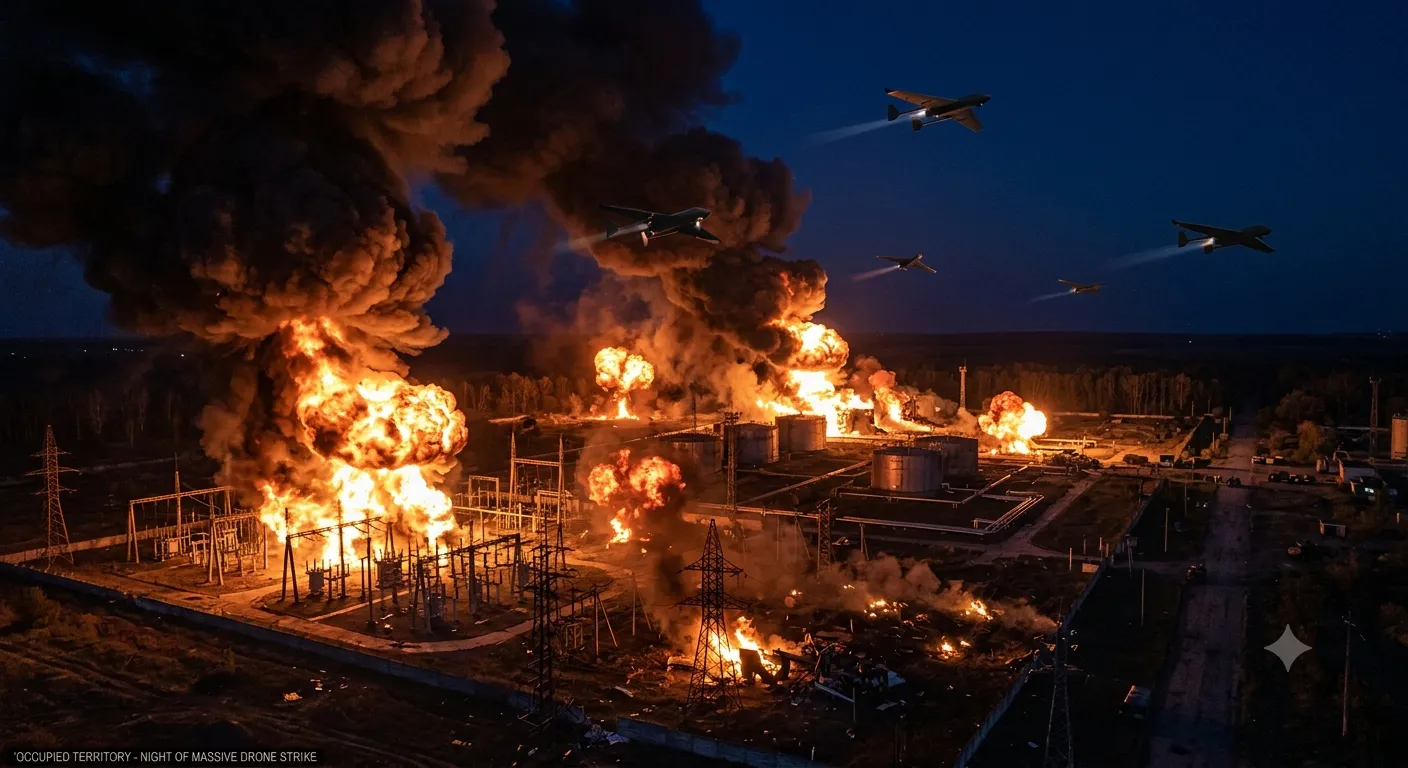
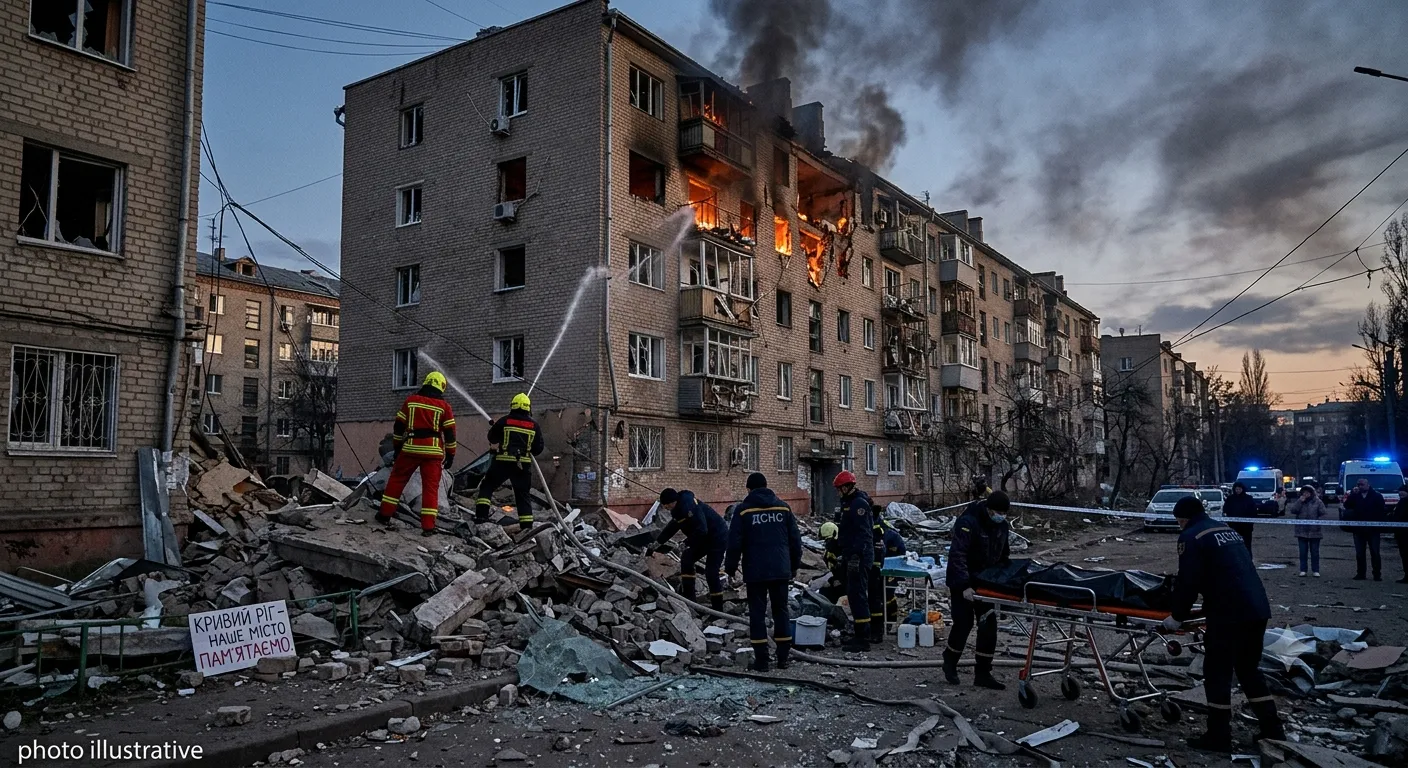
Russian forces struck food warehouses and Red Cross facilities in Boryspil district during a nearly nine-hour overnight assault on Kyiv and the surrounding region. Fires continued at some sites as emergency crews worked to contain the damage, while the latest regional figures reported at least 13 people killed and 40 injured across Kyiv and Kyiv region.
Food Warehouses Hit Near Boryspil
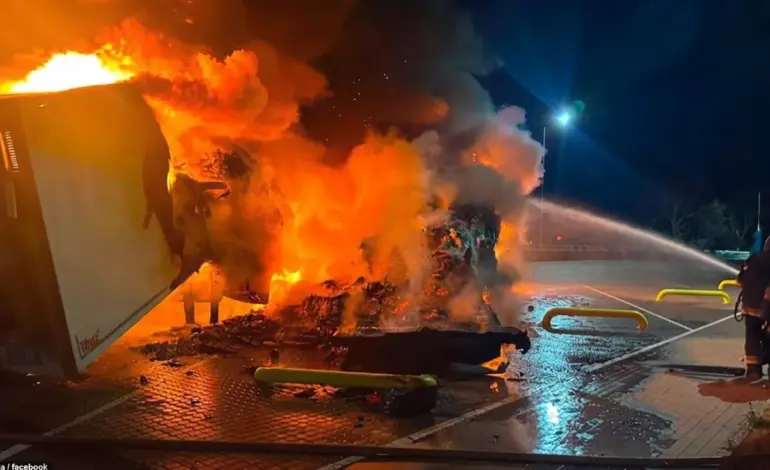
Food-storage facilities in Boryspil district were among the civilian sites hit during the overnight Russian attack.
According to the latest report, several warehouse and humanitarian facilities were affected, with fires continuing at some locations after the main attack had ended.
The strikes are particularly significant because warehouses form an important part of the food-supply chain serving Kyiv and the surrounding region.
Red Cross Facilities Also Damaged
Facilities belonging to the Red Cross were also among the sites affected in the Boryspil area.
The organization provides humanitarian assistance, making damage to its infrastructure another example of how the overnight attack affected civilian and humanitarian facilities.
The extent of the damage to those facilities was still being assessed.
Nearly Nine Hours Under Attack
The attack on Kyiv and the surrounding region lasted almost nine hours.
Russian forces used dozens of missiles and reactive drones against civilian infrastructure during the assault.
The prolonged duration meant that emergency services had to operate continuously through the night and into the morning.
462 Rescuers Deployed
The State Emergency Service deployed 462 rescuers and 116 units of specialized equipment to deal with the consequences of the attack.
Their work included fighting fires, searching damaged buildings, rescuing people and securing affected areas.
The scale of the response reflects the number of simultaneous incidents created by the attack.
At Least 13 People Killed
The latest figures cited by RBC-Ukraine put the overall death toll at at least 13 people.
Twelve people were killed in Kyiv, while another person died in Kyiv region.
The figures remain subject to further clarification as rescue and recovery operations continue.
Forty People Injured
Another 40 people were reported injured in Kyiv and the region.
Medical teams have been providing assistance to those affected by the attack.
Some of the injuries were caused by explosions, debris and damage to buildings.
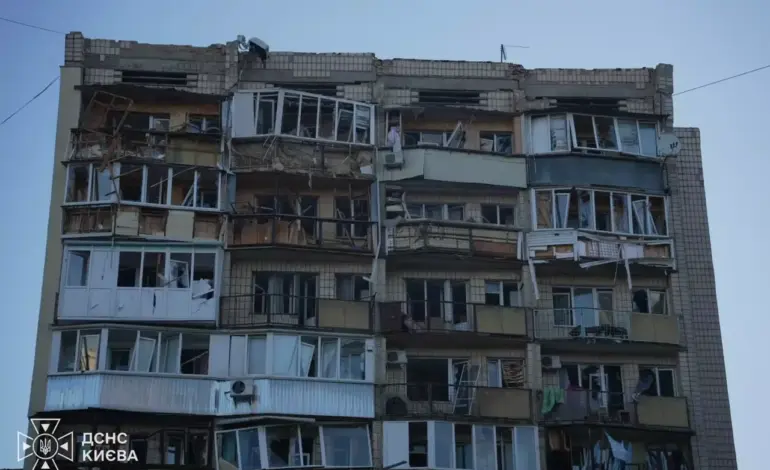
Residential Buildings Also Hit
The attack was not limited to industrial or warehouse infrastructure.
Russian missiles and drones also struck residential buildings in the capital and surrounding region.
Damage to homes adds another layer to the humanitarian consequences of the assault, potentially leaving residents temporarily unable to return to their properties.
Children’s Hospital Damaged
A children’s hospital was also among the facilities hit during the attack, according to the latest report.
The damage demonstrates the broad range of civilian infrastructure affected during the overnight strikes.
Medical facilities are particularly sensitive targets because they provide essential services to civilians even during wartime.
Fires Continue at Some Sites
Emergency workers were still dealing with fires at several locations after the attack.
Warehouse fires can be particularly difficult to extinguish because large enclosed structures can contain significant quantities of combustible materials.
Firefighters therefore need to secure the surrounding area while preventing the flames from spreading.
Why Food Warehouses Matter
The damage to food warehouses has implications beyond the buildings themselves.
Large distribution facilities connect producers and suppliers with supermarkets and other retailers.
When such facilities are damaged, companies may have to redirect deliveries through alternative warehouses or routes.
This can temporarily slow deliveries even when enough food remains available overall.
Kyiv’s Food Supply Is Highly Dependent on Logistics
Kyiv is a major consumer market that relies on an extensive logistics network.
Food enters the capital from Ukrainian producers, importers and distribution centers before reaching supermarkets and smaller stores.
Large warehouse complexes are therefore essential to keeping this system operating efficiently.
Damage to several facilities can create localized disruptions even without causing a nationwide shortage.
A New Blow After Earlier Warehouse Attacks
The latest strike comes after other Russian attacks damaged food-storage and distribution infrastructure in the Kyiv region earlier in August.
Previous attacks on warehouses used by major retail networks already caused temporary supply problems and reduced assortments in some supermarkets.
The repeated targeting of logistics infrastructure is therefore becoming an increasingly important issue for businesses operating in and around Kyiv.
Businesses May Need Alternative Routes
When a warehouse is destroyed or severely damaged, retailers must quickly find alternative storage and distribution capacity.
This can involve moving goods to facilities farther away from the capital or changing delivery schedules.
Such adjustments increase transportation and operating costs.
The Economic Impact Can Extend Beyond the Strike Site
The consequences of attacks on logistics infrastructure can spread through the wider economy.
A damaged warehouse can affect suppliers, retailers, transport companies and consumers.
Even if replacement capacity is found quickly, companies may face additional expenses for transportation, temporary storage and reconstruction.
The Attack Also Affected Transport
Damage to infrastructure from the overnight assault forced Ukrzaliznytsia to change the routes of several suburban trains.
Transport disruptions can make it more difficult for workers and goods to move through the region.
This adds to the broader economic impact of the attack.
Boryspil Is a Major Logistics Area
Boryspil district plays an important role in the logistics network around Kyiv.
Its location near the capital and major transportation infrastructure makes it an important area for warehouses, distribution centers and other commercial facilities.
Damage there can therefore have consequences beyond the immediate local community.
Humanitarian Infrastructure Under Threat
The damage to Red Cross facilities is particularly significant because humanitarian organizations need reliable infrastructure to distribute assistance.
Warehouses and logistics facilities allow humanitarian organizations to store and move food, medical supplies and other essential goods.
Damage to these facilities can complicate humanitarian operations at precisely the moment when demand for assistance is increasing.
Emergency Operations Continue
Rescue teams remain engaged in extinguishing fires and assessing damaged structures.
Investigators will also need to examine the affected sites and determine the full scale of the destruction.
The final economic losses will only become clear after the emergency phase is completed.
The Attack Demonstrates the Scale of the Overnight Assault
The damage in Boryspil forms part of a much wider pattern of destruction across Kyiv and the surrounding region.
Residential buildings, medical facilities, warehouses, humanitarian infrastructure and transport networks were all affected.
The nearly nine-hour duration of the assault placed enormous pressure on both air defenses and emergency services.
What Happens Next
Authorities and emergency services will continue assessing the damage and extinguishing remaining fires.
Businesses operating the affected warehouses will also have to determine the extent of their losses and identify alternative logistics routes.
For Kyiv’s residents, the immediate priority remains restoring damaged civilian infrastructure and ensuring that food and other essential supplies continue reaching stores.
The strike on food warehouses and Red Cross facilities near Boryspil adds another dimension to the consequences of Russia’s latest massive attack on Kyiv and the surrounding region. Beyond the immediate destruction and fires, damage to food-distribution infrastructure can create logistical challenges for retailers and suppliers, while attacks on humanitarian facilities can complicate the delivery of assistance. With emergency crews still working at the affected sites, the full scale of the damage remains to be established.