Greece Sets Condition for Possible Transfer of S-300 Missiles to Ukraine


KEY TAKEAWAYS
- Greece could consider transferring S-300 missiles to Ukraine only if Athens receives a full replacement for the air-defense capability it gives up.
- According to a report by Forbes, Greece would prefer Patriot systems as a replacement, although such an arrangement currently appears unlikely.
- Athens considers its S-300 systems important for maintaining its air-defense network and as part of its deterrence posture toward Turkey.
- Ukraine and its partners are seeking additional interceptors because Ukrainian air defenses face shortages of missiles for systems such as Patriot.
- Greece’s position is also reportedly influenced by broader political and security considerations involving Ukraine and Russia.
- The potential transfer therefore remains dependent on whether Greece can secure an adequate replacement for its own air-defense needs.
Greece is reportedly willing to consider transferring missiles for its S-300 air-defense systems to Ukraine only if Athens receives a full replacement for the capability it would give up. According to Forbes, Greece would prefer Patriot systems, but such a deal currently appears difficult, leaving the potential transfer dependent on finding a credible replacement.
Greece Sets a Condition for S-300 Transfer
Greece has reportedly established a clear condition for any potential transfer of missiles for its Russian-made S-300 air-defense systems to Ukraine.
According to a Forbes report published on August 18, Athens would consider such a transfer only if it receives a full replacement for the systems or capabilities being provided to Ukraine.
The issue has gained renewed attention as Ukraine faces shortages of interceptors for its air-defense systems and its partners explore additional sources of missiles.
For Greece, however, the priority remains maintaining its own air-defense capability.
Athens Would Prefer Patriot Systems
According to the report, Greece would prefer to receive Patriot systems as a replacement for the S-300 capability.
Patriot is a Western air-defense system already used by Greece and several other NATO countries.
However, Forbes assesses that an arrangement in which Greece receives Patriots in exchange for transferring its S-300 missiles to Ukraine currently appears unlikely.
This creates the main obstacle to a potential agreement.
Athens may be willing to discuss transferring equipment, but it does not want to create a gap in its own air-defense network.
Why Ukraine Wants Greek S-300 Missiles
Ukraine continues to operate Soviet-designed air-defense systems alongside Western systems supplied by its partners.
The country’s S-300 infrastructure remains important for protecting cities and critical infrastructure from Russian missile attacks.
However, years of war have consumed large quantities of interceptor missiles.
Ukraine and its allies have therefore been searching for additional stocks of compatible ammunition, including missiles for older Soviet-designed systems. Forbes reported that Kyiv is also working with the United States on efforts to develop upgraded interceptors for its older S-300 systems.
Greek stocks could potentially provide Ukraine with additional ammunition without requiring the creation of an entirely new air-defense architecture.
Greece Still Operates S-300 Systems
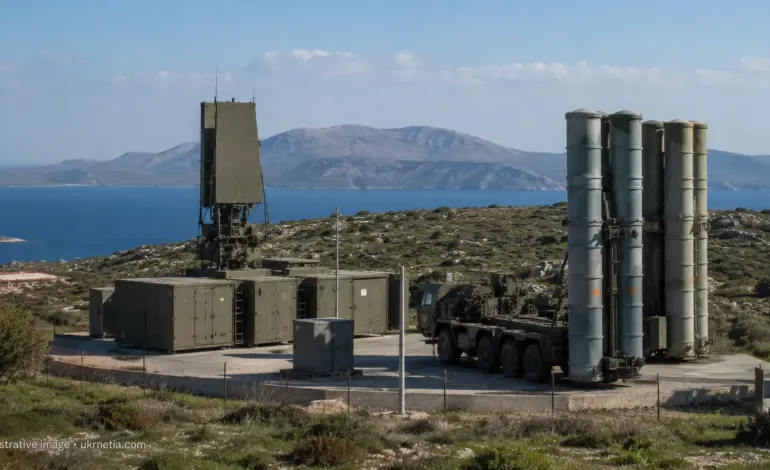
Greece possesses the S-300PMU-1 variant of the Russian-designed air-defense system.
The systems were originally acquired in the context of the Cyprus missile crisis in the late 1990s and subsequently became part of Greece’s air-defense network.
Greece is the only NATO member known to operate the S-300 system.
For Athens, the systems therefore represent a legacy capability that remains relevant to national air defense despite Greece’s broader transition toward Western military equipment.
Turkey Is an Important Factor
One of the reasons Greece is reluctant to give up the S-300 capability is its security relationship with Turkey.
The two NATO members have a long history of disputes over territorial, maritime and airspace issues in the Aegean and Eastern Mediterranean.
Greece considers its air-defense network an important element of national deterrence.
For that reason, Athens does not want to remove a long-range air-defense capability without ensuring that another system can immediately perform the same role.
The concern is therefore not necessarily about the S-300’s origin but about maintaining sufficient defensive capacity.
Ukraine’s Air-Defense Shortage Is Becoming More Important
The potential Greek transfer is being discussed at a time when Ukraine faces increasing pressure on its air-defense ammunition stocks.
Russia continues to launch large numbers of drones and missiles against Ukrainian cities and infrastructure.
Patriot systems are particularly important because they provide one of the capabilities Ukraine uses against Russian ballistic missiles.
But Patriot interceptor missiles are expensive and difficult to replace quickly.
The shortage has therefore encouraged Ukraine and its partners to examine every possible source of compatible air-defense ammunition.
S-300 Missiles Could Provide an Alternative
The potential value of Greek S-300 missiles comes from their compatibility with Ukrainian air-defense infrastructure.
Ukraine has operated different variants of the S-300 system for decades and has extensive experience maintaining and using Soviet-designed air-defense equipment.
Additional ammunition could therefore potentially strengthen existing Ukrainian units without requiring the introduction of a completely new missile system.
This is one reason why Kyiv and its partners have continued looking for S-300 missiles abroad.
Greece Does Not Want to Weaken Its Own Defense
For Athens, however, transferring the missiles is not simply a question of supporting Ukraine.
Any significant reduction in its own air-defense inventory would have to be compensated by another system.
This explains why Greece’s condition focuses on a full replacement rather than simply financial compensation or political guarantees.
The Greek position is consistent with the broader principle that countries providing military equipment to Ukraine must also maintain sufficient capabilities to protect their own territory.
Patriot Replacement Appears Difficult
The main problem is that Patriot systems are in high demand internationally.
Many countries are attempting to strengthen their air-defense networks because of the lessons of the wars in Ukraine and the Middle East.
At the same time, production of advanced air-defense interceptors cannot be expanded instantly.
This makes it difficult to guarantee Greece an immediate one-for-one replacement.
For Athens, accepting a transfer without replacement could therefore create a security gap.
The S-300 Issue Is Not New
Discussions about Greece transferring its S-300 systems to Ukraine have existed for several years.
In 2022, reports emerged that Greece could potentially transfer the systems if the United States provided Patriot systems as a replacement.
The idea has repeatedly encountered the same fundamental obstacle: Greece does not want to sacrifice its own air-defense capability.
The latest reporting therefore represents a continuation of an existing debate rather than a completely new proposal.
Athens Has Other Russian-Made Systems
Greece also operates or has operated other Russian-designed air-defense equipment, including Tor and Osa systems.
The country’s military has gradually been moving toward greater reliance on Western equipment.
This creates a broader question about how and when Athens will replace its remaining Soviet- and Russian-origin systems.
If suitable Western replacements become available, transferring older equipment to Ukraine could become easier.
Russia Opposes the Transfer
Another factor reportedly influencing the situation is Moscow’s opposition to any transfer of Russian-origin air-defense systems to Ukraine.
Forbes reported that Russia has warned Greece against transferring the systems and has argued that Athens would require Russian permission to provide the equipment to a third party.
Such claims do not determine Greece’s legal obligations under international law, but they illustrate the political pressure surrounding the issue.
Russia has an obvious strategic interest in preventing Ukraine from acquiring additional long-range air-defense ammunition.
Relations Between Greece and Ukraine Also Matter
Forbes also identified another possible factor: relations between Athens and Kyiv have experienced some friction.
The report pointed to an incident involving a Ukrainian unmanned surface vessel discovered in Greek territory near the island of Lefkada.
It is unclear how significant this episode is in Greece’s decision-making.
The primary publicly reported obstacle remains Athens’ concern about maintaining its own air-defense capability.
Ukraine Needs Every Available Air-Defense Option
The importance of the potential transfer goes beyond the number of missiles involved.
Ukraine is facing a sustained Russian campaign involving drones, cruise missiles and ballistic weapons.
Air-defense ammunition must therefore be continuously replenished.
Even relatively old systems can remain valuable if they are compatible with Ukraine’s existing infrastructure and can protect populated areas or critical facilities.
The Potential Deal Depends on a Replacement
The situation can therefore be reduced to a relatively straightforward equation.
Ukraine wants additional S-300 ammunition.
Greece has stocks that could potentially help but considers the capability necessary for its own defense.
Athens is therefore asking for a replacement before agreeing to transfer the missiles.
The problem is finding a replacement system that is available, sufficiently capable and politically acceptable.
A Patriot-for-S-300 Arrangement Would Be Significant
If Greece were eventually provided with Patriot systems in exchange for S-300 missiles, the arrangement would have two consequences.
Ukraine would gain additional ammunition for its existing air-defense network, while Greece would accelerate its transition toward Western air-defense technology.
Such a deal could therefore serve the interests of both countries.
The difficulty is the availability and cost of the replacement systems.
The Broader European Air-Defense Problem
The Greek debate reflects a wider problem facing European countries.
Russia’s war against Ukraine has demonstrated the importance of large stocks of air-defense interceptors.
At the same time, European countries are seeking to strengthen their own defenses.
This creates competition for systems and ammunition at precisely the moment when Ukraine needs more of both.
The result is that even countries willing to help Ukraine may hesitate to transfer equipment that they cannot quickly replace.
What Could Make a Transfer Possible
Several developments could potentially change Greece’s position.
The most obvious would be the availability of replacement Patriot systems or another modern long-range air-defense capability.
A broader NATO arrangement could also potentially provide Greece with temporary or permanent reinforcement while its S-300 missiles are transferred to Ukraine.
Such an arrangement would reduce the risk that Greece’s own air-defense network would be weakened.
No Transfer Has Been Announced
It is important to distinguish between a condition for a possible transfer and an actual agreement.
The latest reports do not indicate that Greece has decided to send S-300 missiles to Ukraine.
Instead, they describe the circumstances under which Athens could consider such a move.
The transfer therefore remains hypothetical until Greece and its partners agree on a replacement.
What It Means for Ukraine
For Ukraine, the Greek position means that additional S-300 missiles cannot currently be treated as an immediately available source of air-defense ammunition.
Kyiv and its partners will have to continue pursuing other options while negotiations over Greek stocks remain unresolved.
The United States and European countries are simultaneously working to increase production and availability of modern air-defense systems.
In the meantime, every additional stock of compatible ammunition could help Ukraine maintain its existing defenses.
A Decision With Strategic Implications
The debate over Greece’s S-300 missiles illustrates the difficult balance between helping Ukraine and maintaining the defense capabilities of NATO countries.
Greece’s concern is understandable from its own security perspective, particularly given its longstanding tensions with Turkey.
For Ukraine, however, the issue is equally urgent because air-defense ammunition directly affects the protection of cities and critical infrastructure.
The final outcome will depend largely on whether Greece can obtain a replacement system without creating a vulnerability in its own defenses.
Greece is reportedly not ruling out the possibility of transferring S-300 missiles to Ukraine, but Athens wants a full replacement for the air-defense capability it would give up. Patriot systems are the preferred option, although such a deal currently appears difficult because of limited availability. For Ukraine, the issue is important because its existing S-300 systems remain part of a broader air-defense network facing continued shortages of interceptor missiles.