Four Killed in Russian Drone Strike on Civilian Minibus in Kherson


KEY TAKEAWAYS
- A Russian FPV drone struck a civilian minibus in Kherson on the morning of August 19, killing four people and injuring five others.
- The attack occurred at about 8:50 a.m. in Kherson’s Korabelnyi district.
- The victims were civilians traveling by public transport, with passengers reportedly heading to work, the market and a hospital.
- President Volodymyr Zelenskyy condemned the attack and called for stronger international pressure on Russia and additional air-defense and other protective equipment for Ukraine.
- The strike is part of a broader pattern of Russian drone attacks on civilian vehicles and public transport in Kherson, which has repeatedly come under attack from Russian forces.
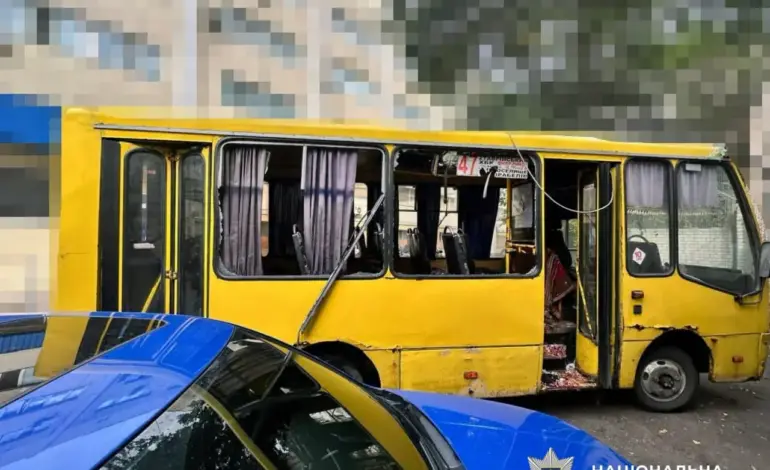
A Russian FPV drone struck a civilian minibus in Kherson on August 19, killing four passengers and injuring five other people. The deadly attack prompted President Volodymyr Zelenskyy to call for greater pressure on Russia and faster deliveries of defensive equipment to Ukraine.
Russian Drone Hits Civilian Minibus in Kherson
The attack took place in the morning of August 19 in the Korabelnyi district of Kherson.
According to reports from Ukrainian authorities and media, a Russian FPV drone struck a route minibus carrying civilians at approximately 8:50 a.m.
The vehicle was traveling through the city when it was attacked.
Four People Were Killed
Four passengers died as a result of the strike.
The victims included a 69-year-old man and three women aged 63, 71 and 89, according to reports citing local authorities.
Five other people were injured, including the minibus driver.
The casualties underline the particular danger faced by civilians traveling through Kherson, where Russian forces regularly use drones against vehicles and other targets.
Passengers Were Traveling Through the City
The minibus was carrying ordinary civilians going about their daily activities.
According to reports, passengers were traveling to work, the market and a hospital when the attack occurred.
This detail has become particularly significant in Ukrainian officials’ descriptions of the attack because the vehicle was civilian public transport rather than a military vehicle.
President Zelenskyy also emphasized that the bus was clearly civilian.
Zelenskyy Condemns the Attack
Zelenskyy responded to the strike by condemning Russia’s continued attacks on civilians in Kherson.
He described the pattern of attacks against residents of the city as a brutal campaign that had gone far beyond what a normal person could imagine.
The president also argued that Russia continues to act without sufficient restraint while Ukraine’s international partners debate additional deliveries of defensive equipment.
Call for More Defensive Equipment
A central part of Zelenskyy’s response was a renewed appeal to Ukraine’s international partners.
He argued that additional defensive capabilities are needed to protect Ukrainian cities from Russian attacks.
The request is particularly relevant for Kherson because the city is located close to Russian-controlled territory and can be attacked by drones launched from relatively short distances.
Kherson Faces Persistent Drone Threat
The latest attack is not an isolated incident.
Russian forces have repeatedly attacked civilian vehicles and public transport in Kherson with drones.
Earlier in August, Russian drones also struck a route bus and other civilian vehicles in the city, causing injuries.
In July, a Russian drone attack on a route bus in central Kherson injured multiple passengers, with the number of wounded later increasing as additional victims were identified.
The repeated attacks have made ordinary transportation in the city particularly dangerous.
FPV Drones Create a Different Threat
FPV drones are relatively small unmanned aircraft that can be controlled remotely and used to attack individual vehicles.
Their size and maneuverability can make them difficult to detect and intercept, particularly when used against targets in urban environments.
For civilians in frontline cities such as Kherson, this creates a threat that can emerge with little warning.
The Attack Occurred in a Frontline City
Kherson remains one of the Ukrainian cities most exposed to Russian attacks.
The city is located near the Dnipro River, with Russian forces positioned on the opposite bank in areas under Russian control.
This geographic situation allows Russian forces to use drones and other weapons against the city on a regular basis.
Civilian infrastructure, roads and vehicles can consequently remain exposed even when there is no large-scale ground fighting in the immediate area.
Public Transport Has Become Particularly Vulnerable
Buses and minivans are difficult to protect because they must continue moving through the city.
Unlike military installations, public transport cannot simply be moved underground or surrounded by extensive defensive structures.
Passengers also have limited ability to react when a drone approaches a moving vehicle.
This makes repeated attacks on civilian transport especially dangerous for people who need to continue working, shopping or accessing medical services.
The Human Cost Goes Beyond the Immediate Victims
The attack also affects the wider civilian population.
When public transportation becomes a potential target, residents may be forced to reconsider how they travel through the city.
For elderly people and those who need medical treatment, however, avoiding public transport may not always be possible.
The resulting insecurity can make everyday life significantly more difficult even when no major infrastructure has been destroyed.
Ukraine Wants More Protection for Cities
The latest attack has again highlighted Ukraine’s need for additional air-defense and counter-drone capabilities.
While major air-defense systems are important against missiles and larger aerial threats, frontline cities also need effective protection against smaller drones operating at short range.
Ukraine has repeatedly asked international partners for additional systems, ammunition and technologies that can help protect both critical infrastructure and civilians.
International Support Remains Important
Zelenskyy’s response links the Kherson attack to the broader question of military assistance to Ukraine.
His argument is that faster deliveries of defensive systems could help reduce the number of successful Russian attacks against Ukrainian cities.
The issue is particularly urgent for frontline communities where residents remain exposed to daily drone strikes.
Kherson’s Residents Continue to Live Under Threat
Despite the continuing attacks, civilians remain in Kherson.
People continue traveling to work, buying food, visiting medical facilities and carrying out other essential activities.
The minibus attack demonstrates how even routine movement through the city can become life-threatening.
The repeated nature of such incidents has made the protection of civilian transport an increasingly important issue for local authorities and Ukrainian security services.
A Repeated Pattern of Attacks
The August 19 strike follows several earlier attacks on civilian transport in Kherson.
That pattern is important because it suggests that the threat is not limited to a single incident.
Ukrainian authorities have repeatedly documented Russian drone attacks on buses, minivans and private vehicles in Kherson and the surrounding region.
The latest attack is therefore part of a broader and continuing security problem.
What Happens Next
Ukrainian authorities are expected to continue documenting the circumstances of the attack and providing medical assistance to those injured.
The incident will also add to Ukraine’s documentation of Russian attacks on civilian infrastructure and transportation.
At the international level, Kyiv is likely to continue pressing partners for additional defensive capabilities designed to protect frontline cities from drones and other Russian weapons.
The deadly strike on a civilian minibus in Kherson demonstrates the continuing danger faced by residents of Ukraine’s frontline cities. Four people were killed and five injured in the August 19 attack, while Zelenskyy’s response again highlighted the gap between the scale of the Russian threat and the defensive capabilities available to Ukraine.