Coalition of the Willing to Hold First Joint Military Exercises in October-November

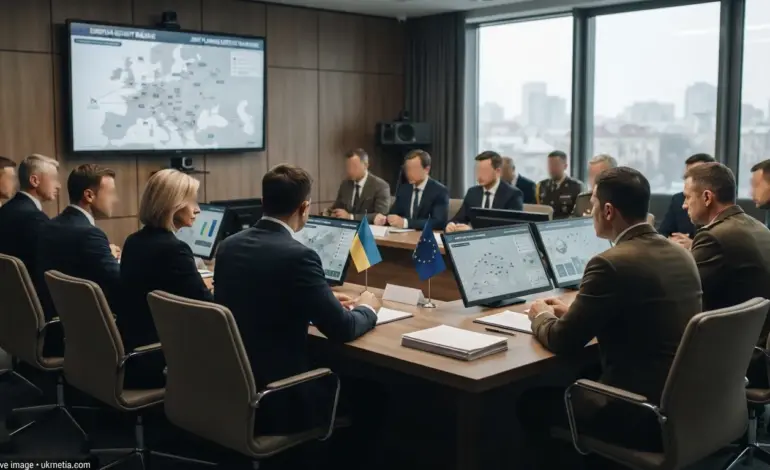

- The Coalition of the Willing held a major meeting in Kyiv on August 24, Ukraine’s Independence Day.
- French President Emmanuel Macron said the coalition’s first full-scale joint military exercises will take place in October and November 2026.
- The exercises are intended to test the operational readiness of multinational forces that could potentially be deployed in Ukraine after active hostilities end.
- Partners also discussed strengthening Ukraine’s protection against Russian ballistic missiles and accelerating deliveries of interceptor missiles.
- Ukrainian President Volodymyr Zelenskyy said Ukraine needs at least 300 Patriot missiles for a winter ballistic-defense package.
- The coalition also discussed military and energy assistance, sanctions against Russia and measures against its shadow fleet.
The Coalition of the Willing has agreed to hold its first large-scale joint military exercises in October and November, French President Emmanuel Macron said after the coalition’s meeting in Kyiv on August 24. The exercises are designed to demonstrate the readiness of multinational forces that could potentially operate in Ukraine after the end of active hostilities, while coalition members also agreed to strengthen Ukraine’s air defense and maintain pressure on Russia.
Coalition of the Willing Meets in Kyiv
The Coalition of the Willing held its latest meeting in Kyiv on August 24, coinciding with Ukraine’s 35th Independence Day.
The meeting brought together European leaders and representatives of countries supporting Ukraine, with some participants attending remotely.
The talks focused on military support, security guarantees, air defense and preparations for a possible future multinational force in Ukraine.
First Joint Exercises Planned for October and November
French President Emmanuel Macron said the coalition’s first full-scale joint military exercises would take place in October and November 2026.
According to Macron, the exercises are intended to demonstrate the coalition’s operational readiness and its ability to carry out future missions after active hostilities end.
The announcement marks a move from planning toward practical preparation.
Multinational Forces Could Be Deployed in Ukraine
One of the coalition’s central objectives is preparing multinational forces that could potentially be deployed in Ukraine after a cessation of active fighting.
The forces are being planned as part of broader security arrangements intended to help deter a renewed Russian attack.
The exercises will allow participating countries to test how such forces could operate together.
Britain Will Host an Operational Headquarters
British Prime Minister Andy Burnham said the coalition has concrete plans for multinational forces in Ukraine.
He said an operational headquarters would move to Britain in the autumn, while military personnel would conduct exercises to prepare for a possible deployment.
The headquarters would support coordination among participating countries.
The Exercises Will Test Operational Readiness
The planned exercises are not simply symbolic.
Their purpose is to test whether multinational units can coordinate their activities and operate effectively together.
This includes assessing command structures, communication and cooperation between forces from different countries.
Air Defense Was a Major Topic
The coalition meeting also focused heavily on Ukraine’s need for protection against Russian ballistic missiles.
Burnham called for countries to use their own stocks of interceptor missiles and help Ukraine expand its ability to defend against ballistic threats.
Air defense has become one of Ukraine’s most urgent military priorities.
Ukraine Needs More Patriot Interceptors
Zelenskyy said Ukraine needs a special winter package of assistance against ballistic missiles.
According to the Ukrainian president, the country needs at least 300 missiles for Patriot systems to strengthen its defenses.
The request comes after repeated Russian attacks involving ballistic missiles against Ukrainian cities.
France Wants to Accelerate Interceptor Deliveries
Macron said coalition members need to accelerate the delivery of interceptor missiles to Ukraine.
France also intends to speed up licensing procedures that could allow Ukraine to produce more relevant defense capabilities domestically.
The objective is to combine immediate deliveries with longer-term production capacity.
Britain Offers Missile Technology
Burnham also announced that Britain had agreed to share technology related to the Storm Shadow cruise missile with Ukraine.
The goal is to help Ukraine develop its own production capabilities for the weapon.
The announcement represents a significant step toward expanding Ukraine’s domestic long-range strike capabilities.
Britain Also Wants a Cheaper Patriot Alternative
Burnham said Britain would ask its defense industry to support Project Freya, intended to provide a cheaper alternative to American Patriot systems for ballistic-missile interception.
The initiative is part of the broader effort to increase the supply of air-defense capabilities available to Ukraine.
The Coalition Wants to Increase Pressure on Russia
Sanctions against Russia were another major issue discussed during the meeting.
British officials called for stronger measures targeting Russian oil and liquefied natural gas revenues, as well as increased pressure on the country’s shadow fleet.
The aim is to reduce the financial resources available to Moscow to continue the war.
The Shadow Fleet Remains a Concern
Russia’s so-called shadow fleet consists of vessels used to transport oil and other goods while attempting to circumvent international restrictions.
Coalition members are seeking additional measures to limit the fleet’s ability to support Russian energy exports.
Macron proposed a separate ministerial meeting focused specifically on the issue.
Energy Support for Ukraine
The coalition also discussed immediate support for Ukraine’s energy sector.
The issue is particularly important ahead of the winter months, when Russia is expected to continue targeting Ukrainian energy infrastructure.
Leaders agreed on the need for additional assistance to help Ukraine maintain the resilience of its energy system.
Military and Energy Packages Are Being Prepared
Zelenskyy said Ukraine received commitments for new military and energy support packages following the meeting.
He emphasized that air defense remains the top priority.
The packages are expected to address both immediate battlefield needs and the country’s preparations for another winter under Russian attack.
Europe Wants to Be Part of Future Peace Negotiations
Zelenskyy also argued that European countries must participate in any negotiations aimed at ending the war.
He said European leaders remain skeptical that Russia is genuinely prepared for meaningful negotiations at this stage.
This reflects the coalition’s broader view that European security interests must be represented in any future settlement.
Moscow Is Being Asked to Accept a Ceasefire
Coalition members called on Russia to agree to a full and unconditional ceasefire.
The demand comes amid continued Russian missile and drone attacks against Ukrainian cities.
The coalition’s position is that military pressure and diplomatic efforts should continue simultaneously.
The Coalition Has Expanded to 37 Countries
The Coalition of the Willing has grown considerably since France and Britain launched the initiative.
According to Rubryka, the coalition now includes 37 countries, mostly European states.
Moldova and North Macedonia were among the newer participants joining discussions.
The Meeting Took Place on Ukraine’s Independence Day
Holding the meeting in Kyiv on August 24 carried significant symbolic importance.
Ukraine was celebrating the 35th anniversary of the restoration of its independence while its international partners gathered to discuss its future security.
The physical presence of foreign leaders in Kyiv also served as a political signal of continued support.
The Coalition Is Moving From Declarations to Planning
The planned military exercises represent an important evolution of the coalition.
Previous meetings focused heavily on political commitments, security guarantees and possible force structures.
The October-November exercises will provide an opportunity to test some of those plans in practice.
The Future Force Would Depend on a Ceasefire
The proposed multinational force is linked to a potential end to active hostilities.
The exercises therefore do not mean that foreign troops are being deployed to Ukraine immediately.
Instead, participating countries are preparing for a possible future role if a suitable security arrangement is reached.
Ukraine Remains at the Center of the Coalition’s Plans
The coalition’s military planning is focused on Ukraine’s security rather than creating a separate European military structure.
Its members are attempting to develop practical mechanisms that could deter Russia from restarting the war after any future ceasefire.
This makes the planned exercises an important test of the coalition’s credibility.
The Air Defense Challenge Remains Urgent
The discussion of 300 Patriot missiles demonstrates the scale of Ukraine’s current requirements.
Russia continues to use ballistic missiles that are difficult to intercept, placing additional pressure on Ukraine’s existing air-defense systems.
The coalition therefore faces a race between increasing Russian attacks and expanding Ukrainian defensive capacity.
European Defense Production Is Becoming More Important
The meeting also highlighted the growing importance of European defense production.
France wants to accelerate licensing for Ukrainian production, while Britain is encouraging its own defense industry to develop additional ballistic-missile interception capabilities.
The objective is to make support more sustainable over the long term.
A September Meeting Has Been Proposed
Zelenskyy said Ukraine asked coalition members not to allow long pauses between their meetings.
Kyiv proposed holding the next meeting as early as September.
The proposal reflects Ukraine’s desire for the coalition to maintain momentum as the security situation continues to evolve.
What Happens Next
The immediate focus will be on translating the commitments made in Kyiv into concrete deliveries and preparations.
That includes air-defense missiles, energy assistance, defense funding and the practical organization of the multinational exercises.
The October-November exercises will provide the first major test of the coalition’s ability to operate as a coordinated military group.
A New Stage for the Coalition
The Kyiv meeting demonstrated that the Coalition of the Willing is moving toward a more operational role.
The planned multinational exercises, preparations for a possible force in Ukraine and efforts to strengthen ballistic-missile defenses all point toward a deeper level of military coordination.
For Ukraine, the immediate priorities remain clear: more air-defense interceptors, continued military and energy assistance, stronger pressure on Russia and credible long-term security arrangements.
The Coalition of the Willing’s decision to hold its first joint military exercises in October and November marks a significant step in preparing multinational forces for possible future missions in Ukraine. At the same time, the coalition is seeking to address Ukraine’s immediate needs, particularly ballistic-missile defense, energy security and continued military support.