Ukraine Cuts Pole Access Fees to 1 Kopek to Help Bring Internet to 1,043 Villages

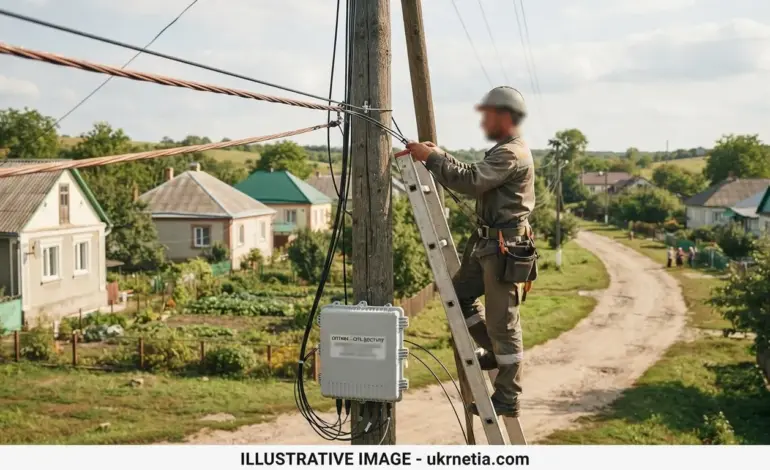
Ukraine has reduced the cost of access to electricity poles for internet providers from UAH 10 to just one kopek, a move expected to make broadband expansion economically viable in 1,043 settlements.
Lower infrastructure costs for providers
The Ministry of Digital Transformation said internet providers have for years avoided some remote villages because the cost of renting electricity poles made network construction commercially unattractive.
Under the new rules, providers will pay a symbolic one kopek instead of UAH 10 per pole, allowing them to redirect funds toward network construction and equipment.
The measure is expected to create conditions for connecting 1,043 settlements where residents currently do not have access to home internet.
Support for fiber-optic networks
The lower rate applies not only to electricity poles located within villages. It also covers the transit of cables from neighboring settlements, reducing the cost of building network sections needed to reach more remote communities.
The Ministry of Digital Transformation expects providers to use the savings to purchase equipment, modernize communication nodes and expand modern optical networks, including xPON technology.
xPON networks can continue providing internet during power outages because the optical network does not require active equipment between the provider and the subscriber. The user’s router and optical terminal can be powered from a battery or power bank.
Rules will remain in place after the war
The reduced infrastructure access fee will apply throughout the period of martial law and for one year after it ends. The government says this longer period is intended to give providers more certainty when planning investments in rural networks.
For residents, the measure could eventually mean access to stable home internet in settlements that have remained outside commercial broadband networks.
The Ministry said better connectivity would also make it easier for people in remote communities to use digital government services, banking, education and remote work.
The reduction in pole rental costs does not itself mean that residents will receive internet for one kopek. The measure concerns the cost of infrastructure access for providers; the availability, connection conditions and subscription price will depend on individual providers and local network construction.