What Is Everyday Life Like in Ukraine? A Guide to Ukrainian Society and Daily Life



“Where is that war?”
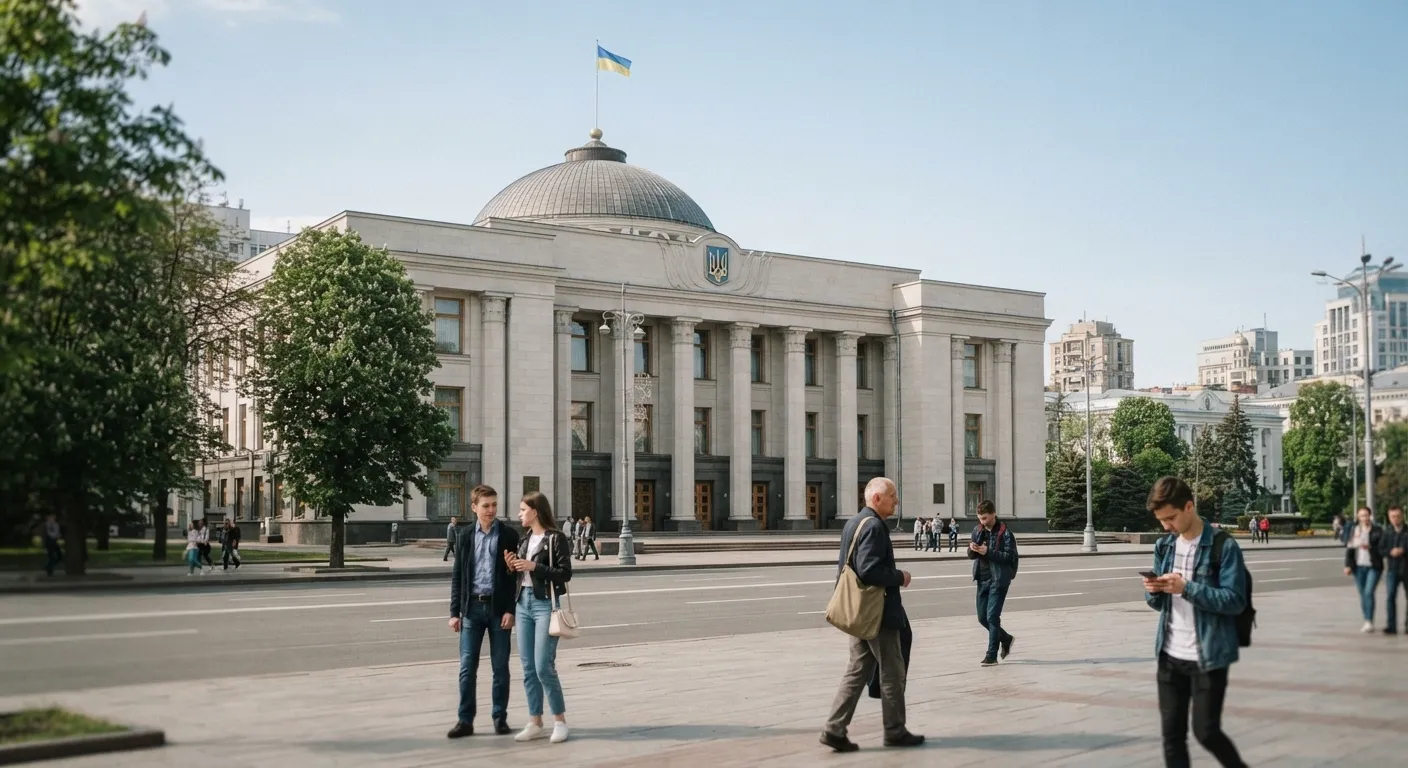
If you fly into Ukraine expecting the country to look like the newsreels — rubble, smoke, columns of refugees — the first hours can be disorienting. You take a train into Kyiv. People are drinking flat whites on Khreshchatyk. Someone laughs walking out of a café. Traffic idles at the lights. A busker plays guitar in an underpass. Couples argue about where to eat. Teenagers film TikToks in a park where the tulips are in bloom.
A foreigner who arrives on a quiet day — no sirens, no strikes for a stretch — can end up thinking a thought that later feels obscene: Where is that war?
And then, usually, it comes. An air-raid alert rolls across your phone, flat and mechanical. Somewhere a generator coughs to life. People finish their coffee, glance up, and move — not in panic, but in the practiced way of a person who has done this a thousand times — toward a metro station, a stairwell, an underground car park. Later that night you hear the buzz. Ukrainians can now identify the sound of a Shahed drone the way you might recognize a neighbor’s car engine. It has a lawn-mower drone to it, a mechanical insect grinding across the dark. Then either it passes, or it doesn’t.
This is the essential paradox of Ukraine today, and any honest guide has to begin with it. Life is, in many respects, startlingly ordinary. It can look a lot like Poland, or Croatia, or any other Central European country — the same supermarkets, the same delivery apps, the same office jobs and school runs and Saturday markets. And then, without warning, a drone can fall on your head, or you can go to sleep in your own bed and never wake up because a missile finds your apartment block, or you can be a man from a village who came into Kherson to sell vegetables and end up chased around your own van by a Russian FPV drone while, somewhere across the river, a soldier practices his aim on you.
Both of these things are true at the same time. That is what it means to live in Ukraine now.
Normal life, and how it holds
Start with the ordinary, because the ordinary is where most Ukrainians spend most of their days, and because the endurance of the ordinary is itself the story.
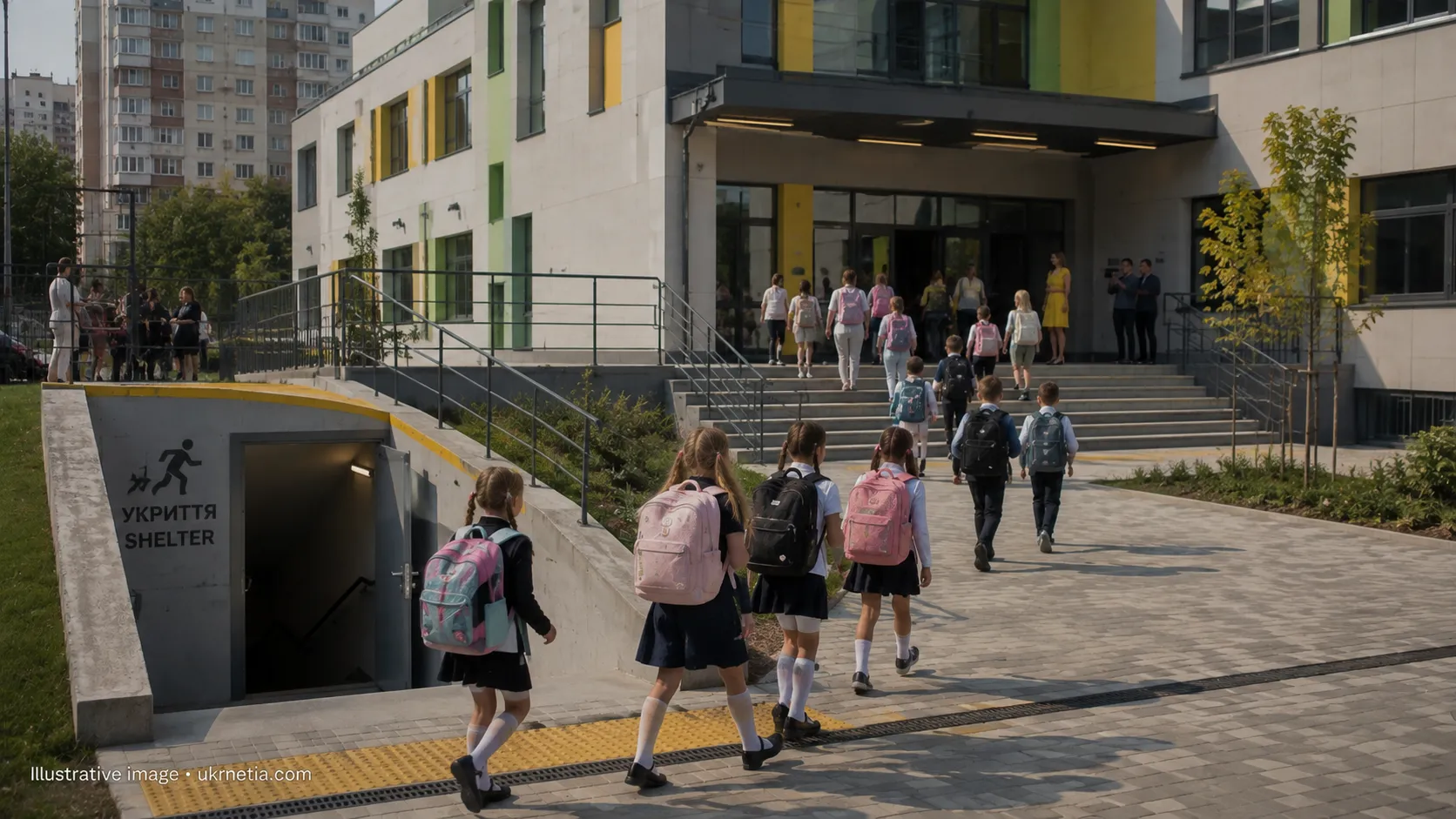
People go to work. Offices open. Baristas pull espresso. Couriers weave through traffic. Businesses launch new projects even when, by any rational reckoning, the moment for launching projects has passed. Schools and universities run — often in a hybrid format, splitting time between classrooms and screens, but they run. Ukrainian education has bent itself into new shapes so that children keep learning and stay reasonably safe, with reinforced shelters built into schools and evacuation plans updated as a matter of routine.
Cities have rewired themselves around the war without surrendering to it. Kyiv, according to people who live there, still sounds like Kyiv: a siren somewhere in the distance, and nearby someone laughing on their way out of a café with a morning coffee. Neighborhoods keep their character — one district creative and bohemian, another all business, another a dense working-class sprawl, another the transport heart of the city that never quite stops moving. Across the country, so-called “points of invincibility” have appeared: places where, when the power is knocked out, you can charge your phone, get a hot cup of tea, warm up, and feel that you are not alone in the dark.
And people do the things people do. They go to the theater. They go to concerts. When a rock band plays, the hall fills. They ride the metro and the trams and the marshrutky. They ice-skate at Christmas markets under strings of lights, sometimes wearing headlamps because the grid is down. They fall in love and break up and get married and bury people. Opera performances continue. Soldiers on leave attend church. In the country’s second winter of war, one photographer captured all of this at once — the skating, the markets, the funerals, the generators purring on the sidewalks — and it remains the truest picture of the place: not despair, and not defiance-as-poster, but the stubborn continuation of life around the edges of catastrophe.
Ukrainians have had to recalibrate what “normal” even means — monthly, weekly, daily, sometimes hourly. In the first days of the invasion, normal meant a ghost town, the only crowded place the central train station as people fled west. In a good summer, normal meant packed bars until curfew. In winter, normal means blackouts, scheduled and unscheduled, loosely tracking Russia’s near-weekly waves of drones and missiles. The definition keeps moving. People keep adjusting. That adjustment — exhausting, endless — is one of the quiet, uncelebrated labors of Ukrainian daily life.
There are no safe places, but there are different dangers
It is tempting to draw a map of Ukraine with a safe half and a dangerous half. Resist it. There is no safe place in Ukraine — a long-range missile or a Shahed can reach Lviv near the Polish border as easily as it reaches the east — but there are very different textures of danger depending on where you stand.
The far west — Lviv, Uzhhorod, Ivano-Frankivsk — is the closest thing to a rear. Life here can feel almost peacetime on a good week: full restaurants, tourists, university students, wedding photographers in the old town squares. But “rear” is relative. Lviv has taken devastating strikes on residential buildings. And the west carries its own particular grief: it is where many of the fallen come home. The first soldiers’ funerals of the war filled Lviv’s Greek Catholic churches, and they have not stopped since.
The big cities of the center — Kyiv, Dnipro — live the double life most fully. They are large enough to absorb the war into a rhythm of ordinary work and culture, and important enough to be targeted constantly. This is where the paradox is sharpest: a normal office day, a normal date, a normal school pickup, punctuated by the sprint to a shelter and the grim morning-after ritual of checking which district was hit.
The east and the frontline cities — Kharkiv, and the towns strung along the contact line — live under a different sky. Kharkiv sits about thirty kilometers from the Russian border; air-raid sirens there long ago stopped being events and became weather. Glide bombs, which give almost no warning, are a constant terror. People still work, still shop, still send their kids to underground schools built in the metro — but the margin for error is measured in seconds.
Kherson is its own category of horror, and it deserves to be described plainly, because it is where the war has invented something genuinely new. The city was liberated in November 2022, but the front line simply moved to the Dnipro River that runs through it. Russian forces sit on the far bank, a few kilometers away. From there, since the summer of 2024, they have conducted what residents call the “human safari”: small FPV and grenade-dropping drones sent across the river not to hit military targets but to hunt individual civilians — a woman getting out of her car, a man walking his dog, a pensioner at a bus stop.
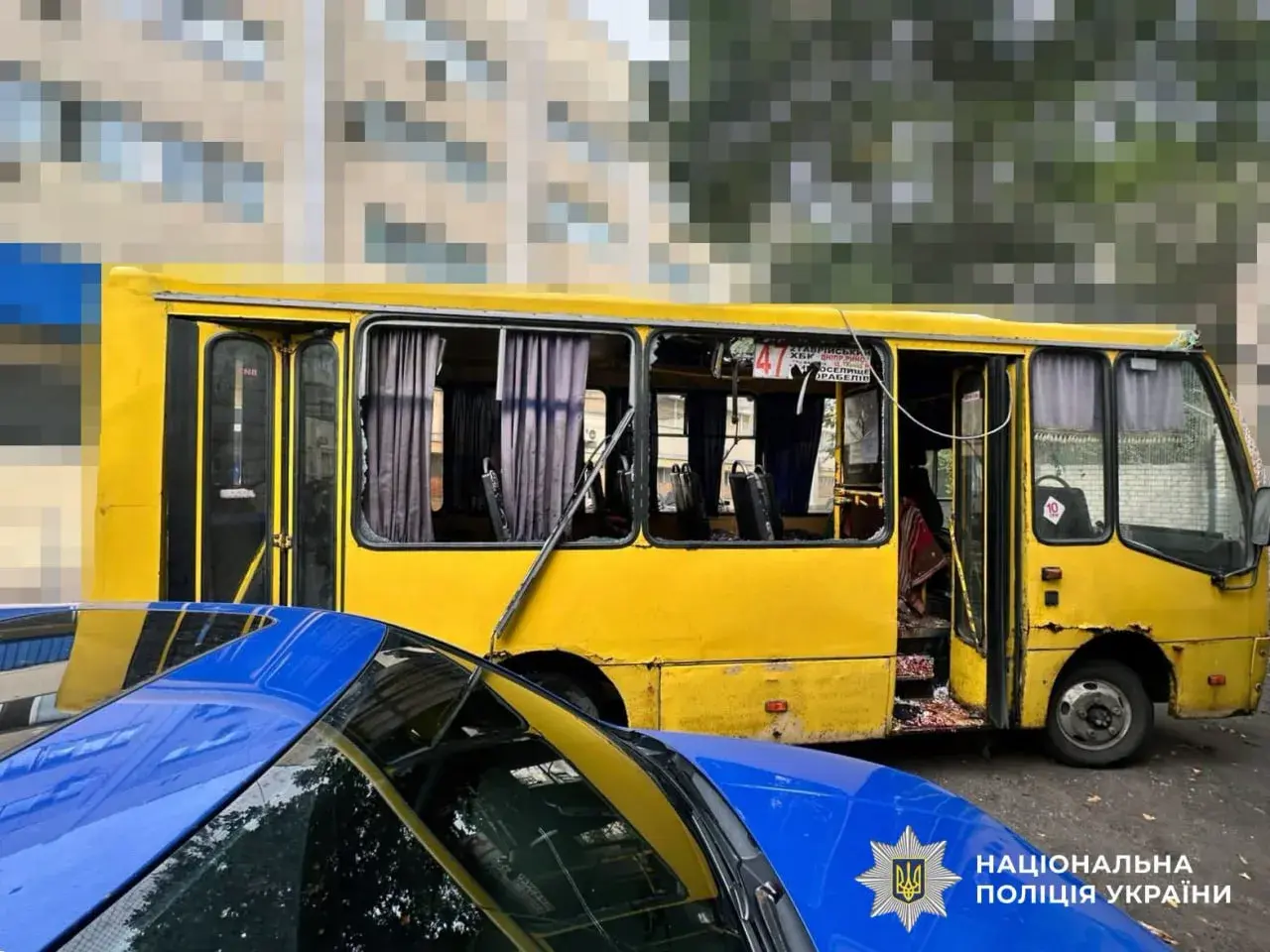
The Russian crews film it themselves and post the videos, which is the only reason the pattern is so thoroughly documented. In August 2026, geolocated police footage showed a Russian drone circling and taunting a 52-year-old vegetable seller named Yurii as he set up his market stall, then diving at him and exploding; he survived with shrapnel wounds and a concussion. “I was showing the drone, ‘Look, there are vegetables,’ but it started flying right at me,” he said from his hospital bed. He had come in from a village to earn a little money.
A local resident described it in the barest terms: “It’s a safari for people.” Officials and residents say Russian units cycle drone crews through Kherson deliberately — using the civilians of the city as live targets to train operators before rotating them east to the front. The United Nations’ commission of inquiry concluded in 2025 that these attacks were widespread, systematic, and part of a coordinated policy to terrorize and depopulate the area — that they amount to crimes against humanity. In the first half of 2026, short-range drones alone killed hundreds of civilians and injured thousands, a sharp jump on the year before. Kherson’s answer is heartbreakingly low-tech: municipal crews string fishing nets over central streets, hospital courtyards, and generators, and the city government has moved its offices underground.
So: no safe places. Just different ways the war can find you.
Rural and urban: two different wars
The war is not experienced the same way in a Kyiv high-rise and a village in Kharkiv oblast, and the difference is not only about proximity to the front.
Cities have infrastructure that can be hardened — metro stations that double as shelters, reinforced basements, points of invincibility, hospitals, hybrid schooling, the density that lets services keep running even when the power fails. A city can lose electricity and water and still function, grimly, on generators and improvisation.
Rural areas near the front live closer to the bone. Villages are strung out, hard to shelter, hard to evacuate, hard to supply. Postal workers drive frontline routes with one ear uncovered so they can hear a drone’s rotors over the engine. A child in one northern region reportedly snapped the fiber-optic tether of a drone with his bare hands. Farmers work fields that may be mined. When a village school is destroyed, there is often no second building to move into, and a fifteen-year-old finds himself finishing his education on a patchy phone connection, hoping his younger brothers will someday get a proper classroom. Rural communities also empty out — the young leave, the old stay — so that the texture of village life becomes older, quieter, more precarious, more dependent on volunteers and humanitarian convoys that are themselves now targeted.
The young: growing up with the war as a clock
Ukraine’s teenagers are living through adolescence and war at the same time, and the war has become the clock they measure their lives by: there is before the full-scale invasion, and there is after. For those from occupied towns, the dividing line is the day the occupation came.
In many ways they are teenagers like any others. They juggle high school and dread their final exams. They search for who they are. They do photo shoots for Instagram, obsess over friendships, get bored, complain that there is nothing to do — because curfews cut the evenings short and many hobbies and clubs have simply shut down. But their values are shaped less by textbooks than by the blunt lessons of the war: near-misses, blackouts, the funerals of people they knew, the wrenching choice every one of them will eventually face between staying out of a sense of duty and leaving before it’s too late.
School, for a great many of them, has meant years of inconsistent online classes, patchy connectivity, and lost learning — a gap that worries educators for what it means not just for these kids but for the country’s ability to rebuild. And the mental toll is heavy and measurable: surveys have found that close to a third of Ukrainian teenagers report feeling so sad or hopeless that it stops them doing their usual activities, with the burden falling hardest on girls.
Their relationships to the war differ wildly, even within one city. Some experienced occupation firsthand. Some have parents at the front. Some volunteer — teaching first aid to civilians, attending soldiers’ funerals, protesting for the release of prisoners of war on their weekends. Some are counting down to their eighteenth birthday so they can enlist. And some are counting down to that same birthday so they can leave before the border closes to them. In one Kyiv gym, boys of fourteen to seventeen train in a military youth program, dropping and rolling under a soldier’s barked commands — until an air-raid siren cuts across the campus and they all run for the nearest subway station to wait it out, and for a moment they are just kids again.
The workers: blue collar, white collar, and the man who stays inside
For adults, daily life is organized around work, and work has kept going with remarkable stubbornness.
Blue-collar Ukraine keeps the country physically alive: the electricians and gas crews who race to restore power after each strike, the railway workers who keep trains running on time to the minute even under bombardment, the delivery couriers, the market traders, the farmers, the utility workers who repair the same substation five times. Much of the war’s endurance is really their endurance — the unglamorous, essential labor of keeping the lights on and the shelves stocked.
White-collar Ukraine — and above all the country’s large, world-class IT sector — has adapted by going remote, resilient, and portable. A software engineer can work from a Kyiv flat, from a café in Lviv, from a basement during an alert, laptop balanced on a knee, switching to a phone hotspot when the fiber goes down and to a power bank when the grid does. The tech industry has been a genuine economic lifeline. But — as we’ll see — a white collar offers no protection from the war’s most intimate danger to men.
And then there is the category of person that outsiders rarely picture: the man who stays inside. Under martial law, men between eighteen and sixty generally cannot leave the country, because the military may call on them. Most have not volunteered. Many do not have a бронь — an official work-based deferment from an employer in a critical industry — and do not want to fight. And so a significant number of ordinary Ukrainian men now live in a state of low-grade siege inside their own cities: reluctant to go out, avoiding the metro, avoiding markets and checkpoints, working from home not only because of drones but because of the possibility of being seized on the street.
That fear is not paranoia. It has a name.
“Busification”: the war that comes for you on the pavement
As the war has ground on and the army’s need for men has become desperate, Ukraine’s Territorial Recruitment Centers — the ТЦК — have turned to increasingly aggressive tactics. The Ukrainian word coined for it, so widely used it was named a word of the year, is “busification” (бусифікація): men of conscription age stopped in public and, sometimes forcibly, loaded into vans and buses and taken to recruitment centers.
The scenes, filmed on countless phones, are hard to watch and harder to defend. Men pulled from cars. Men wrestled into vans in daylight. Checkpoints on the main roads where buses are stopped and every passenger’s papers checked. Raids on bars, restaurants, and, in one notorious case, a concert hall in Kyiv after a rock show, where officers detained men whose registration wasn’t in order. Human-rights monitors and Ukraine’s own courts have documented cases of assault during detention, men denied medical treatment or a lawyer, officers operating without proper identification, and deaths in custody. Ukrainian authorities have acknowledged abuses and dismissed some officials; prosecutions have followed in some cases. But the pattern continues, because military manpower is the country’s most limited and most vital resource, and the ledger is brutal.
This is where the war stops being abstract for the man who never wanted it. He is not a coward in any meaningful sense; he is a person who wanted an ordinary life — a job, a family, a Saturday at the market — and who now measures his own city in terms of where the vans wait.
The cruelest irony: coward on Monday, hero on the shield by Friday
Here is the part of Ukrainian life that is almost too bitter to say out loud, and that Ukrainians themselves argue about constantly.
Imagine an ordinary man — a programmer, say, or a barista. He is grabbed off the street. Local commentary, and some of his own neighbors, are quick with their verdict: coward, draft-dodger, hiding while others die. He is processed, given a short stretch of training, and sent east. And then, a month or two later, he is killed — one more name in a war that swallows names — and his body comes home.
When a fallen soldier returns, Ukraine has a phrase for it: he comes home “on the shield” (на щиті) — an image borrowed from the ancient world, the warrior carried back on his shield rather than walking beside it. The cortège moves slowly through the town. A lone trumpeter plays. And along the route, people stop what they are doing and drop to one knee as the coffin passes — a spontaneous, genuine gesture of gratitude that has become one of the central rituals of Ukrainian life since 2014. It is moving. It is sincere.
And it is, for this particular man, unbearably cynical. The same people who called him a coward on Monday kneel for him as a hero on Friday. But it was never his choice. He did not want the shield. He wanted to live. He was not especially patriotic; he was a guy who liked his job and his coffee and his ordinary weekends. The honor is real, and the grief is real, and the community’s need to make meaning out of the loss is real — but so is the terrible fact that the man himself was given no say in becoming the thing they now revere. This gap — between the coerced reality of a death and the sacred meaning draped over it afterward — sits at the raw center of how Ukrainians feel about their war, and it does not resolve. It is not supposed to. It just aches.
None of this diminishes the volunteers — the many who did choose, who went knowingly, whose brothers-in-arms genuinely could not do without them, who wanted their children to grow up free. Their sacrifice is exactly as real as the poster says. The point is only that “hero” and “victim” and “conscript” and “coward” are not clean categories in Ukraine, and that the same funeral can hold all of them at once.
The soldier near the frontline
For the men and women actually at the front, daily life is a different order of existence entirely — one that civilians a hundred kilometers away can barely picture even as they live in the same country.
The frontline soldier’s day is dominated now by the drone. The battlefield has become a place where nothing can move in daylight without being seen and hunted, where a resupply run or a rotation is a lethal gamble, where the enemy is often a machine piloted by someone kilometers away. Between the terror there is boredom, mud, cold, bad sleep, and the strange domesticity of dugouts. And there is the bond that keeps many of them there — the one soldiers describe again and again — that they cannot leave because their brothers need them, injury or no injury. Some, recovered from wounds, ask to go back. That, too, is part of Ukrainian daily life: the fact that some of the people best positioned to quit choose to return, for reasons that have nothing to do with posters and everything to do with the person in the next position.
Life under occupation: the slow erasure
And then there are the Ukrainians on the other side of the line — those in the territories Russia holds: Crimea, much of Luhansk and Donetsk, parts of Kherson and Zaporizhzhia. Their daily life is a different kind of war: not the sudden violence of a drone, but the slow, bureaucratic erasure of the fact that they are Ukrainian at all.
The passport ultimatum. In a March 2025 decree, Vladimir Putin ordered residents of the occupied regions to take a Russian passport or “leave” by September 10, 2025. After that deadline, those who refused were effectively reclassified as foreigners in their own homes. Without a Russian passport you cannot legally own property, collect a pension, hold many jobs, receive humanitarian aid — and, most cruelly, you cannot see a doctor or send your child to school. Occupation authorities have set up passport application desks inside hospitals and instructed medical staff to turn away those without Russian documents. Families naturalize their children not out of loyalty but because only Russian citizens can attend school. As one woman who complied put it, she took a Russian passport simply “to live.” Ukraine, for its part, does not recognize these documents — but tells its people that if taking the paper is what survival requires, take it, and if you can possibly leave, leave.
The language. The erasure is deliberate and cultural. From September 1, 2025, Ukrainian-language instruction was banned in all schools in the occupied territories — the culmination of a years-long campaign to remove the language from public life. Speaking Ukrainian in the wrong place, at the wrong checkpoint, can mark you as suspect. Preserving the language has become a private, almost clandestine act — something you do at home, quietly, with your children, hoping it survives.
The surveillance. Life under occupation means living inside a system of pervasive control. Checkpoints and random searches are constant, most intrusive on the roads toward the front. Phones are checked — your messages, your photos, the channels you follow, the apps you have. Russian television and internet monopolize the information space; independent Ukrainian media is gone. VPNs, though frequently disrupted, are one of the few ways to reach the free Ukrainian internet at all, and using one is a risk. People self-censor reflexively, because a pro-Ukrainian sentiment overheard or a flag emoji found on a phone can be enough.
The filtration and the disappearances. Since 2022 Russia has run “filtration” operations — screening civilians to identify anyone suspected of ties to the Ukrainian army or state or of pro-Ukrainian views. Those flagged can be detained, disappeared, tortured. Human-rights bodies have documented arbitrary killings, enforced disappearances, torture, and sexual violence in the occupied areas, alongside the forced transfer of populations and the abduction and “re-education” of Ukrainian children. Notorious sites like the “Isolation” prison in occupied Donetsk have become bywords for what can happen to a person who ends up on the wrong list.
The severed families. Perhaps the quietest cruelty is the simplest: families split by the line of contact often cannot even talk. A mother in occupied Melitopol and a daughter in free Zaporizhzhia may be an hour’s drive and an entire universe apart — phone calls monitored, messaging apps risky, a visit requiring a long, expensive, dangerous journey out through Russia and back around through a third country, if it can be made at all. Men of military age often cannot make that journey. So people keep their love for one another in coded messages and long silences, and wait.
How to hold all of this at once
So — what is everyday life like in Ukraine?
It is a barista pulling an espresso and a barista being pushed into a van, sometimes the same person on different days. It is a theater full for an evening performance and a metro platform full of families sleeping through an alert, sometimes on the same night. It is a software engineer shipping code from a café in Lviv and a software engineer coming home on his shield to a town that called him a coward last month. It is a teenager doing an Instagram shoot among the tulips and a teenager finishing school on a cracked phone screen because his classroom no longer exists. It is a vegetable seller from a village, setting up his stall in the morning light, showing a machine his tomatoes.
It is, in the west, almost peace. It is, in Kherson, an open-air experiment in hunting human beings. It is, under occupation, the slow bureaucratic murder of an identity. And it is, everywhere, the astonishing, stubborn, unglamorous persistence of ordinary life — coffee and school runs and love and work and Saturday markets — carried on by people who know, in a way most of us are lucky never to learn, exactly how fragile all of it is.
The foreigner’s first thought — where is that war? — is not naïve. It is the whole truth, held for a moment before the other half arrives. In Ukraine, the war is everywhere and nowhere at once. It is in the sound of a distant siren while someone laughs leaving a café. Learn to hear both at the same time, and you will have understood the country better than any single image ever could.
This article draws on reporting and human-rights documentation from 2022 through 2026, including the UN Human Rights Monitoring Mission in Ukraine and the UN Independent International Commission of Inquiry on Ukraine, Human Rights Watch, Freedom House, UNICEF, the U.S. State Department, CSIS, the Jamestown Foundation, and journalism from the Kyiv Independent, NPR, CBS News, Al Jazeera, Rolling Stone, France 24, the BBC, and others. Some sources describing forced mobilization circulate in a heavily politicized information environment; this piece relies on incidents and patterns corroborated by mainstream reporting, court records, and human-rights monitors rather than on partisan framing.