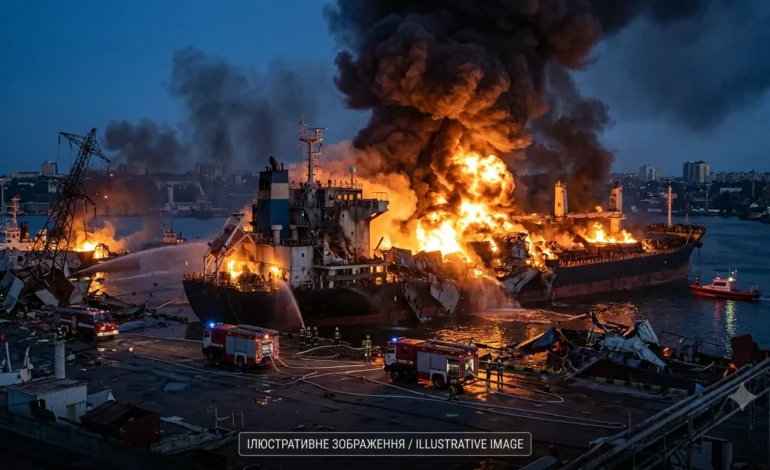
Ukraine Loses One-Third of Grain Export Capacity as Russian Attacks Intensify on Black Sea Ports


Ukraine has lost around one-third of its grain export capacity through Black Sea ports following a wave of intensified Russian missile and drone attacks on port infrastructure, according to the Ukrainian Agrarian Council (UAC). The disruption threatens one of the country’s most important economic sectors and could have wider implications for global food supplies.
Agricultural exports, particularly grain and vegetable oil, remain Ukraine’s largest source of foreign currency earnings. More than 90% of these exports are shipped through three major ports in the Odesa region, which have become frequent targets of Russian strikes in recent weeks.
Export Capacity Falls by a Third
Before the latest escalation, Ukraine’s Black Sea ports were capable of handling about 6 million metric tons of grain exports per month. Following repeated attacks, monthly capacity has fallen to approximately 4 million metric tons, according to the Ukrainian Agrarian Council.
“Russia has begun systematically striking port infrastructure, terminals, and the entire transport logistics chain, once again using ballistic missiles,” the organization said in its weekly market report.
Industry analysts warn that if attacks continue at the current pace and damaged facilities cannot be repaired quickly, the losses to Ukraine’s export infrastructure could become long-term.
Terminals Suspend Operations
The strikes have already disrupted commercial activity across the country’s grain export network. Kernel, one of Ukraine’s largest agricultural exporters, has suspended operations at its terminal in the port of Chornomorsk after repeated Russian attacks damaged loading equipment, storage facilities, and other infrastructure.
Industry sources also told Reuters that four of Ukraine’s 13 major grain export terminals have temporarily stopped purchasing grain, while some shipping companies have begun avoiding Ukrainian ports because of security concerns. Existing freight bookings are being reconsidered, and some shipping contracts have reportedly been canceled.
Logistics Under Pressure
The attacks have affected Ukraine’s broader transportation network as well. According to Ukrainian railway data, the number of grain railcars heading toward Odesa ports fell by 11% during one week in early July, while grain export volumes dropped by 17% over the same period.
Analysts say higher insurance costs, rising freight rates, and uncertainty among shipowners are placing additional financial pressure on Ukrainian exporters.
Global Food Market at Risk
Ukraine remains one of the world’s leading grain exporters, supplying roughly 6% of global wheat exports and 11% of global corn exports. Any prolonged disruption to Black Sea shipping could affect international food markets, particularly countries that rely heavily on Ukrainian agricultural products.
Despite the damage, Ukrainian officials say maintaining agricultural exports remains a strategic priority. The government has pledged to continue protecting port infrastructure and preserving export volumes wherever possible, emphasizing that stable grain shipments are essential both for Ukraine’s economy and for global food security.