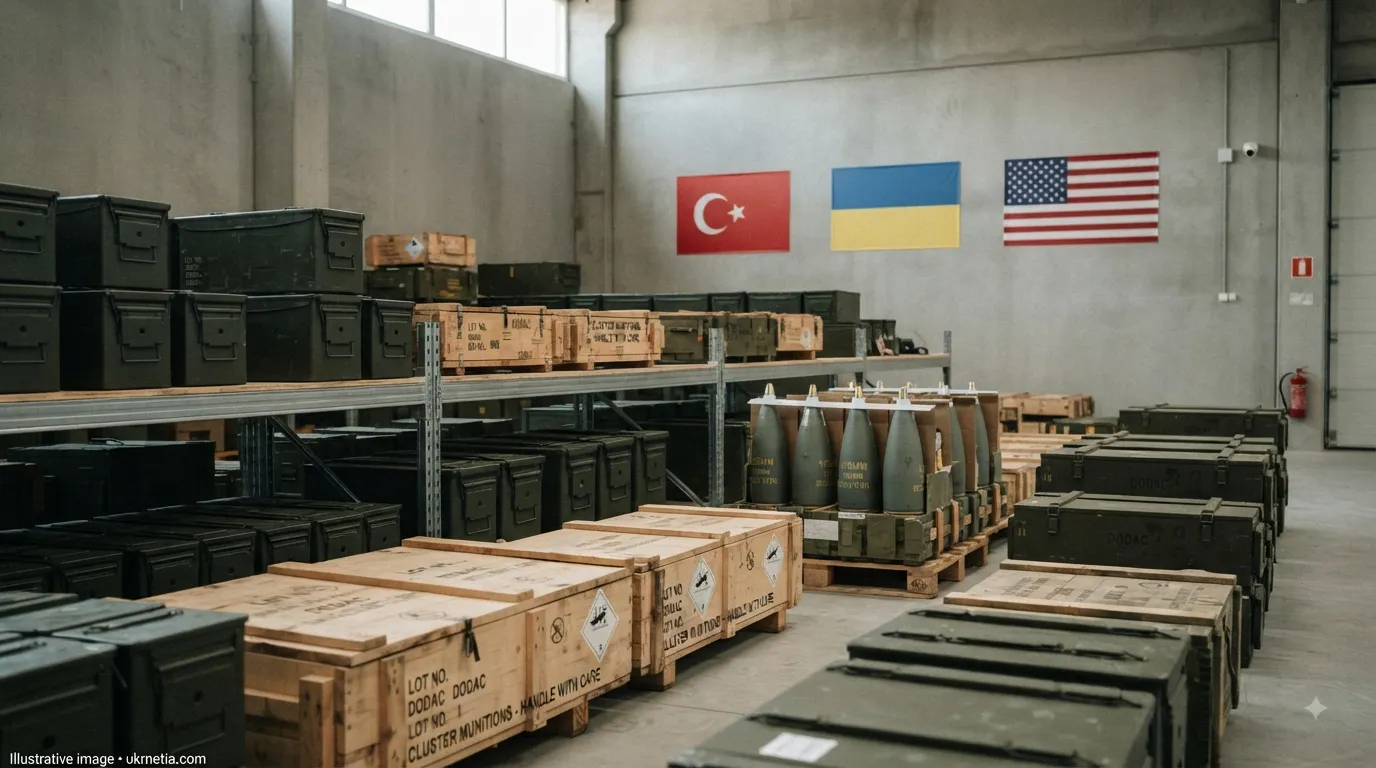
The Strategic Stakes in Ukraine: Hard Power vs. Negotiation and the Trump Equation


The ongoing war between Ukraine and Russia has become a testing ground for how the United States defines its global role. At the centre of that test is the question of whether military support or diplomatic negotiation best serves both Ukrainian defence and American strategic interests. In this context, the posture of Donald Trump — as he balances promises of “Making America Great Again” with a war between two other states — takes on particular significance.
Weapons Support for Ukraine as a Strengthening Strategy
From a purely real-political perspective, supplying Ukraine with the means to impose costs on Russia serves several goals. First, it reaffirms that the United States (as representative of the West) remains a serious actor: that when an ally is attacked, the U.S. backs them with more than rhetoric. For Trump, this feeds directly into the “America Great” narrative: strength abroad reinforces prestige at home.
Second, a well-armed Ukraine changes Russia’s calculation. If Moscow believes that Ukraine is being allowed (and enabled) to fight with Western-style weapons, then Russia must either absorb greater costs or reconsider its strategy. Indeed, recent reporting shows that the Trump administration approved a new mechanism under which U.S.–made weapons will be supplied to Ukraine via NATO, financed by allies, signalling a renewed commitment. The Kyiv Independent
Moreover, Ukraine itself has pressed for access to frozen Russian assets to buy U.S. weapons, thereby tying Moscow’s resources to its defeat. The Washington Post
Third, supporting Ukraine robustly allows the U.S. (and Trump) to claim a moral as well as strategic high ground. Putin’s invasion is widely regarded in the West as a war of aggression. By resisting it with strength, the U.S. aligns itself with the defence of sovereignty, rule of law and international order. It reinforces a narrative of American leadership.
In sum: If Trump chooses to tilt hard into military support for Ukraine, he can present himself as the leader who revived American strength, projected it abroad, confronted an aggressive rival, and restored credibility to U.S. commitments. That brand is compelling for the domestic base that cares about American primacy, deterrence, and projecting toughness.
The Negotiation Option: Risks of Appearing Weak
By contrast, consider the alternative: Trump prioritises negotiation with Putin, perhaps pushing for a quick settlement of the war, while limiting Ukraine’s ability to fight. On its surface this might look pragmatic — wars are costly, alliances get frayed, war-fatigue sets in. But diplomatically, without credible leverage (i.e., Ukraine’s ability to impose costs) negotiation risks being interpreted as capitulation.
Putin’s bargaining position is strengthened when the opponent signals that the war is not costly enough or that Western support is tenuous. If Ukraine lacks Western weapons, then Putin can escalate attacks without fear of major retaliation, thereby telling the West: “You cannot stop me.” Indeed, recent commentary suggests that Trump’s suspending military aid to Ukraine had precisely that effect — it emboldened Russia, or at least signalled to Moscow that U.S. backing for Ukraine wasn’t iron-clad. Al Jazeera
Furthermore, negotiation with a party unwilling to negotiate in good faith — as critics argue about Putin — without first strengthening one’s hand may backfire. Putin has repeatedly been accused of using negotiations as a stalling tactic while continuing the war; in that sense, accepting negotiation too early may reward bad behaviour. As one analyst said of the Trump shift:
“We get a lot of bull-sh-t thrown at us by Putin… he’s very nice all the time, but it turns out to be meaningless.” Al Jazeera
Therefore, if Trump pushes negotiation without giving Ukraine the tools to signal strength, he risks two things: (a) that Putin will press further, seeing weak will; (b) that U.S. credibility among allies and adversaries will erode. On the domestic front, this could be read as weakness — not the image Trump generally claims. In the context of his “Make America Great Again” message, being seen as seeking deals from weaker positions could undermine it.
Domestic-Political and Strategic Implications for Trump
From the vantage of Trump’s domestic and global strategy, these two options map onto different narrative arcs. The “guns and strength” arc: Trump backs Ukraine militarily, confronts Russia, signals American power is back. The “deal-maker” arc: Trump seeks a negotiated settlement, invites Putin to the table, emphasises diplomacy — but only credible if backed by strength.
Domestically, his base includes voters who value military strength, protection of America’s global interests, and confrontation with perceived adversaries. For them, Ukraine becomes a proxy test: does America still lead, or does it retreat? If Trump favours strong support for Ukraine, he can claim he is restoring American leadership, pushing back Russia, protecting democracy and American interests. On the contrary, if he appears to be cutting aid, negotiating prematurely, or showing deference to Russia, his message of strength may ring hollow.
Internationally, the implications are equally significant. U.S. allies watch. If the U.S. demonstrates that it will support weaker partners with credible military backing, then its alliances are bolstered. If instead it appears hesitant or transactional, allies may doubt U.S. commitments, adversaries may exploit the doubt, and the U.S. strategic position erodes. In other words, strength begets credibility, and credibility supports leadership.
In Trump’s case, there’s also the economic dimension: new weapons, arms sales, defence industry involvement — these help justify the “America First” economic narrative. By linking Ukraine aid to U.S. industry (or even to NATO allies reimbursing the U.S.) he can argue that supporting Ukraine serves U.S. economic interests as well. For example, his announced deal whereby NATO would buy U.S. weapons that Ukraine would then receive shows this logic: “we’ll send them weapons and they’ll pay for it.” euronews
However, there’s a real risk in the “guns first” approach: escalation. Supplying weapons means U.S. becomes more deeply implicated, making de-escalation harder. Also, domestic fatigue at cost of foreign wars remains high in some segments. If war drags on, the political window may close. So Trump must calibrate: show enough strength to deter, but avoid open-ended entanglement.
Synthesis and Strategic Recommendation
Putting these threads together, your core idea holds: from a strategic narrative standpoint, if Trump backs Ukraine militarily and resists premature negotiation, he advances his “America strong” line — showing that the U.S. is not just a talker, but a doer. If instead he emphasises negotiation without credible backing, he risks appearing weak — which is the opposite of his brand.
But there are some caveats:
-
Military aid must be credible and sustained: a one-time gesture or wavering commitment undermines the message. Some reports suggest Trump’s policy has been inconsistent (aid freeze, then resume) which weakens leverage. Al Jazeera
-
Negotiation is not inherently bad — it’s often necessary — but only when conducted from strength (i.e., Ukraine can defend, the U.S. can credibly enforce costs). If negotiation begins while Ukraine is on the back foot and Russia senses weakness, it becomes an invitation to further aggression.
-
The domestic audience is varied: while part of Trump’s base values strength, another part emphasises non-entanglement and spending restraint. Balancing those is tricky: strong support for Ukraine may entail higher expenditures and longer commitment, which can alienate some voters.
-
The international alliance context matters: if the U.S. acts alone or in a transactional way (weapons sold, allies reimburse) it may shore up American industrial interests, but may also raise questions of leadership vs. burden-sharing. Some European voices have already pointed out that shared burden matters. Deutsche Welle
Given all that, the strategic recommendation for Trump (if he wishes to maximise his “strength” narrative) is to adopt a “strong-first, negotiate later” posture: ensure Ukraine has the weapons and means to impose credible deterrence; signal that negotiation will only be meaningful once Ukraine is in a position of strength and Russia sees that further aggression has real costs. Doing so allows Trump to claim victory on multiple fronts: America backing its allies, standing up to Putin, strengthening alliances, and preserving the option to negotiate from power rather than appeasement.
Final thoughts
In the complex chessboard of the Russia-Ukraine war, the actions of the United States — and specifically of President Trump — carry reputational, strategic and domestic-political weight far beyond the conflict itself. If Trump chooses to supply Ukraine comprehensively with the weapons it asks for, he can credibly frame the outcome as: “We made America strong again, we backed our allies, we confronted aggression.” On the flipside, if he turns to negotiation without building leverage, he may find himself portrayed as seeking peace from a position of weakness — a narrative he cannot afford under his “Make America Great Again” banner.
Ultimately, strength begets the ability to negotiate; negotiation without strength invites exploitation. For Trump, the question isn’t merely whether to help Ukraine, but how and when. The timing, scale, and credibility of U.S. support will determine whether the diplomatic path ahead is one of leverage or vulnerability. If he gets it right, he reinforces his brand; if he gets it wrong, he risks undermining it.