Russian Agent in Ukraine Sentenced to 15 Years After Renting Apartment Opposite Military Base

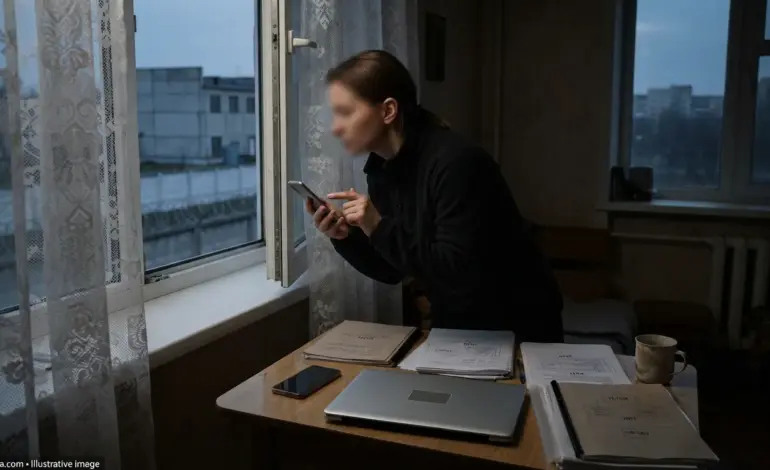

- A court in Khmelnytskyi region has sentenced a 27-year-old local woman to 15 years in prison for treason committed during martial law.
- Investigators said she agreed to cooperate with a representative of Russia’s Federal Security Service (FSB) in March 2025.
- She rented an apartment opposite a Ukrainian military unit in Khmelnytskyi to monitor and document the facility.
- For about two weeks, she regularly photographed and filmed the military site and sent the material to her Russian handler.
- Investigators said a phone application used by the woman recorded the time and GPS coordinates associated with the images.
- She was paid in cryptocurrency, according to the prosecution’s case.
- The court sentenced her to 15 years in prison with confiscation of property under Part 2 of Article 111 of Ukraine’s Criminal Code.
A court in Khmelnytskyi has sentenced a 27-year-old woman to 15 years in prison after finding her guilty of treason for gathering information about a Ukrainian military facility for a Russian intelligence service. Prosecutors said she deliberately rented an apartment opposite the facility and used it as a vantage point for surveillance.
Woman Rented Apartment Opposite Military Facility
A 27-year-old resident of Khmelnytskyi has been sentenced to 15 years in prison for state treason committed during wartime.
According to prosecutors, the woman cooperated with a representative of Russia’s FSB and collected information about a Ukrainian military facility.
The court also ordered the confiscation of her property.
She Was Recruited in March 2025
According to the investigation, the woman agreed to carry out assignments from an FSB representative in March 2025.
Ukrainian law enforcement agencies subsequently uncovered her activities in April 2025.
The Apartment Was Chosen for Surveillance
Investigators said the woman deliberately rented an apartment located opposite one of the military units in Khmelnytskyi.
The location gave her a direct view of the military facility.
According to prosecutors, she used the apartment as a base from which to collect information.
She Recorded the Military Site
For approximately two weeks, the woman systematically photographed and filmed the military facility.
The material was then sent to her Russian contact, according to the prosecution.
The case was therefore not described as a single accidental photograph but as a sustained intelligence-gathering operation.
Her Phone Recorded Location Data
Investigators said the woman installed specialized software on her phone.
According to the case presented by prosecutors, the application recorded the time and GPS coordinates associated with the images.
This information could provide additional context about where and when the footage had been captured.
The Information Was Sent to a Russian Intelligence Representative
The collected photographs and videos were transferred to a representative of Russia’s security service.
The Ukrainian authorities identified the recipient as an FSB representative.
She Was Paid in Cryptocurrency
According to the investigation, the woman received payment for completing the assignments through a cryptocurrency wallet.
This was part of the evidence presented in the case.
Police Discovered the Communications
During a search of the rented apartment, law enforcement officers seized the woman’s mobile phone.
Investigators found correspondence with the Russian intelligence representative on the device.
The communications were cited as evidence of her cooperation with the Russian service.
She Was Detained in April 2025
Ukrainian authorities exposed the woman’s activities in April 2025.
She remained in custody from the time of her detention, according to the report.
The Court Found Her Guilty of Treason
The court convicted the woman under Part 2 of Article 111 of Ukraine’s Criminal Code.
This provision concerns state treason committed under martial law.
The sentence was 15 years in prison and confiscation of property.
Why the Case Was Treated as Treason
The prosecution’s case was based on cooperation with a Russian intelligence service and the deliberate transfer of information about a Ukrainian military facility.
Because the alleged activity took place during martial law, the relevant provision provides for particularly severe punishment.
The Military Facility Was the Main Target
The investigation focused on the woman’s collection of information about a specific Ukrainian military site.
Authorities did not publicly disclose operational details about the facility.
That information has not been included here to avoid reproducing potentially sensitive military details.
The Case Shows How Intelligence Collection Can Happen Without a Military Background
The defendant was a civilian.
According to the investigation, she did not need access to the military facility itself.
Instead, she allegedly used an apartment across the street to observe and document the site.
Physical Proximity Can Be Valuable to Intelligence Services
A location overlooking a sensitive facility can potentially provide information without requiring physical access to the site.
This is one reason Ukrainian authorities regularly warn civilians against photographing military facilities or sharing information about their locations and activities.
The Investigation Relied on Digital Evidence
The case also demonstrates the importance of electronic evidence in modern espionage investigations.
The seized phone reportedly contained communications with the Russian intelligence representative.
The authorities also examined the technical information associated with the photographs.
Cryptocurrency Was Used for Payments
The prosecution said the woman received money through a cryptocurrency wallet.
Cryptocurrency can be used for many legitimate purposes, but law enforcement agencies also investigate its use in cases involving illicit payments.
In this case, investigators treated the cryptocurrency transfers as part of the alleged intelligence operation.
The Defendant Had Previously Faced Criminal Proceedings
The investigation also established that the woman had previously been held legally responsible for crimes involving the illegal circulation of narcotic substances.
That earlier history was separate from the treason case.
The Previous Criminal Record Was Not the Basis of the Treason Conviction
The current sentence was imposed for state treason.
The earlier criminal history was mentioned by investigators as additional background on the defendant.
Ukrainian Authorities Continue to Investigate Russian Intelligence Networks
The case comes amid ongoing Ukrainian efforts to identify people suspected of cooperating with Russian intelligence services.
Since the beginning of Russia’s full-scale invasion, Ukrainian law enforcement agencies have reported numerous cases involving alleged recruitment of civilians.
Recruitment Can Begin Online
Russian intelligence services have been accused by Ukrainian authorities of contacting potential agents through online platforms and messaging applications.
The methods and targets vary from case to case.
Not Every Contact Is Espionage
It is important to distinguish between ordinary communication with people in Russia and criminal cooperation with an intelligence service.
In this case, the court’s conviction was based on evidence presented in the specific criminal proceedings.
The Sentence Is Among the Most Severe Available
A 15-year prison sentence with property confiscation reflects the seriousness with which Ukrainian law treats treason committed during martial law.
The punishment was imposed after the court found the defendant guilty.
The Case Was Based on Prosecutorial Evidence
The investigation was conducted by Ukrainian law enforcement agencies, while prosecutors from the Khmelnytskyi regional prosecution service presented the case in court.
The conviction followed the judicial process.
The Woman Was Not Accused of Carrying Out a Physical Attack
According to the information available, the case concerned intelligence collection and transfer of information.
There is no indication in the source that she personally carried out an attack against the military facility.
Surveillance Was the Alleged Role
Her alleged role was to observe the facility, record information and transmit the collected material.
The prosecution considered this cooperation with the Russian intelligence service sufficient for a treason conviction under wartime legislation.
Why Military Photography Is Sensitive in Ukraine
Ukraine has repeatedly urged civilians not to photograph military facilities, troop movements, air-defense positions or the aftermath of attacks in ways that could reveal operational information.
Images can contain more information than appears at first glance, including location data and timing.
The GPS Issue Is Particularly Relevant
The reported use of an application that recorded GPS coordinates demonstrates why digital metadata can matter.
A photograph can potentially contain information about where it was taken even when the location is not obvious from the image itself.
The Case Highlights the Importance of Digital Security
Modern intelligence operations increasingly involve smartphones, messaging applications, digital payments and location data.
This means investigations can involve both traditional evidence and extensive digital records.
The Court’s Decision Is the Latest Stage of the Case
The woman’s activities were uncovered in 2025.
The investigation and court proceedings followed.
The August 28, 2026 decision now establishes the sentence reported by the Ukrainian authorities and media.
The Sentence Includes Property Confiscation
In addition to 15 years in prison, the court ordered confiscation of property.
This is an additional consequence of the conviction under the relevant wartime treason provision.
The Case Illustrates the Risks of Cooperation With Russian Intelligence
For civilians approached by Russian intelligence services, the legal consequences of agreeing to provide information can be extremely serious.
The Khmelnytskyi case demonstrates how Ukrainian courts treat such cooperation during wartime.
Ukrainian Cities Remain Intelligence Targets
Military facilities in Ukrainian cities can be valuable targets for intelligence collection.
Russia’s intelligence services seek information that can potentially support military planning.
This makes civilian observation around sensitive sites a continuing security concern.
Why the Apartment Location Mattered
The fact that the woman rented an apartment specifically opposite the military facility was central to the prosecution’s account.
It suggested deliberate preparation for surveillance rather than an incidental opportunity to observe the site.
The Operation Lasted Two Weeks
The investigation says the woman repeatedly documented the facility over approximately two weeks.
That pattern was an important element of the case.
The Material Was Systematically Transmitted
The collected information was not allegedly kept on her phone.
It was sent to her Russian contact.
That transfer established the connection between the surveillance activity and the alleged intelligence operation.
The Investigation Did Not Depend Only on Her Photographs
The seized correspondence provided additional evidence.
Investigators found communications with the Russian intelligence representative on her phone.
This helped establish the alleged relationship between the defendant and her handler.
The Court Accepted the Prosecution’s Case
The court ultimately found the woman guilty of treason.
The 15-year sentence indicates that the court accepted the prosecution’s evidence and legal qualification.
The Case Was Reported by Ukraine’s Prosecutor General
The Office of the Prosecutor General was cited as the source of the information about the conviction.
StopCor and other Ukrainian media reported the details of the case based on that official information.
What This Means for Civilians
The case is also a reminder that civilians living near military infrastructure can unintentionally become exposed to sensitive information.
Ukrainian authorities have repeatedly warned against sharing images or details that could assist Russian forces.
A Smartphone Can Become a Source of Sensitive Data
Modern phones automatically collect and store information such as location, time and device metadata.
In this case, investigators specifically highlighted the use of software that recorded GPS coordinates.
The Broader Security Challenge
Ukraine’s defense against Russian intelligence activity extends beyond the battlefield.
Counterintelligence agencies also have to identify people who collect information inside Ukrainian cities.
The Khmelnytskyi Case Is One Example
The conviction does not by itself establish how widespread similar activity is.
It does demonstrate that Ukrainian authorities are actively investigating suspected intelligence networks and bringing cases to court.
What the Court Decided
The final sentence is:
15 years of imprisonment plus confiscation of property.
The conviction concerns state treason committed during martial law under Part 2 of Article 111 of the Criminal Code of Ukraine.
The Case Is Now a Judicially Decided Matter
Unlike an initial arrest or suspicion, this case has reached a court verdict.
The woman was found guilty and sentenced.
The available reports do not provide further details about whether an appeal has been filed.
Why This Case Has Attracted Attention
The unusual detail is how the alleged surveillance operation was organized.
Rather than attempting to enter the military facility, the woman reportedly rented a home directly opposite it and used the location to observe the site.
The Method Was Simple but Deliberate
The case illustrates that intelligence gathering does not always require sophisticated technology.
A smartphone, a strategically located apartment and a communication channel with a handler were reportedly enough to create an intelligence-collection operation.
The Digital Trail Ultimately Became Evidence
The same technology that enabled the alleged operation also helped investigators reconstruct it.
Messages on the phone, together with other evidence, were used to establish the connection with the Russian intelligence service.
The Final Outcome
The 27-year-old woman will serve a 15-year prison sentence and lose property under the court’s decision.
The case adds to a growing body of Ukrainian wartime treason prosecutions involving alleged cooperation with Russian intelligence.
A Case About Espionage, Digital Evidence and Wartime Law
The Khmelnytskyi verdict demonstrates how Ukraine’s legal system is treating civilian cooperation with Russian intelligence during the full-scale war.
The alleged operation involved a rented apartment, systematic surveillance, digital communications and cryptocurrency payments.
The court ultimately classified the activity as state treason under martial law and imposed one of the country’s most severe criminal penalties.