Pentagon Wants Europe to Take Greater Responsibility for Its Defense and Support for Ukraine

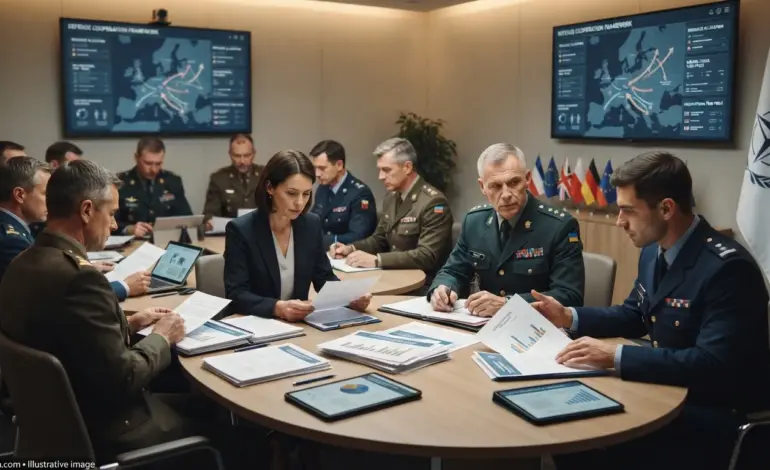

- The United States expects Europe to take primary responsibility for its own conventional defense.
- Washington also wants European allies to take a leading role in supporting Ukraine.
- US Under Secretary of Defense for Policy Elbridge Colby made the remarks at NATO headquarters in Brussels on August 27.
- The US has sent European allies a questionnaire asking for their assessments and plans for a future European-led conventional defense model.
- Colby stressed that the change does not mean the United States is leaving NATO.
- The Pentagon is separately reviewing the US military presence in Europe, with options expected to be presented to Defense Secretary Pete Hegseth by November 6.
The United States wants Europe to assume greater responsibility for its own conventional defense and take the lead in supporting Ukraine, a senior Pentagon official said in Brussels. The statement comes as Washington reviews its military posture in Europe and asks NATO allies to provide plans for a more European-led defense model.
Pentagon Calls for a New European Defense Role
The United States is pushing European allies toward a larger role in defending the continent and supporting Ukraine.
Elbridge Colby, the US Under Secretary of Defense for Policy, said on August 27 that Washington expects Europe to take primary responsibility for its own conventional defense.
He made the comments during meetings at NATO headquarters in Brussels.
Europe Should Also Lead Support for Ukraine
Colby linked the shift in European defense responsibility directly to Ukraine.
According to the Pentagon official, Europe should take a leading role in supporting Ukraine while the United States remains committed to NATO.
This would represent a significant change in how the transatlantic alliance divides responsibilities for European security.
The US Is Not Leaving NATO
Colby was careful to distinguish the new approach from a US withdrawal from NATO.
He said the United States would remain in the Alliance and continue to be linked to NATO.
The proposed change concerns the distribution of responsibilities rather than the end of American participation in European security.
Washington Wants Europe’s Views in Writing
The United States has already sent European allies a questionnaire asking them to provide their assessments and plans.
The questionnaire concerns how Europe could assume greater responsibility for conventional defense in the future.
Washington also wants to understand how the contributions and major defense investments already being made by individual European countries would fit into the new model.
Poland, Germany and the Netherlands Were Mentioned
Colby specifically referred to major investments being made by countries including Poland, Germany and the Netherlands.
He said the United States wants to understand how these investments would be managed over time within a more European-led defense structure.
Other European allies are expected to participate as well.
What Does “European-Led Defense” Mean?
The concept does not necessarily mean that Europe would operate independently of NATO or the United States.
Instead, it points toward European countries providing a larger share of the troops, conventional military capabilities, infrastructure and financial resources needed to defend Europe.
The United States would remain an essential part of NATO while potentially reducing some of its direct responsibilities.
The Shift Comes at a Sensitive Moment
The announcement comes as Washington conducts a review of its military presence in Europe.
The review was launched earlier this year and could result in changes to the number and deployment of US forces stationed on the continent.
That possibility has created uncertainty among European allies.
The Pentagon Is Reviewing US Troop Deployments
According to Reuters, the Pentagon’s review is expected to produce at least four possible options for Defense Secretary Pete Hegseth.
The options are due by November 6, ahead of a formal deadline in December.
The review covers the structure and deployment of US forces across Europe.
Around 80,000 US Troops Are in Europe
The Pentagon review could potentially affect a US military presence of approximately 80,000 personnel stationed across Europe.
European governments are therefore watching the process closely because changes in American deployments could alter the Alliance’s conventional defense posture.
Europe Has Already Been Increasing Defense Spending
The shift is not happening in a vacuum.
European countries have significantly increased defense spending since Russia launched its full-scale invasion of Ukraine in 2022.
Countries close to Russia’s borders, particularly Poland and the Baltic states, have pursued especially ambitious military expansion programs.
Poland Is Becoming a Major European Military Power
Poland is one of the clearest examples of the change Washington is asking for.
Warsaw has dramatically increased defense spending and invested in tanks, artillery, air defense, aircraft and other military capabilities.
Its geographic position makes strengthening its armed forces particularly important for NATO’s eastern flank.
Germany Is Also Expanding Its Military Role
Germany has announced major increases in defense spending and is rebuilding capabilities that had declined after the end of the Cold War.
Berlin’s military modernization is likely to become increasingly important if European countries assume more responsibility for conventional defense.
The Netherlands Is Also Investing
The Netherlands was another country specifically mentioned by Colby.
Dutch defense spending and military modernization have increased as European governments reassess security risks following Russia’s invasion of Ukraine.
Ukraine Is Central to the New Model
The proposed redistribution of responsibility is closely connected to the war in Ukraine.
Europe is already providing substantial financial and military assistance to Kyiv.
Washington now wants European governments to take an even more central role in maintaining that support.
Why Ukraine Matters to European Security
For many European governments, supporting Ukraine is no longer seen simply as foreign aid.
The outcome of Russia’s war directly affects European security.
A Russian military victory could increase pressure on NATO’s eastern flank and force European countries to devote even more resources to defense.
Europe Is Already Funding Ukraine
The European Union and its member states have provided extensive military, financial and humanitarian assistance to Ukraine.
The EU has also committed to accelerating deliveries of air-defense systems, ammunition, drones and missiles to Ukraine.
The Pentagon’s latest message suggests that Washington wants this European role to become even more central.
Air Defense Remains a Priority
Ukraine’s immediate military needs include air-defense systems and interceptor missiles.
Russia continues to launch large-scale drone and missile attacks against Ukrainian cities and infrastructure.
European countries therefore face pressure to increase both financial contributions and defense production.
The US Is Also Reorganizing Ukraine Support
Washington has already begun changing the way some elements of US military assistance to Ukraine are organized.
US European Command was directed in August to oversee the reorganization of the Security Assistance Group-Ukraine and realignment of responsibilities involving NATO’s Security Assistance and Training-Ukraine structure.
The US military said the reorganization would not affect American support for Ukraine but would shift leadership of key elements toward allies.
This Fits the Broader Strategy
The reorganization of military assistance and Colby’s latest comments point in the same general direction.
European allies are being encouraged to assume more operational and financial responsibility, while the United States preserves its role within NATO.
What Does This Mean for Ukraine?
For Ukraine, the main question is whether greater European responsibility will translate into more predictable and sustained military support.
Europe has the financial resources and industrial capacity to provide substantial assistance.
The challenge is turning those resources into weapons, ammunition and systems quickly enough.
It Could Mean More European Weapons
A larger European role could eventually mean increased production and deliveries of artillery ammunition, drones, air-defense systems and other equipment.
It could also encourage European countries to make longer-term commitments instead of relying primarily on emergency packages.
But Europe Has Its Own Military Gaps
European militaries still have significant capability gaps.
Many countries reduced defense spending after the Cold War and became heavily dependent on American capabilities.
These include areas such as strategic intelligence, airlift, missile defense, surveillance and some advanced military technologies.
Rebuilding Those Capabilities Will Take Time
Even substantial increases in defense spending cannot immediately create new military capabilities.
New aircraft, ships, air-defense systems and ammunition factories require years of planning and production.
Training personnel and developing command structures also takes time.
Russia’s War Has Accelerated the Process
The war in Ukraine has nevertheless pushed European governments to move much faster than they had planned.
Defense budgets are rising, military production is expanding and countries are increasingly discussing long-term European defense cooperation.
NATO Remains the Framework
Despite the proposed shift, NATO remains the central framework for European collective defense.
Colby’s comments specifically emphasized that the United States would remain in the Alliance.
The question is therefore how NATO’s internal division of responsibilities will evolve.
The Idea of “NATO 3.0”
Colby referred to a future model as “NATO 3.0.”
In his description, this would involve European-led conventional defense while maintaining the transatlantic connection.
The concept suggests a NATO in which European members contribute a substantially larger share of conventional military capabilities.
The US Still Sees Europe as Important
Colby also emphasized that Europe remains a critical US interest even as Washington prioritizes the Western Hemisphere.
This is significant because it indicates that the United States does not view the shift as a rejection of Europe.
Instead, Washington is seeking a different balance of responsibilities.
Why the Western Hemisphere Matters
The Trump administration has increasingly emphasized security priorities closer to the United States.
That does not automatically mean Washington is abandoning European allies.
But it does mean American policymakers are asking whether European countries should carry more of the conventional defense burden on their own continent.
European Allies Are Being Asked to Make Plans
The questionnaire sent by Washington is important because it moves the discussion from general political statements to concrete planning.
European governments are being asked to explain how they would contribute to a future defense model.
Their answers could influence the eventual structure of NATO’s conventional defense.
The Questionnaire Also Addresses Existing Investments
Colby specifically mentioned the need to account for major national investments.
This means the proposed model is not simply about asking every European country to spend the same amount.
Instead, Washington wants to understand how different military capabilities and financial commitments fit together.
This Could Change European Defense Planning
If implemented, the new approach could encourage European countries to coordinate their defense spending more closely.
Instead of maintaining fragmented national capabilities, governments could increasingly specialize and cooperate on major systems.
It Could Also Strengthen Europe’s Defense Industry
A larger European defense role would likely increase demand for European-made weapons and ammunition.
That could encourage additional investment in factories and defense technology.
For Ukraine, stronger European production capacity could eventually mean a larger and more reliable supply of military equipment.
The Risk Is a Transition Gap
The biggest concern is what happens during the transition.
If the United States reduces some capabilities before Europe can fully replace them, NATO could temporarily face gaps.
This is one reason European governments are closely watching the Pentagon’s review.
Ukraine Cannot Afford a Support Gap
The issue is even more urgent for Ukraine.
The Ukrainian military depends on a steady supply of ammunition, air-defense interceptors and other equipment.
Any uncertainty about future assistance can make long-term military planning more difficult.
The Timing of the Pentagon Review Matters
The Pentagon’s review is expected to produce options by November 6, with a formal deadline in December.
That gives European governments only a limited period to respond to Washington’s questionnaire and develop their own proposals.
The Change Would Not Happen Overnight
Even if Washington and European governments agree on a new model, implementing it would take years.
Military capabilities cannot be transferred instantly.
The process would involve budgets, procurement contracts, infrastructure, personnel and command arrangements.
What Europe Would Need to Provide
A truly European-led conventional defense would require more than larger budgets.
European countries would need sufficient:
- ammunition stocks;
- air-defense systems;
- combat aircraft;
- armored forces;
- long-range fires;
- logistics;
- intelligence and surveillance;
- military transport;
- command-and-control capabilities.
The exact division of these responsibilities remains to be negotiated.
Ukraine Could Become Part of the New Architecture
The future European defense model could also deepen Ukraine’s integration with European security structures.
Ukraine already cooperates extensively with NATO and European militaries.
A larger European defense role could create additional opportunities for joint production, training and procurement.
Europe Has a Direct Interest in Ukraine’s Defense
European governments have increasingly argued that supporting Ukraine is also an investment in Europe’s own security.
Ukraine’s military is currently confronting Russia directly, preventing Russian forces from advancing farther west.
This makes Ukrainian defense an important part of the security architecture of the continent.
The Strategic Question for Europe
The central question is no longer simply whether Europe should spend more on defense.
It is whether European countries can collectively develop the capabilities needed to defend the continent with less reliance on American conventional forces.
That is a much larger strategic challenge.
The Strategic Question for the United States
For Washington, the issue is how to preserve NATO’s effectiveness while freeing American resources for other priorities.
Colby’s comments suggest that the US wants European allies to become more capable rather than simply asking Washington to provide the majority of conventional defense capabilities.
What Happens Next
European governments will respond to the US questionnaire and discuss the future division of responsibilities within NATO.
The Pentagon will continue its review of US deployments in Europe.
The results could provide the first concrete indication of how significant the shift in American military posture will be.
The November Deadline Will Be Important
The Pentagon expects to have several deployment options ready for Hegseth by November 6.
Those options will help determine whether Washington intends to make major changes to the US military presence in Europe.
The Future of NATO Is Being Debated
The debate is not about whether NATO should disappear.
Instead, it concerns what NATO should look like in a world where European countries are expected to carry more of the conventional defense burden.
Colby’s “NATO 3.0” description provides one indication of the direction Washington would like to see.
A Major Change for Europe
If the new model is implemented, Europe could become much more responsible for its own security than at any point since the end of the Cold War.
That would represent a major strategic transformation.
And Ukraine Is at the Center of It
The war in Ukraine is one of the main reasons European defense policy has changed so dramatically.
The continent’s governments now have a direct and immediate reason to increase military capabilities.
The Pentagon’s message is that this process needs to go further.
What the Announcement Does — and Does Not — Mean
It does not mean that the United States has announced a withdrawal from NATO.
It does not mean that American military forces are immediately leaving Europe.
It does mean that Washington is actively discussing a future in which European allies take primary responsibility for conventional defense and lead support for Ukraine.
A New Division of Responsibility
The emerging model can be summarized simply:
Europe takes more responsibility for Europe’s conventional defense and Ukraine support, while the United States remains inside NATO and retains a major strategic role.
How far this shift goes will depend on the responses from European governments and the outcome of the Pentagon’s review.
Why This Matters for Ukraine
For Kyiv, a stronger European role could ultimately be positive if it results in larger and more predictable supplies of weapons and ammunition.
But the transition also creates uncertainty.
Ukraine will be watching closely to ensure that a change in transatlantic responsibility does not become a reduction in practical support.
The Bigger Picture
The United States is signaling that the era in which Washington carried the largest share of Europe’s conventional defense burden is changing.
Europe is being asked to become more militarily capable, more financially responsible and more directly involved in supporting Ukraine.
The next several months will show whether European governments are prepared to turn that political expectation into concrete military capabilities.
The Pentagon’s latest message marks an important moment in the debate over Europe’s future security. Washington wants European allies to take primary responsibility for conventional defense on the continent and assume a leading role in supporting Ukraine, while the United States remains committed to NATO. The shift comes as the Pentagon reviews US military deployments in Europe and European governments prepare to respond to Washington’s request for concrete defense plans.