European Integration Remains at the Center of Ukraine’s Political Agenda

KEY TAKEAWAYS
- European integration remains a top priority for Ukraine’s government.
- Reforms continue despite the challenges of wartime.
- Alignment with EU standards is influencing legislation and public administration.
- Closer cooperation with European partners supports long-term political and economic stability.
Ukraine continues to pursue European integration as one of its defining strategic goals. While the ongoing war presents significant challenges, government institutions remain focused on implementing reforms, strengthening cooperation with the European Union, and preparing the country for deeper political and economic integration with Europe.
European Integration Drives Government Policy
Joining the European Union remains one of Ukraine’s most important long-term political objectives.
Government ministries, parliament, and public institutions continue working on reforms designed to align Ukrainian legislation with European standards. These efforts cover areas including judicial reform, public administration, competition policy, environmental protection, digital governance, and economic regulation.
Officials describe the reform process as essential not only for EU membership but also for building stronger and more transparent public institutions.
For many policymakers, European integration represents a roadmap for long-term modernization.
Reforms Continue Despite Wartime Challenges
Implementing complex reforms during an ongoing war presents unique challenges.
Government resources remain heavily focused on national defense and public security, yet reform efforts continue across multiple sectors. Legislative changes, institutional modernization, and improvements in public administration remain active priorities.
Analysts note that maintaining momentum demonstrates Ukraine’s determination to continue pursuing long-term political goals despite extraordinary circumstances.
The continuation of reforms also provides reassurance to international partners supporting Ukraine’s development.
Cooperation with European Institutions Expands
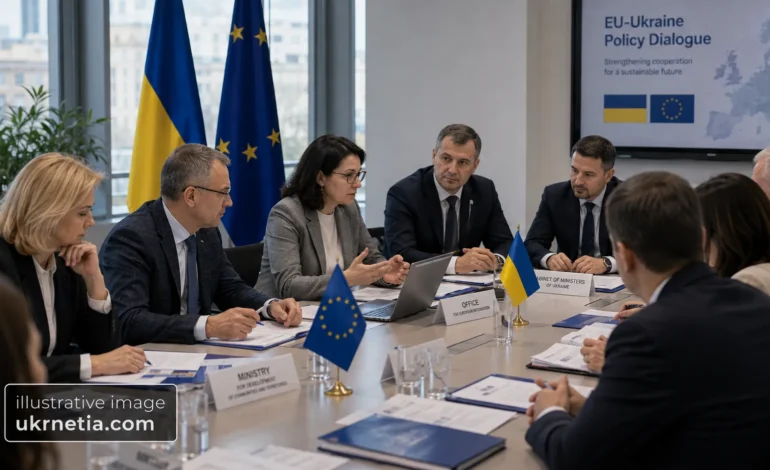
Ukraine’s relationship with European institutions continues to deepen through regular political dialogue, technical cooperation, and joint initiatives.
European experts provide assistance in areas such as governance, anti-corruption measures, regulatory alignment, infrastructure development, and digital transformation.
This cooperation allows Ukrainian institutions to exchange expertise with European counterparts while adapting best practices to national priorities.
Closer institutional cooperation is expected to simplify future integration and strengthen long-term political partnerships.
European Standards Shape Daily Governance
European integration is influencing more than foreign policy.
Many reforms directly affect how public institutions operate, how businesses interact with government, and how public services are delivered to citizens.
Digital government platforms, transparent procurement procedures, improved regulatory oversight, and administrative modernization all reflect broader efforts to improve governance.
Officials argue that these changes increase efficiency while strengthening public trust in government institutions.
Many observers believe these reforms will continue benefiting citizens regardless of the pace of formal accession negotiations.
Looking Toward Europe’s Future Together
Political leaders increasingly describe Ukraine’s future as closely connected with the broader European community.
Beyond institutional membership, European integration involves expanding cooperation in education, science, energy, infrastructure, technology, environmental policy, and security.
Business organizations also expect closer integration to create new opportunities for investment, trade, and innovation.
Although important challenges remain, Ukraine continues presenting European integration as a long-term national strategy supported by broad political commitment.
WHY IT MATTERS
European integration extends beyond diplomacy. It influences how institutions function, how laws are developed, and how citizens and businesses interact with the state. For international readers, understanding Ukraine’s reform agenda provides important context for the country’s political direction and its evolving relationship with Europe.
WHAT’S NEXT?
Ukraine is expected to continue implementing reforms required for closer integration with the European Union while expanding political dialogue and technical cooperation with European partners. Future progress is likely to focus on strengthening institutions, aligning legislation, and preparing additional sectors for deeper European cooperation.
RELATED TOPICS
- European Union
- Ukraine Reforms
- European Integration
- Public Administration
- International Cooperation