Are Ukrainian Marriages Arranged? Understanding Marriage Traditions in Ukraine

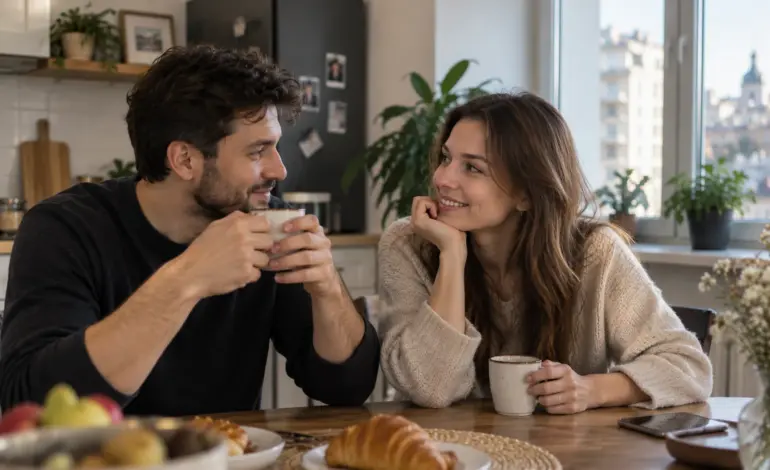
If you are curious about Ukrainian culture and have wondered whether marriages in Ukraine are arranged, the short answer is straightforward: modern Ukrainian marriages are generally not arranged marriages in the traditional sense. For the overwhelming majority of contemporary Ukrainians, marriage is a personal decision. Adults choose their own partners and decide for themselves whether and when to marry.
That said, the fuller picture is more nuanced, and it helps to separate several ideas that are easy to blur together. There is a real difference between an arranged marriage, in which families organize the match; family involvement in how someone meets or evaluates a partner; parental approval or disapproval of a relationship the couple chose themselves; and forced marriage, in which someone is compelled to marry against their will. These are not the same thing, and confusing them leads to inaccurate assumptions about Ukrainian family life. This article walks through each distinction, along with the historical background that shaped today’s customs.
What Is an Arranged Marriage?
An arranged marriage is one in which families, matchmakers, or other third parties play a major role in selecting or organizing whom a person marries. The degree of involvement varies widely across cultures and eras—from families making introductions that the individuals can accept or decline, to systems where the couple has little say.
It is important to distinguish an arranged marriage from a forced marriage. In many arranged-marriage traditions, both people consent and retain the ability to refuse a proposed match. A forced marriage, by contrast, removes meaningful consent altogether. Consent is the essential dividing line. Arranged marriage is neither automatically good nor bad; different societies have organized it in very different ways, and the key questions are always how much choice and consent the individuals actually have.
Marriage Traditions in Historical Ukraine
In historical Ukrainian communities, as in much of pre-modern Europe, marriage was rarely understood as a private matter between two individuals alone. It connected families, property, labor, social standing, and community expectations. Parents and relatives often had a significant say, and marriage could carry economic and social weight beyond the couple themselves.
Traditional matchmaking practices existed and left a mark on Ukrainian folk culture. The custom of svatannia—matchmaking or “courtship” negotiations—involved representatives of the suitor, often older male relatives or respected community members known as svaty, visiting the prospective bride’s family to propose the match and discuss terms. These visits were surrounded by rituals, symbolic gestures, and their own etiquette, and they remain a recognizable part of Ukrainian wedding folklore.
It would be a mistake, though, to imagine that historical family involvement meant every marriage was simply imposed. The extent of a young person’s own influence varied by family, region, period, and circumstance. The point is that families were more embedded in the process than they typically are today—not that individual feeling counted for nothing. This is historical context, neither a golden age to romanticize nor something to condemn.
How Ukrainian Marriage Traditions Changed
Over the twentieth century and into the present, marriage in Ukraine changed alongside broad social transformation. Urbanization moved people away from tight village networks. Expanding education, especially for women, reshaped expectations. Growing economic independence meant young adults could build lives without relying on family-arranged matches. Shifting social attitudes placed increasing value on romantic love and personal choice.
The result is that romantic relationships and individual decision-making became central to how Ukrainians marry. Modern Ukrainian marriage simply cannot be described using historical village customs, however colorful those customs remain in songs, films, and wedding rituals.
How Much Influence Do Ukrainian Parents Have Today?
Parents in Ukraine, like parents nearly everywhere, may have opinions about their children’s partners. Some families place real weight on parental approval; others give adult children complete independence. A parent might introduce their child to someone, suggest a potential partner, or voice concern about a relationship.
None of this amounts to an arranged marriage. There is a meaningful difference between “My parents introduced me to someone, but I decided whether to date them” and “My parents selected my spouse and I had no meaningful choice.” The first describes ordinary family life; the second describes something Ukrainians overwhelmingly do not practice today. An introduction or a recommendation leaves the decision with the couple.
Love, Choice and Marriage in Modern Ukraine
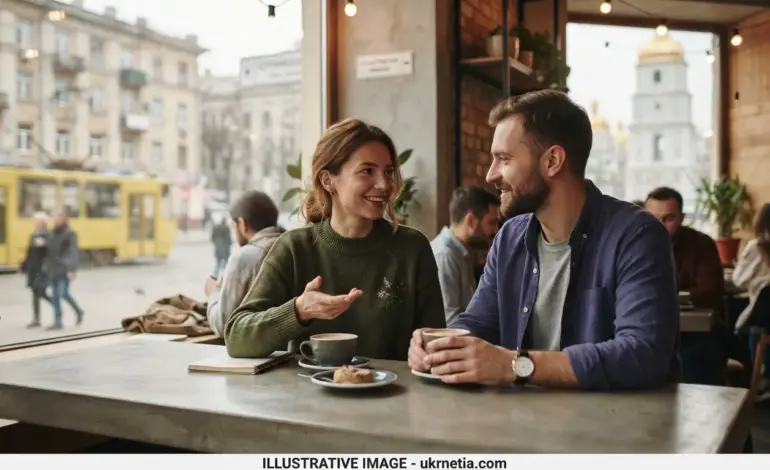
Most contemporary Ukrainian couples form their relationships on their own. People meet through the same channels common across much of the world: university, workplaces, mutual friends, social circles, and online dating platforms. Marriage generally rests on the couple’s own decision to commit.
Beyond that, it is wise not to over-generalize about exactly how Ukrainians meet or what they want, because individual paths differ enormously from person to person and city to city.
What About Forced Marriage?
Forced marriage—compelling someone to marry against their will—is fundamentally different from both consensual arranged marriage and traditional matchmaking. Family advice, an introduction, or a folk courtship ritual are not coercion. The distinguishing feature of forced marriage is the absence of genuine consent.
Ukrainian law treats free consent as a requirement for marriage; a valid marriage depends on the voluntary agreement of both people, who must be of legal age. There is no reliable basis for sensational claims about widespread forced marriage in Ukraine, and it should not be conflated with the ordinary family involvement described above.
Do Ukrainian Families Expect Their Children to Marry?
In some families, traditional expectations persist. Parents or grandparents may ask when a wedding is coming, when grandchildren might arrive, or whether a relationship is getting serious. Such questions will sound familiar to people from many cultures.
But these expectations vary greatly by family, generation, education, location, and personal belief. It would be inaccurate to say Ukrainians universally pressure their children to marry, or to marry young. As family life in Ukraine has modernized, so have attitudes toward the timing and even the necessity of marriage, with many people marrying later or choosing different arrangements.
Marriage, Religion and Tradition
Religious and cultural traditions influence some Ukrainian weddings and families—church ceremonies, ritual customs, and inherited practices can all play a part for those who value them. This does not mean religion dictates whom people marry. Ukrainian society today includes religious believers, non-religious people, and those who keep cultural traditions without strict religious observance. Whom a person marries generally remains their own choice.
Is an Arranged Marriage Common in Ukraine Today?
For most contemporary Ukrainians, no. Marriage is generally based on personal choice rather than on parents selecting spouses. Family influence can be present—sometimes strongly—but influence is not the same as arrangement. There is no reliable evidence supporting a picture of arranged marriage as a common feature of Ukrainian life today, whether in cities or in the countryside. Any genuine exceptions would need to be described specifically and carefully, not generalized to Ukrainians as a whole.
What Foreigners Should Understand About Ukrainian Marriage Traditions
If you are dating a Ukrainian, you should not assume that their family will choose their spouse. Family relationships can matter, and meeting parents may carry real significance once a relationship becomes serious—an occasion worth taking seriously. But the couple’s own wishes are what count.
It is equally worth avoiding the stereotype that Ukrainian women are especially “traditional” or particularly focused on getting married. People differ. Treating an individual as a representative of a cultural cliché is the surest way to misunderstand them.
So, Are Ukrainian Marriages Arranged?
Historical Ukrainian marriage traditions included substantial family and community involvement, and echoes of that history survive in folk customs and wedding rituals. But modern Ukrainian marriages are generally based on the choices of the two people getting married. Parents and relatives may advise, introduce, or approve or disapprove of a partner—yet none of that should automatically be described as an arranged marriage.