Romanian Farmers Complain Ukrainian Grain Is Taking Over Railway Capacity


KEY TAKEAWAYS
- Romanian farmers and grain traders say Ukrainian grain has received priority access to railway capacity heading toward the port of Constanta.
- They claim railway transport from Vadul-Siret and northeastern Romania has been largely reserved for Ukrainian-origin grain.
- Romanian companies say the situation is putting their existing export contracts at risk because they cannot secure sufficient railway capacity.
- Switching to road transport would reportedly double logistics costs, making it economically unattractive for many exporters.
- The situation comes during the seasonal peak in Black Sea grain exports, when railway and port capacity is under particularly strong pressure.
- Romanian wheat prices have also risen, with 12% protein milling wheat reaching approximately $260 per tonne FOB Constanta during August 7–14.
Romanian farmers and grain traders are complaining that Ukrainian grain is occupying much of the available railway capacity toward the port of Constanta, making it difficult for Romanian exporters to fulfill their contracts. The dispute highlights growing competition for transport infrastructure as Ukrainian grain increasingly uses Romania as a key route to global markets.
Romanian Farmers Report Railway Congestion
Romanian agricultural companies and traders have raised concerns about significant delays in the movement of grain toward Constanta.
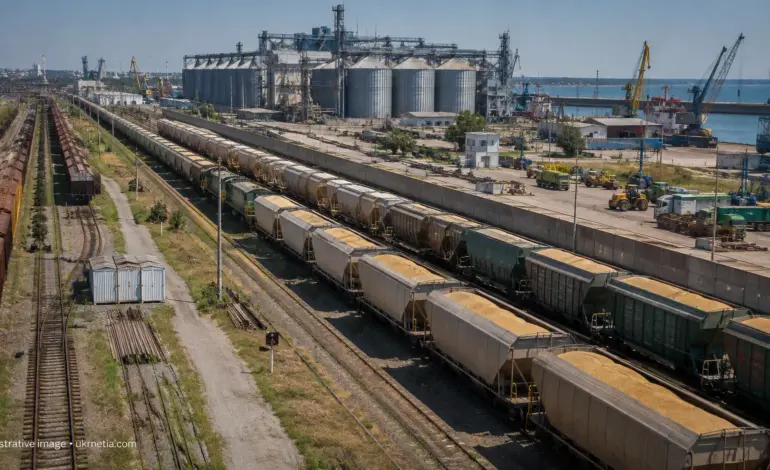
According to the reports, railway capacity from Vadul-Siret and northeastern parts of Romania has been booked for Ukrainian-origin agricultural products, leaving Romanian exporters struggling to obtain wagons for their own shipments.
The complaints come at the height of the grain-export season, when demand for railway transportation is particularly high.
Ukrainian Grain Has Become a Major Transit Flow
Romania has become one of the most important logistics routes for Ukrainian agricultural exports since Russia’s full-scale invasion disrupted Ukraine’s traditional Black Sea shipping routes.
The port of Constanta has played a major role in this process, allowing Ukrainian grain to reach international markets through Romanian infrastructure.
The increase in Ukrainian transit has created additional demand for railway capacity across northeastern Romania and toward the Black Sea.
Romanian Exporters Say Their Contracts Are at Risk
Romanian farmers and traders say the shortage of railway capacity is affecting their ability to meet previously agreed delivery deadlines.
According to the complaints, available rail transport from the Siret border area and neighboring regions has already been reserved for Ukrainian cargo.
For exporters operating under fixed contracts, delays can create additional costs and potentially expose them to contractual penalties.
The problem is therefore not simply one of inconvenience but of commercial risk.
Road Transport Is Considered Too Expensive
Romanian businesses could theoretically switch from railway transportation to trucks.
However, farmers and traders say this alternative is economically unattractive because road transport could double their logistics costs.
For agricultural commodities with relatively low margins per tonne, such an increase can significantly reduce profitability.
This leaves exporters dependent on railway capacity even as competition for wagons increases.
Constanta Has Become a Crucial Export Hub
The port of Constanta has become increasingly important for the regional grain trade.
It provides Ukraine with an alternative route to international markets while also serving Romania’s own agricultural exporters.
This dual role means that Ukrainian and Romanian exporters are effectively competing for some of the same transportation and port infrastructure.
The pressure becomes particularly visible during the seasonal peak in wheat and other grain exports.
The Situation Reflects Ukraine’s Logistics Strategy
For Ukrainian exporters, securing transport capacity in advance has become increasingly important.
Russia’s attacks on Ukrainian ports and infrastructure have made export logistics more unpredictable, encouraging agricultural companies to reserve alternative routes before capacity becomes unavailable.
Railway corridors through Romania are therefore not simply convenient commercial routes.
They are part of Ukraine’s broader strategy for maintaining agricultural exports despite wartime disruption.
Ukrainian Exporters Have Been Booking Capacity Early
The current situation is also linked to forward planning by Ukrainian farmers, agricultural companies and traders.
Market participants have reportedly been reserving railway capacity and transshipment slots in advance because competition for alternative export corridors remains intense.
From the Ukrainian perspective, early booking helps ensure that grain can continue moving toward international markets despite uncertainty surrounding maritime routes.
From the Romanian perspective, however, the same practice can make domestic exporters feel that they are being pushed aside.
Romanian Wheat Prices Are Rising
The logistics pressure has coincided with an increase in Romanian wheat prices.
According to market data cited in the reports, the export price of Romanian milling wheat containing 12% protein increased by approximately $6 per tonne between August 7 and August 14, reaching about $260 per tonne FOB Constanta.
The price increase reflects the importance of Romania as a reliable supplier at a time when other major Black Sea exporters face additional risks.
Romania Remains a Key Black Sea Supplier
Despite the current logistics dispute, Romania remains an important agricultural exporter in the region.
Its geographic position and access to Constanta provide an advantage when other Black Sea routes face disruption.
This has helped Romanian grain maintain demand on international markets.
However, the same infrastructure that gives Romania an export advantage is now being used extensively to move Ukrainian agricultural products.
Ukraine’s Grain Is Also Under Pressure
The complaints from Romania come at a time when Ukrainian exporters are facing their own logistical challenges.
Russia’s attacks on Ukrainian ports and transport infrastructure can disrupt traditional export routes and force companies to seek alternative corridors.
This makes Romania particularly valuable to Ukraine.
For Ukrainian agricultural businesses, access to Constanta can be essential for maintaining export flows during periods when direct maritime logistics are under threat.
The Dispute Is About Logistics, Not Simply Grain Imports
The current Romanian complaints differ from the disputes over Ukrainian grain that dominated European agriculture in 2023 and 2024.
The issue described now is primarily transit and railway capacity, rather than unrestricted Ukrainian grain entering the Romanian domestic market.
Ukrainian grain can pass through Romania on its way to international markets, while Romanian farmers remain concerned about the infrastructure needed to export their own production.
This distinction is important when assessing the current dispute.
Why Railway Capacity Matters
Railways are particularly important for transporting large volumes of agricultural commodities.
A single train can move a substantial amount of grain more efficiently than dozens of trucks, especially over longer distances toward a major port.
This makes railway capacity strategically valuable during the harvest and export season.
When demand exceeds available capacity, companies that cannot secure wagons in advance can face significant delays.
The Port of Constanta Faces Seasonal Pressure
Constanta handles large quantities of agricultural cargo during the Black Sea export season.
The combination of Romanian domestic production and Ukrainian transit can create considerable pressure on terminals, railways, storage facilities and loading infrastructure.
Any disruption along one part of the chain can therefore affect exporters throughout the region.
The current complaints illustrate how closely interconnected the Ukrainian and Romanian grain logistics systems have become.
Ukrainian Transit Has Also Benefited Romania
Although Romanian farmers are now complaining about congestion, Ukraine’s growing use of Romanian transport infrastructure has also brought additional economic activity to the country.
Ports, railway operators, warehouses, logistics companies and transport providers have benefited from increased cargo volumes.
Constanta’s role as a regional export hub has also strengthened as Ukraine searches for reliable alternatives to its own maritime routes.
The challenge for Romania is to balance those benefits with the needs of its domestic agricultural exporters.
A Difficult Balance for Bucharest
Romanian authorities face a complicated logistical and political problem.
Supporting Ukraine’s export routes is an important part of regional cooperation and European solidarity.
At the same time, Romanian farmers and traders need access to their country’s own transportation infrastructure.
Finding enough capacity for both flows could become increasingly important as Ukrainian agricultural exports remain high and Romania enters its own peak export period.
Competition Could Increase Further
The pressure on railway infrastructure may continue if Ukrainian exporters maintain high volumes through Constanta.
The situation could become more difficult if grain production or export demand rises simultaneously in Romania.
Without additional railway capacity, storage infrastructure and port-handling efficiency, competition between domestic and transit cargo could intensify.
That could increase pressure on Romanian authorities and logistics companies to find additional routes.
Alternative Routes Could Reduce the Pressure
Other transport corridors could potentially help distribute the cargo flows.
Routes through Moldova and Ukrainian Danube ports, including Reni and Izmail, provide additional options for Ukrainian exporters.
Recent reductions in Moldovan transit tariffs could make the railway route toward Reni more competitive and potentially shift some cargo away from Constanta.
However, each alternative route has its own capacity, cost and infrastructure limitations.
The Wider European Grain Challenge
The dispute is another example of how Russia’s war has transformed agricultural logistics across Eastern Europe.
Ukraine remains one of the world’s major grain exporters, but its traditional maritime routes have been repeatedly disrupted.
Neighboring EU countries have consequently become essential transit corridors.
This has created new economic opportunities but also increased competition for infrastructure.
What Happens Next
Romanian exporters will likely continue pressing authorities and railway operators to provide sufficient capacity for domestic agricultural shipments.
At the same time, Ukrainian companies will have strong incentives to preserve reliable access to Constanta while alternative export routes remain vulnerable to disruptions.
The long-term solution is likely to require investment in additional railway capacity, border infrastructure, storage and port handling rather than simply reallocating existing capacity between Ukrainian and Romanian cargo.
The complaints from Romanian farmers demonstrate how deeply Ukrainian grain has become integrated into the region’s transport network. For Ukraine, access to Romanian railways and the port of Constanta remains an important export lifeline, while Romania faces the challenge of ensuring that its own farmers can continue fulfilling international contracts. The growing competition for railway capacity is therefore likely to remain an important issue for the Black Sea agricultural market during the current export season.