
European Innovation Council Funding Helps Ukrainian Deep-Tech Startups Scale Globally

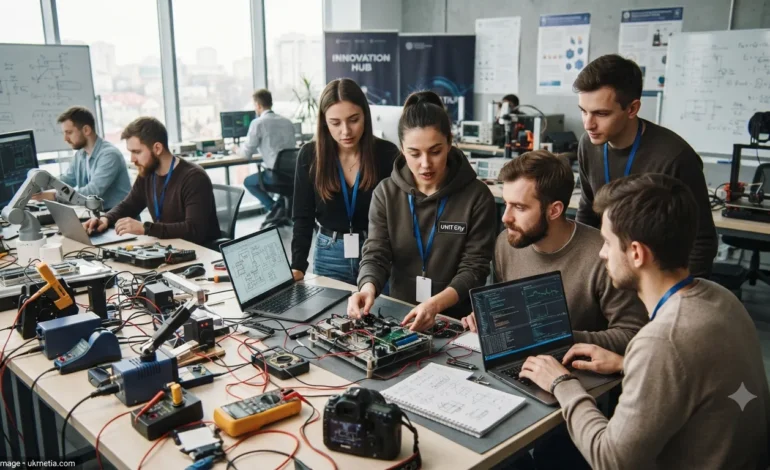
Ukraine’s startup ecosystem has earned international recognition for its highly skilled engineers, fast-growing technology companies, and resilient entrepreneurial culture. Despite the challenges created by Russia’s full-scale invasion, Ukrainian founders continue to build innovative products that attract customers and investors worldwide. Now, expanded support from the European Innovation Council (EIC) is opening new opportunities for these companies to accelerate their growth and become part of Europe’s next generation of deep-tech leaders.
While funding is often viewed simply as financial assistance, the broader significance lies in integration. By connecting Ukrainian startups with European research institutions, venture capital, accelerators, and industrial partners, the EIC is helping transform Ukraine from a source of engineering talent into a creator of globally competitive technologies.
For international investors, businesses, and policymakers, this marks an important shift. Ukraine is increasingly becoming not only a country rebuilding after war but also one of Europe’s most dynamic innovation ecosystems.
Ukraine’s Innovation Ecosystem Is Evolving
For more than two decades, Ukraine has built a reputation as one of Europe’s strongest software development destinations. Thousands of engineers have contributed to products developed by global technology companies, while Ukrainian outsourcing firms established themselves as trusted partners for businesses around the world.
Today, however, the country’s technology sector is entering a new phase.
Instead of focusing primarily on providing engineering services, many entrepreneurs are developing their own intellectual property, creating scalable products, and solving complex scientific and industrial challenges.
This transition reflects the natural evolution of a mature technology ecosystem. As experienced engineers become founders, they bring with them deep technical expertise, international experience, and an understanding of global markets.
The result is a rapidly growing community of startups developing technologies designed not only for Ukraine but for customers across Europe and beyond.
Why Deep-Tech Matters More Than Ever
Unlike traditional software startups that can often launch products within months, deep-tech companies are built around scientific discoveries, advanced engineering, and years of research and development.
Their innovations frequently emerge in areas such as:
- Artificial intelligence
- Robotics and autonomous systems
- Cybersecurity
- Biotechnology
- Aerospace engineering
- Advanced manufacturing
- Clean energy
- Quantum technologies
These companies usually require more capital, longer development timelines, and close collaboration with universities and research institutions. At the same time, they often create technologies capable of transforming entire industries.
This is precisely why initiatives like the European Innovation Council play such an important role. They help bridge the gap between breakthrough research and commercial success.
More Than Funding: Access to Europe’s Innovation Network
Financial support is only one part of what European programs offer.
Perhaps the greatest value comes from access to Europe’s broader innovation ecosystem.
Through EIC initiatives, Ukrainian startups can connect with research laboratories, universities, corporate innovation centers, experienced mentors, and venture capital investors across the European Union.
These relationships create opportunities that extend far beyond individual grants.
A startup developing advanced AI software may find industrial partners in Germany. A robotics company could validate its technology with manufacturers in Italy. A biotechnology startup may collaborate with research institutions in France or the Netherlands.
Such partnerships help Ukrainian companies mature faster while increasing their visibility in international markets.
Innovation Built Under Extraordinary Conditions
Ukraine’s technology sector has developed under circumstances unlike those faced by most European startup ecosystems.
Years of crisis have forced entrepreneurs to become exceptionally adaptable, resourceful, and efficient.
Solutions initially designed for logistics, communications, cybersecurity, energy resilience, and autonomous systems have often found applications far beyond their original purpose.
This ability to rapidly solve complex problems has become one of Ukraine’s defining competitive advantages.
International investors increasingly recognize that Ukrainian founders combine strong engineering expertise with an entrepreneurial mindset shaped by resilience and continuous adaptation.
Rather than slowing innovation, adversity has accelerated the development of technologies capable of addressing global challenges.
Why Europe Is Investing in Ukrainian Startups
The European Union’s growing interest in Ukrainian innovation reflects broader strategic priorities.
Europe seeks to strengthen its technological competitiveness while reducing dependence on external suppliers in critical sectors such as artificial intelligence, semiconductors, cybersecurity, healthcare, and advanced manufacturing.
Supporting Ukrainian startups contributes to these goals in several ways.
First, it expands Europe’s pool of highly qualified engineers and researchers.
Second, it encourages the commercialization of cutting-edge technologies developed within the broader European innovation ecosystem.
Third, it strengthens collaboration between companies, universities, and investors across national borders.
Perhaps most importantly, it demonstrates that Ukraine is increasingly viewed as a long-term innovation partner rather than simply a recipient of international assistance.
Opportunities for Entrepreneurs and Investors
Expanded access to European innovation programs creates significant opportunities for Ukrainian founders.
Beyond grants, startups gain credibility that can help attract venture capital, secure pilot projects, and establish commercial partnerships with global companies.
Participation in European initiatives also encourages businesses to adopt internationally recognized standards in product development, governance, intellectual property protection, and regulatory compliance.
For investors, this creates a more attractive environment.
Ukraine combines world-class engineering talent with competitive operating costs, growing international integration, and an increasing number of founders building technologies with global ambitions.
As more success stories emerge, the country’s startup ecosystem is likely to attract greater attention from European and international venture capital firms seeking the next generation of deep-tech innovators.
Challenges Remain
Despite encouraging progress, important challenges still exist.
Many Ukrainian startups continue to operate in difficult economic and security conditions. Access to private capital remains more limited than in established European technology hubs, while some founders face operational uncertainty due to the ongoing war.
Commercializing deep-tech innovations also requires patience.
Scientific breakthroughs often take years to reach large-scale markets, and founders must navigate regulatory requirements, manufacturing challenges, and international competition.
However, expanded European cooperation helps reduce many of these barriers by providing not only financial resources but also expertise, networks, and market access.
Looking Ahead
Ukraine’s future as an innovation leader will not depend on a single startup, investment round, or funding program.
Instead, it will be shaped by the gradual development of an ecosystem where entrepreneurs, researchers, universities, investors, and international partners work together to transform ideas into globally competitive technologies.
The European Innovation Council’s expanded support represents another step in that direction.
By helping Ukrainian deep-tech startups scale internationally, Europe is investing in solutions that could influence industries ranging from artificial intelligence and healthcare to robotics, clean energy, and advanced manufacturing.
Years from now, this period may be remembered not only as a time of reconstruction but also as the moment when Ukraine established itself as one of Europe’s most important centers for scientific innovation and high-tech entrepreneurship.