Ukraine Expects Laser Weapons for Drone Defense Within 2-3 Months, General Staff Says

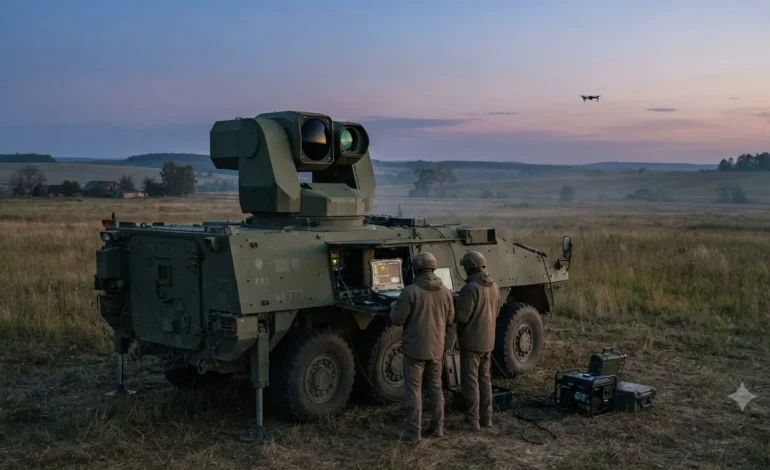
KYIV, July 22, 2026 — Ukraine’s military anticipates deploying domestically developed laser and directed-energy weapons capable of countering enemy drones within the next two to three months, a senior General Staff official said on Tuesday.
Deputy Commander-in-Chief of the Armed Forces of Ukraine Andriy Lebedenko stated that projects involving laser and impulse weaponry are advancing, with systems expected to enhance the country’s ability to neutralize aerial threats, including Russian Shahed-type kamikaze drones.
“Within the next two to three months, laser and impulse weapons may appear in Ukraine that will allow us to effectively destroy enemy air attack means,” Lebedenko was quoted as saying by Ukrainian media.
The announcement highlights Ukraine’s push toward innovative, cost-effective air defense solutions amid ongoing Russian drone and missile barrages targeting cities and infrastructure. Laser systems are seen as potentially more economical for intercepting low-cost drones compared to expensive missiles, offering rapid engagement and low per-shot costs once operational.
Ukraine has already tested prototypes, including the “Sunray” laser system, designed to disrupt or destroy drones by targeting their electronics or structure with focused energy. Such systems are part of broader efforts involving both military units and private developers to create layered defenses.
Challenges and context
Directed-energy weapons face technical hurdles, including weather dependency, power requirements, and the need for precise tracking. Experts note that while promising against slow-moving drones, their effectiveness against faster or more sophisticated threats remains under development globally.
The General Staff’s comments come as Ukraine continues to integrate a mix of Western-supplied systems, domestic production, and experimental technologies into its air defense network. Officials have emphasized accelerating innovation to counter the scale of Russian aerial attacks.
No specific details on the exact models, quantities, or deployment locations were disclosed for security reasons. The military has not confirmed whether the systems will be mobile, stationary, or vehicle-mounted.
Western allies, including the United States, have previously provided laser-guided munitions and supported Ukraine’s air defense capabilities, but the latest developments appear focused on indigenous production.
Image: Illustrative / Gemini AI