Regional Cultural Differences in Ukraine: Understanding the East and West Beyond Stereotypes

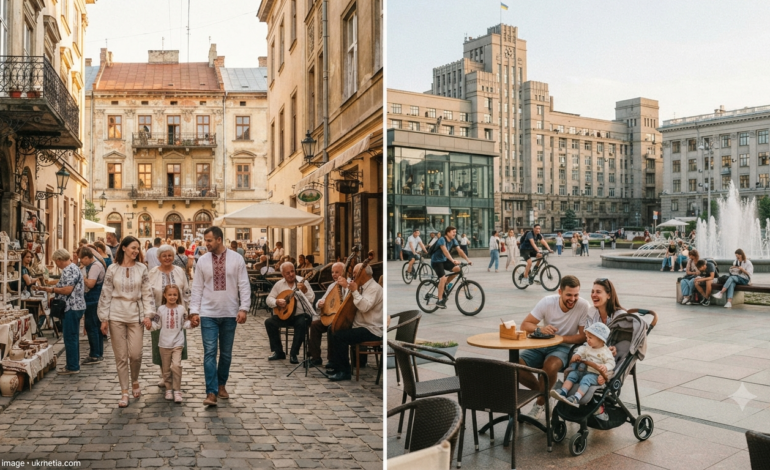
Ukraine is often described as a country of remarkable diversity. Stretching from the Carpathian Mountains in the west to the vast eastern steppes and the Black Sea coast in the south, it has been shaped by centuries of different historical influences, empires, religions, and trade routes. These experiences have naturally created regional differences in traditions, architecture, cuisine, dialects, and everyday life.
For outsiders, these differences are sometimes oversimplified into stereotypes about “Eastern” and “Western” Ukrainians. In reality, the picture is far more nuanced. While regional identities certainly exist, they do not divide the country into two opposing cultures. Instead, they form a rich cultural mosaic that contributes to Ukraine’s unique national identity.
Understanding these regional characteristics offers international readers a deeper appreciation of Ukraine—not as a country of contrasts, but as one where diversity has long been part of everyday life.
A Country Shaped by Different Histories
One of the main reasons regional differences exist is history.
For centuries, different parts of modern Ukraine belonged to different states and empires. Western regions experienced periods under the Polish-Lithuanian Commonwealth, the Habsburg Empire, and later Austria-Hungary. Meanwhile, much of central and eastern Ukraine developed under the influence of the Cossack Hetmanate and, later, the Russian Empire.
Southern cities such as Odesa grew into major international ports, attracting merchants, sailors, and immigrants from across Europe, while the eastern industrial regions expanded rapidly during the nineteenth and twentieth centuries.
These different historical experiences influenced local architecture, education, cuisine, religious traditions, and urban development. Yet despite these regional paths, Ukrainian culture continued to evolve through shared language, folklore, literature, and traditions that connected communities across the country.
Language Reflects Regional Diversity
Ukraine is a multilingual country, and language has always reflected its complex history.
Ukrainian is the country’s official language and is spoken throughout the country, although regional dialects vary considerably. In western regions, local speech often preserves expressions influenced by neighboring Central European cultures. In the east and south, historical contact with Russian-speaking communities has also shaped everyday communication.
Many Ukrainians grow up bilingual or switch naturally between languages depending on family, workplace, or social setting.
For visitors, this diversity is often surprising. Rather than indicating different identities, multilingualism frequently reflects generations of cultural interaction and practical communication.
Today, the Ukrainian language has gained renewed prominence across all regions, while regional dialects continue to enrich the country’s linguistic heritage.
Traditions Share Common Roots but Local Character
Many Ukrainian holidays are celebrated nationwide, yet local customs often give them a distinctive regional flavor.
Christmas provides a good example. Across Ukraine, families gather for festive meals and carol singing remains an important tradition. However, western regions are particularly well known for preserving elaborate Christmas customs, traditional nativity plays (vertep), and community celebrations that have been passed down through generations.
In central Ukraine, many customs reflect the agricultural traditions of the country’s fertile heartland, while southern regions often incorporate influences from the multicultural communities that have lived along the Black Sea coast for centuries.
Rather than competing with one another, these traditions demonstrate how local communities have preserved their own cultural identities while remaining part of a broader Ukrainian heritage.
Cuisine Changes from Region to Region
Although dishes such as borshch, varenyky, and holubtsi are known throughout Ukraine, regional cuisine offers remarkable variety.
Western Ukraine is known for hearty mountain dishes, mushroom recipes, smoked cheeses, and influences from Central European cooking.
Central Ukraine is often associated with classic versions of many traditional Ukrainian dishes that have become internationally recognized.
Southern Ukraine reflects centuries of trade through Black Sea ports, featuring abundant vegetables, fish, seafood, and multicultural culinary influences.
Eastern Ukraine developed its own traditions around grain production, meat dishes, and foods suited to industrial communities and farming regions.
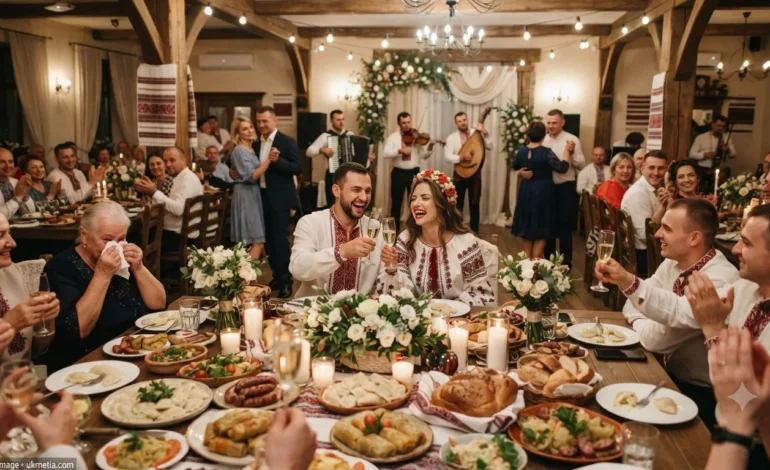
Despite these differences, hospitality remains one of the strongest shared characteristics across the country. Offering guests generous meals and homemade specialties continues to be an important part of Ukrainian culture regardless of region.
Different Landscapes, Different Lifestyles
Ukraine’s geography has also shaped regional identities.
The Carpathian Mountains encouraged close-knit mountain communities with distinctive folk traditions, music, crafts, and wooden architecture.
The central plains became some of Europe’s most productive agricultural lands, influencing village life and seasonal celebrations connected to farming.
The eastern steppes supported trade routes and later industrial development, while the southern coastline fostered maritime traditions and multicultural port cities.
These landscapes influenced occupations, architecture, clothing, and local customs, creating regional diversity that can still be experienced today.
Shared Values Across the Country
Despite regional differences, many values remain remarkably consistent throughout Ukraine.
Family plays a central role in everyday life.
Hospitality is widely regarded as both a tradition and a source of pride.
Community celebrations, respect for older generations, and strong local identities continue to shape social life in cities and villages alike.
Whether visiting Lviv in the west, Poltava in central Ukraine, Kharkiv in the east, or Odesa on the Black Sea, travelers often encounter the same willingness to welcome guests, share local traditions, and introduce visitors to regional cuisine.
These shared values often matter far more than regional differences.
Modern Ukraine Is More Connected Than Ever
In recent decades, internal migration, education, tourism, and digital communication have brought Ukrainians from different regions closer together than ever before.
Students study in universities far from their hometowns. Professionals relocate between major cities. Families often have relatives living in several different regions.
As a result, regional traditions increasingly complement rather than separate one another.
The full-scale Russian invasion has strengthened this sense of national unity even further. Millions of Ukrainians from different regions have worked, volunteered, and supported one another, reinforcing a shared civic identity while continuing to celebrate local customs.
Rather than erasing regional diversity, these experiences have highlighted how different traditions contribute to a stronger national culture.
Looking Beyond Stereotypes
International media has often portrayed eastern and western Ukraine as fundamentally different societies. While regional distinctions certainly exist, everyday life tells a more balanced story.
People across Ukraine share many of the same aspirations: building stable families, preserving cultural traditions, creating opportunities for future generations, and maintaining close community ties.
Regional identity is better understood as a reflection of history and geography than as a measure of different values or personalities.
Like Italy, Spain, Germany, or the United Kingdom, Ukraine is a country where regional diversity enriches national culture rather than defining separate identities.
Looking Ahead
Ukraine’s regional diversity remains one of its greatest cultural strengths.
Centuries of different historical influences have produced distinctive traditions, dialects, cuisines, and architectural styles, giving each region its own character while contributing to a shared national story.
For international visitors, exploring Ukraine means discovering far more than one culture. It means experiencing a country where mountain villages, fertile plains, industrial cities, and coastal ports all tell different chapters of the same history.
Understanding these regional differences helps move beyond outdated stereotypes and reveals a more accurate picture of modern Ukraine—a nation whose diversity is not a source of division, but one of its greatest cultural treasures.