Empty Classrooms: How Ukraine’s Demographic Crisis Is Reshaping the Education System

KEY TAKEAWAYS
- Ukraine’s declining birth rate and wartime migration are leaving many schools with shrinking student populations.
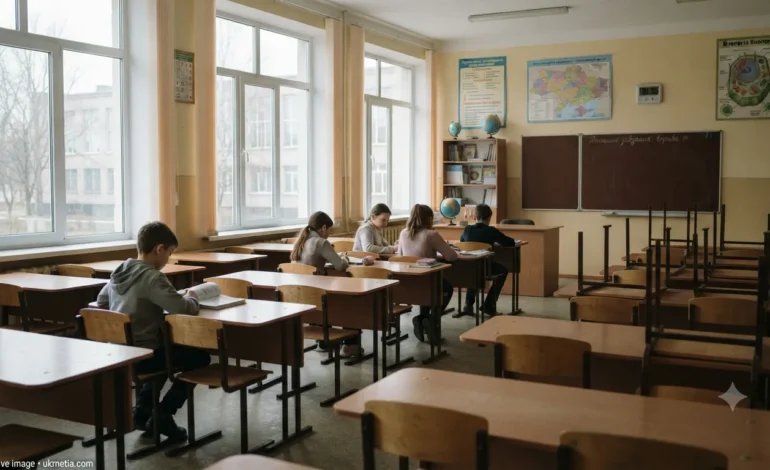
- Some schools are operating with only a handful of pupils per class, particularly in rural communities.
- The government faces growing pressure to optimize the school network while maintaining access to education.
- Experts warn the demographic crisis could reshape Ukraine’s education system for decades.
Ukraine’s education system is facing a new challenge beyond wartime destruction: empty classrooms. A combination of low birth rates, large-scale migration, and population decline is leaving many schools with too few students, forcing authorities to consider difficult decisions about school closures, mergers, and the future of education in affected communities.
Fewer Children, Empty Seats
Ukraine has experienced a steady decline in the number of school-age children over the past decade, a trend that accelerated after Russia’s full-scale invasion.
Millions of Ukrainians, including families with children, remain abroad, while the country’s birth rate has fallen to historic lows. As a result, some schools now have classes with fewer than ten students, especially in smaller towns and villages.
Schools Face Difficult Decisions
The falling number of pupils is forcing local authorities to rethink how schools operate.
In many communities, maintaining underfilled schools has become increasingly expensive. Officials are considering consolidating schools, reorganizing educational districts, and providing transportation for students to larger institutions capable of offering a broader curriculum.
Rural Communities Most Affected
The demographic crisis is particularly severe in rural areas, where depopulation began long before the war.
Many villages have seen younger families move to larger cities or abroad, leaving schools with declining enrolment each year. In some cases, schools that once taught hundreds of children now educate only a few dozen.
Long-Term Consequences
Education experts warn that today’s demographic trends could have lasting consequences for Ukraine’s labour market and economic development.
A smaller number of students today means fewer university graduates, teachers, engineers, healthcare professionals, and skilled workers in the future. At the same time, maintaining access to quality education in remote communities remains a major policy challenge.
Reform Beyond the War
While rebuilding schools damaged by Russian attacks remains a priority, officials increasingly acknowledge that demographic realities require structural reforms as well.
Analysts say Ukraine’s education system must adapt not only to wartime conditions but also to a long-term decline in the school-age population, making efficiency, accessibility, and educational quality central goals of future reforms.